Q355B Steel Grade: Standard, Properties and Comparable Grades
Quick Answer
Q355B is a Chinese high-strength low-alloy structural steel grade defined by GB/T 1591-2018. The designation is built around a 355 MPa minimum upper-yield-strength level for the reference thickness range, but the required yield strength decreases across thicker product bands. The complete requirements also depend on product form, delivery condition and quality class. ASTM A572 Grade 50 and grades in the EN S355 family are often compared with Q355B, but they are not automatically interchangeable.
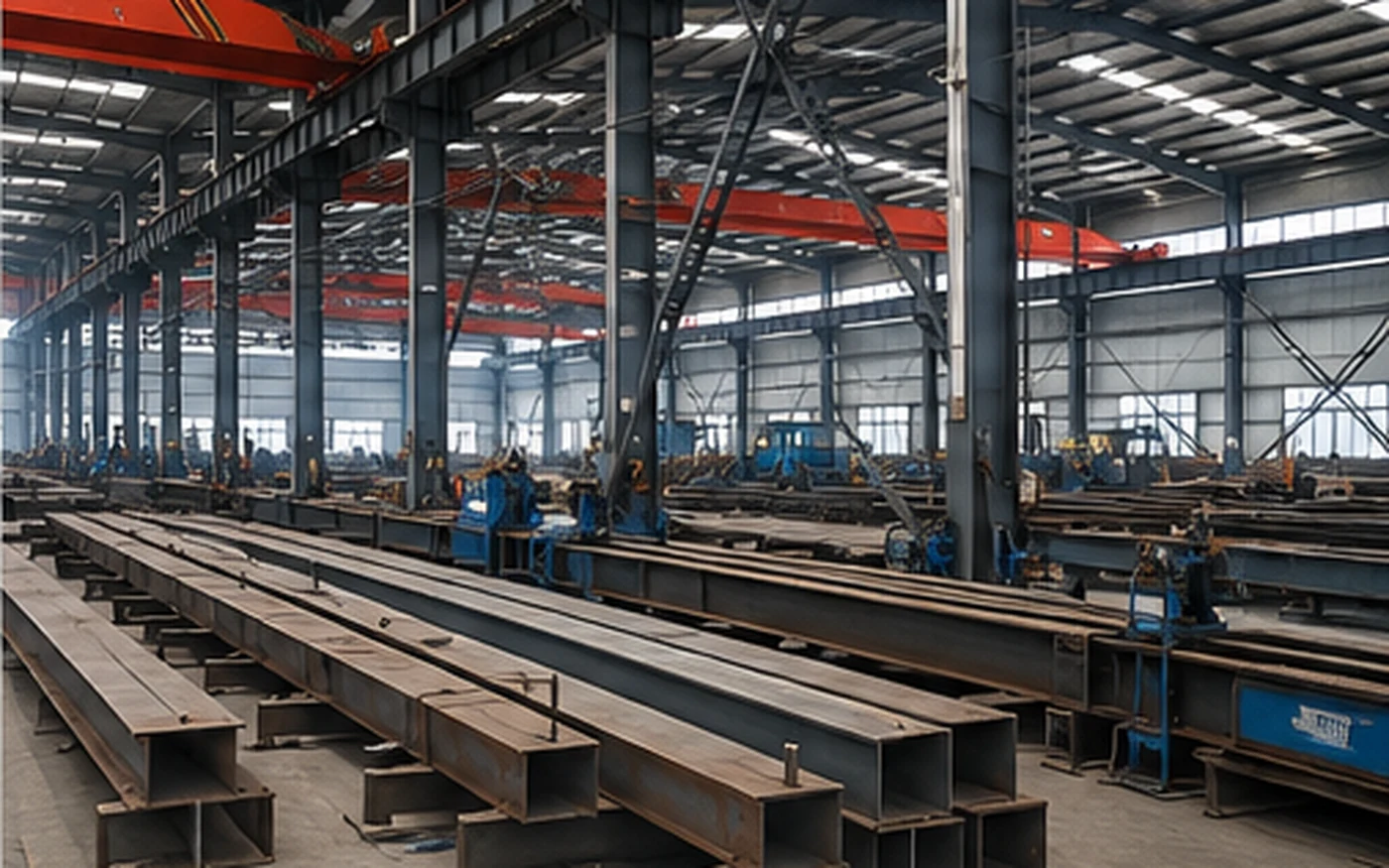
What Is Q355B Steel?
Q355B is one designation within GB/T 1591-2018, the Chinese national standard for high-strength low-alloy structural steels. The standard applies to products such as steel plate, strip, sections and bars used for general structures and engineering. It addresses the material supplied by the steel producer. It does not, by itself, decide which members in a warehouse, workshop or industrial building should use that grade.
For a project buyer, the important point is that Q355B is more than a short label on a quotation. The order should identify the governing standard, complete designation, product form, thickness, dimensions, quantity and any additional testing or documentation requirements. Those details affect whether the supplied material actually matches the approved design and procurement scope.
For a broader introduction to shapes and grade terminology, see our guide to structural steel grades and product forms.
How the Q355B designation is structured
GB/T 1591-2018 defines the designation using the letter Q, the specified minimum upper yield-strength value, an optional delivery-condition code and a quality-class symbol.
- Q represents yield strength in the Chinese designation system.
- 355 is the specified minimum upper-yield-strength value, in MPa, for the reference thickness range. It is not a promise that every thickness has a 355 MPa minimum requirement.
- B is the quality class.
For as-rolled steel, the delivery-condition code AR or WAR may be omitted. Plain Q355B therefore refers to the as-rolled designation. Normalized or normalizing-rolled and thermomechanically processed versions use their own delivery-condition codes and complete designations, such as Q355NB or Q355MB. A buyer should not treat those designations as interchangeable shorthand.
What the quality grade does and does not confirm
Quality class B is linked to the impact-test requirements in GB/T 1591-2018. For Q355B, Table 11 lists minimum Charpy V-notch absorbed energy at 20 degrees C of 34 J for longitudinal specimens and 27 J for transverse specimens. The standard also defines applicability by product thickness or diameter, specimen size and sampling direction.
The B suffix does not confirm the product form, exact thickness-dependent yield requirement, delivery condition, surface condition, inspection scope or project acceptance. These items still need to be read from the purchase specification, material schedule and inspection certificate.
Which Standard Defines Q355B?
Q355B is defined by GB/T 1591-2018, High Strength Low Alloy Structural Steels. The standard specifies designation, ordering information, dimensions and tolerances, technical requirements, test methods, inspection rules, packaging, marking and inspection certificates.
Its stated product scope includes steel plate, strip, sections and bars for general structures and engineering. Chemical-composition provisions also apply to billets. Separate dimensional standards are referenced for different product forms, so a grade name alone does not establish the shape, dimensional tolerance or finished-product standard.
The standard also distinguishes several delivery conditions:
- As-rolled
- Normalized
- Normalizing rolled
- Thermomechanically processed, or TMCP
The required chemical and mechanical tables differ by delivery condition. Buyers should therefore request the complete designation and confirm that the delivery condition stated on the material documentation agrees with the order.
A material standard is not a structural design code
GB/T 1591 defines material requirements. It does not replace the structural design code, approved calculations or project specification.
The responsible design process still has to determine member forces, stability, deflection, connection design, fatigue or impact requirements where applicable, and the grade required for each component. Project location, use, loads and jurisdiction can also affect the design basis. Our guide to project loads and structural design basis explains the inputs that should be confirmed before structural design and quotation.
Q355B Mechanical Properties Depend on Thickness
The number 355 should not be copied into a specification as a universal minimum for every Q355B product. GB/T 1591-2018 reduces the specified minimum upper yield strength as nominal thickness or diameter increases.
The following table summarizes the as-rolled Q355B values in Tables 7 and 8 of GB/T 1591-2018. It covers the thickness ranges for which those tables provide Q355B requirements. The direction of the elongation specimen also matters.
Q355B mechanical requirements for as-rolled products
| Nominal thickness or diameter | Minimum upper yield strength | Tensile strength | Minimum longitudinal elongation | Minimum transverse elongation |
|---|---|---|---|---|
| Up to 16 mm | 355 MPa | 470-630 MPa | 22% | 20% |
| Over 16 to 40 mm | 345 MPa | 470-630 MPa | 22% | 20% |
| Over 40 to 63 mm | 335 MPa | 470-630 MPa | 21% | 19% |
| Over 63 to 80 mm | 325 MPa | 470-630 MPa | 20% | 18% |
| Over 80 to 100 mm | 315 MPa | 470-630 MPa | 20% | 18% |
| Over 100 to 150 mm | 295 MPa | 450-600 MPa | 18% | 18% |
| Over 150 to 200 mm | 285 MPa | 450-600 MPa | 17% | 17% |
| Over 200 to 250 mm | 275 MPa | 450-600 MPa | 17% | 17% |
Source: GB/T 1591-2018, Tables 7 and 8. Values shown are for as-rolled Q355B. Do not extend them to another delivery condition or an unlisted thickness range.
Yield-strength requirements
For nominal thickness or diameter up to 16 mm, the specified minimum upper yield strength is 355 MPa. It then steps down through the thicker bands shown in the table. Where a definite yield phenomenon is not present, the standard uses 0.2% proof strength instead of upper yield strength.
The ordered product therefore needs to be identified before a yield value is placed in a quotation, drawing note or comparison sheet. A value taken from thin plate should not be assigned automatically to a thicker plate, section or bar.
Tensile strength and elongation
For as-rolled Q355B up to 100 mm, the specified tensile-strength range is 470-630 MPa. For the bands over 100 mm through 250 mm, it is 450-600 MPa. Minimum elongation varies with thickness and specimen direction, as shown above.
For plate and strip at least 600 mm wide, GB/T 1591-2018 specifies transverse tensile specimens. Other products use longitudinal specimens. This sampling rule is one reason a buyer should compare the test result, specimen direction and product form rather than checking only one headline value.
Why one universal value is misleading
A material-data page that lists only "yield strength: 355 MPa" leaves out the thickness effect, delivery condition and test basis. It may be useful as a grade-level summary, but it is not enough for procurement approval.
Before using any stated property, confirm:
- The full grade designation
- Product form
- Nominal thickness or diameter
- Delivery condition
- Sampling direction
- Applicable edition of the standard
- Whether the value is a minimum, maximum or range
Chemical Composition and Delivery Condition
GB/T 1591-2018 gives chemical-composition limits by delivery condition and bases the primary tables on heat analysis. For as-rolled Q355B, Table 1 lists maximum mass fractions of 0.24% carbon, 0.55% silicon, 1.60% manganese, 0.035% phosphorus, 0.035% sulfur, 0.30% chromium, 0.30% nickel, 0.40% copper and 0.012% nitrogen.
These values need their table context. For sections and bars, the standard permits phosphorus and sulfur to be 0.005 percentage points higher. It also includes notes affecting nitrogen control and purchaser-specified product analysis. A buyer should therefore use the complete standard and the actual inspection certificate, not an isolated composition list copied from a supplier page.
Heat analysis and alloying context
Heat analysis represents the chemical analysis associated with the steel heat. If the purchaser requires product analysis, that requirement should be identified in the order. GB/T 1591-2018 also permits additional alloying elements by agreement between supplier and purchaser, with their contents reported in the inspection certificate.
This means two products carrying the same grade designation can have different reported heat-analysis values while both remain within the applicable requirements. Procurement review should focus on conformity with the specified limits, not on matching a single "typical" recipe.
Carbon-equivalent and fabrication relevance
For as-rolled Q355, Table 2 gives maximum carbon-equivalent values of 0.45% for nominal thickness or diameter up to 30 mm, 0.47% for over 30 mm through 150 mm, and 0.49% for over 150 mm through 250 mm. In the over 150 mm through 250 mm band, Table 2 applies a separate footnote to sections and bars, so the displayed 0.49% value should not be generalized to those product forms without checking that footnote. The table also includes additional notes for silicon-controlled products.
Carbon equivalent is a useful input when fabrication and welding requirements are reviewed, but it is not a stand-alone guarantee of weldability. The welding procedure still needs to suit the grade, thickness, joint, consumables, restraint, heat input and intended service. Those controls belong in the approved fabrication and welding documentation.
Delivery condition must match the order and certificate
GB/T 1591-2018 permits as-rolled, normalized, normalizing-rolled and TMCP delivery conditions. Their designations and applicable chemical or mechanical requirements are not necessarily the same.
An order that needs a particular delivery condition should state it explicitly. The same designation should appear consistently in the material schedule, purchase order and inspection certificate. If the certificate records a different delivery condition from the approved order, the material should be placed on hold for review rather than accepted from the base grade name alone.
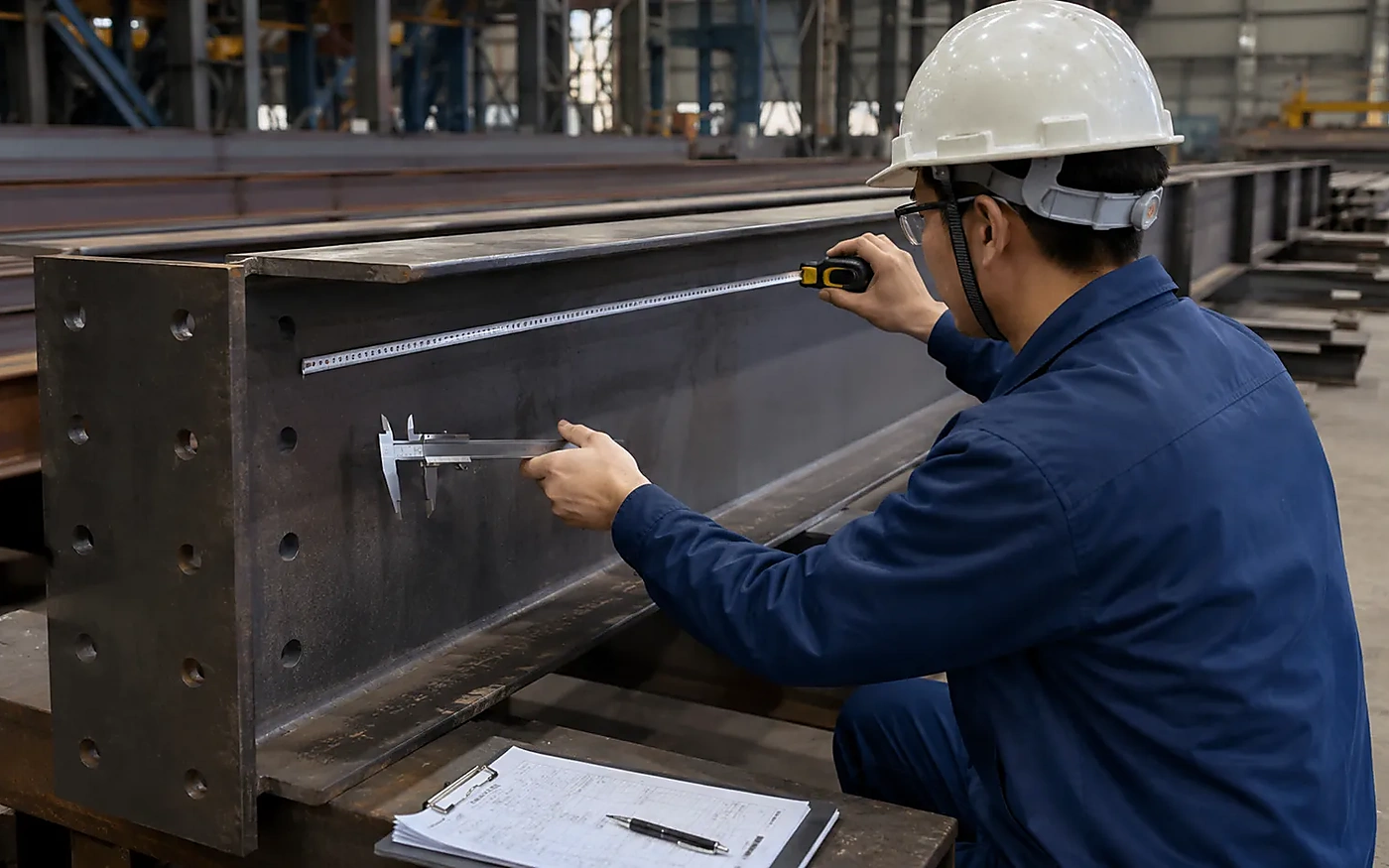
Where Q355B May Be Used in Steel Structures
Q355B may be specified for primary structural members, fabricated beams and columns, industrial steel-building frames and other project-specific components. The actual allocation depends on the approved drawings and calculations.
In a warehouse or workshop project, the grade may be considered alongside member forces, section availability, stability, deflection, connection design, fabrication requirements and local approval rules. It should not be assigned to every column, every beam or every "heavy" building through a general website rule.
Quotations should identify where the grade applies. A material statement such as "main steel: Q355B" is less useful than a member schedule or drawing that connects the grade to specific components and product forms.
For a buyer-facing discussion of choosing between two Chinese structural grades, use the separate Q235B vs Q355B steel comparison. This page remains focused on Q355B itself.
Q355B and Commonly Compared Grades
This is not a direct substitution table. The grades below are commonly compared because of their structural use or strength class. A comparison does not authorize a material change.
Q355B and commonly compared international grades
| Standard system | Grade commonly compared | Why it is compared | Key differences to verify | Approval required |
|---|---|---|---|---|
| ASTM A572/A572M | Grade 50 [345] | Structural HSLA grade with a broadly similar strength class | Product form, 345 MPa grade level, thickness limits, alloy requirements, tensile and elongation rules, impact requirements, testing and reports | Yes |
| EN 10025-2 | S355JR within the S355 family | GB/T 1591-2018 Annex A lists S355JR as a comparison for as-rolled Q355B | Current EN edition, product form, thickness, quality suffix, chemistry, delivery condition, impact testing and inspection documents | Yes |
| ISO 630-2 | S355B in the edition cited by GB/T 1591 Annex A | Included in the standard's informative designation comparison | Current ISO edition, grade/quality definition, covered product forms, thickness, mechanical requirements and test documents | Yes |
Comparison only. No row establishes direct equivalence or automatic interchangeability.
Q355B and ASTM A572 Grade 50
ASTM A572/A572M-25 is a separate specification for high-strength low-alloy columbium-vanadium structural steel. Its public scope covers shapes, plates, sheet piling and bars and identifies Grade 50 [345] as one of several grades.
Q355B and A572 Grade 50 are often compared because both are structural HSLA grades in a similar strength class. They are still governed by different standards. Their grade values, permitted products, chemistry, alloy requirements, thickness rules, toughness provisions and reporting requirements need to be compared against the actual ordered product.
An ASTM-based project should not accept Q355B merely because the nominal strength levels appear close. The proposed substitution should be documented, reviewed against the project specification and accepted by the responsible engineer or client before procurement or fabrication.
Q355B and the EN S355 family
The informative Annex A of GB/T 1591-2018 lists as-rolled Q355B alongside S355JR under EN 10025-2:2004. That is a useful comparison reference, but the annex is informative and the cited EN edition has since been superseded by EN 10025-2:2019.
"S355" also describes a family rather than one complete purchasing designation. Quality suffixes, delivery conditions and product standards matter. EN 10025-2 covers particular hot-rolled flat and long products, while structural hollow sections and tubes are handled by other EN standards.
Use the current project-specified EN standard and complete grade designation when reviewing a proposed comparison. Do not convert Q355B to a generic "S355" label without confirming the exact product and requirements.
Why Comparable Does Not Mean Interchangeable
Two grades can have a similar strength class and still differ in ways that matter to design, fabrication, testing and approval.
Review at least the following:
- Product form: plate, strip, section, bar, hollow section and tube may be governed differently.
- Thickness: yield, tensile and elongation requirements can change by thickness band.
- Chemistry: maximums, ranges and permitted microalloying practices may differ.
- Strength: compare the complete yield, tensile and elongation requirements, not one nominal number.
- Toughness: test temperature, absorbed energy, specimen direction and applicability must match.
- Delivery condition: as-rolled, normalized and TMCP products are not interchangeable labels.
- Testing: sampling, test units, test methods and supplementary requirements can differ.
- Certificates: the reported designation, heat, product and test results must satisfy the purchase specification.
- Project approval: the governing specification and approval authority decide whether substitution is acceptable.
Material-substitution decision flow
- Comparable strength class
- Compare the actual specification requirements
- Review product form, thickness and certificates
- Confirm project acceptance criteria
- Approve or reject the proposed substitution in writing
What Buyers Should Confirm Before an RFQ or Order
A useful Q355B enquiry identifies the material requirement precisely enough for the supplier, fabricator and approval team to review the same scope.
Buyer verification checklist
| Item | What to confirm | Evidence or document | Approval responsibility |
|---|---|---|---|
| Steel grade | Complete designation, including quality and delivery condition | Drawings, material schedule, purchase specification | Designer or project specification owner |
| Governing standard | Standard number and required edition | Contract and technical specification | Client or engineer |
| Product form | Plate, strip, section, bar or other specified product | Bill of materials and drawings | Designer and buyer |
| Thickness and dimensions | Applicable thickness band, size and tolerance | Member schedule, order list and dimensional standard | Designer and supplier |
| Quantity | Mass, number of pieces or other agreed unit | Purchase order and packing list | Buyer and supplier |
| Mechanical requirements | Applicable yield, tensile, elongation and impact requirements | Material standard and inspection certificate | Technical reviewer |
| Delivery condition | As-rolled, normalized, normalizing rolled or TMCP as specified | Complete designation and inspection certificate | Designer and buyer |
| Impact requirements | Quality class, temperature, direction and any project-specific requirement | Project specification and test results | Engineer or client |
| Material documentation | Heat number, test results, traceability and required certificate | Inspection certificate or agreed material documents | Buyer, QA and client |
| Substitution | Differences from the specified grade and proposed acceptance basis | Comparison sheet and written approval | Engineer or client |
Where information is missing, request clarification before comparing suppliers. A low material price does not resolve a mismatch in grade, thickness, test scope or documentation.
Review Your Steel Grade and Material Requirements
Have drawings, a material schedule or a proposed cross-standard substitution? Bingfa can review the grade, product form, thickness and document requirements before quotation.
Review Your Steel Grade and Material RequirementsHow to Review a Q355B Mill Test Certificate
The term mill test certificate, or MTC, is commonly used in procurement, while GB/T 1591-2018 refers to an inspection certificate and points to additional Chinese standards for packaging, marking and certificate requirements. The required certificate format should be agreed for the project instead of assuming that every order uses the same document format.
Review these fields against the purchase order and material schedule:
- Heat number: connects the material to the reported heat analysis and test unit.
- Traceability: links the certificate, product marking, member record and receiving inspection.
- Standard: should identify GB/T 1591-2018 when that is the ordered basis.
- Complete grade designation: should match the quality class and delivery condition required by the order.
- Product and dimensions: should match the plate, strip, section or bar and the applicable thickness band.
- Chemical results: should be reviewed against the correct heat-analysis table and any agreed product-analysis requirement.
- Mechanical results: should match the applicable yield, tensile, elongation and impact provisions.
- Delivery condition: should agree with the designation and purchase specification.
- Required tests: should include any purchaser options or project-specific tests stated in the order.
- Issuing mill: should be identifiable and consistent with the supplied material records.
If one certificate covers multiple items, the receiving and fabrication records should preserve the link between each item and its heat or test unit. Material with incomplete or conflicting traceability should be held for clarification.
For more context on the documents Bingfa can present for buyer review, see steel material and quality documents.
- Material identification
- Mill certificate review
- Requirement comparison
- Traceability check
- Project approval

When Q355B May Be Specified for a Steel Building
Q355B may be specified when the structural design, approved drawings and project requirements call for that material. The decision should connect the grade to the component and product form rather than to a building label alone.
Inputs can include:
- Structural calculations and governing design code
- Project loads and load combinations
- Member size, thickness, stability and deflection
- Connection design and joint detailing
- Fabrication and welding requirements
- Required toughness or other service-related properties
- Material availability and approved supply route
- Project jurisdiction and client requirements
- Inspection, traceability and certificate requirements
A higher nominal strength class does not automatically reduce total steel tonnage or make a grade suitable for every member. Stability, deflection, connection resistance and fabrication can govern the final design. The approved member schedule remains the controlling source for procurement.
Bingfa supports steel-structure design coordination, fabrication, QC, material and document review, packing and shipment preparation. The confirmed drawings, specifications and supply scope should define what is included for each project.
Frequently Asked Questions
What is Q355B steel?
Q355B is a Chinese high-strength low-alloy structural steel grade covered by GB/T 1591-2018. Its designation is based on a 355 MPa minimum upper-yield-strength level for the reference thickness range and quality class B. Actual mechanical requirements depend on thickness, product form and delivery condition, so procurement should use the complete standard and material documentation rather than a single headline value.
What standard defines Q355B?
Q355B is defined by GB/T 1591-2018, High Strength Low Alloy Structural Steels. The standard covers designation, ordering information, chemical and mechanical requirements, testing, inspection, marking and inspection certificates for products including plate, strip, sections and bars. It is a material standard, not a replacement for the structural design code, approved calculations or project specification.
What does the B in Q355B mean?
The B is the quality class. For Q355B, GB/T 1591-2018 lists Charpy V-notch requirements at 20 degrees C, with values depending on specimen direction. The suffix does not state the product form, thickness-dependent strength, delivery condition or project approval. Buyers should review the complete designation, applicable table and inspection certificate before accepting the material.
What is Q355B equivalent to?
There is no universal grade that should be treated as an automatic Q355B replacement. GB/T 1591-2018 informatively compares as-rolled Q355B with S355JR and an ISO S355 designation, while ASTM A572 Grade 50 is also commonly compared by industry. Any proposed substitute still requires a requirement-by-requirement comparison and written project acceptance.
Is Q355B the same as ASTM A572 Grade 50?
No. Q355B and ASTM A572 Grade 50 are separate grades under different standards. They are often compared because they occupy a similar strength class, but they are not automatically interchangeable. Product form, thickness, chemistry, mechanical properties, toughness, delivery condition, testing and documentation must be checked, and any substitution requires project approval before procurement or fabrication.
Is Q355B equivalent to EN S355 steel?
Q355B is commonly compared with grades in the EN S355 family, and the informative annex of GB/T 1591-2018 lists as-rolled Q355B alongside S355JR in an older EN 10025-2 edition. This does not make generic "S355" an automatic substitute. Confirm the current EN standard, complete quality designation, product form, thickness, delivery condition, test requirements and project approval.
What should buyers check before ordering or approving Q355B?
Confirm the complete grade, governing standard and edition, product form, thickness, dimensions, quantity, delivery condition and any impact or supplementary test requirements. The material documentation should show the heat number, traceability, chemistry and applicable mechanical results. If Q355B is proposed instead of another grade, obtain a documented comparison and written approval from the responsible project authority.
Discuss Q355B Documentation for Your Project
Share the approved drawings, material schedule, product form, thickness and documentation requirements. Bingfa can coordinate material and document review with fabrication, QC, packing and shipment preparation for the confirmed project scope.
Discuss Q355B Documentation for Your Project