
What is Structural Steel?
Learn what structural steel is, common shapes and grades, and how it is used in warehouses, workshops, factories and other steel building projects.
Structural steel refers to steel products and fabricated members used in load-bearing building and infrastructure systems according to project drawings, material specifications and engineering requirements. It may be supplied as hot-rolled sections, steel plates, tubes or hollow sections where specified, cold-formed secondary members, welded or built-up members, connection plates and related components. Structural steel is a material and member category. It is not automatically a complete steel building.
Structural Steel Material vs Steel Member vs Complete Steel Building
Structural Steel Material
Structural steel material is the steel product supplied according to a grade, product form and material specification.
Fabricated Steel Member
A fabricated steel member is steel material that has been cut, drilled, assembled, welded, prepared for bolted connections, marked or otherwise fabricated according to drawings.
Complete Steel-Frame Building
A complete steel-frame building is a coordinated structural system containing primary members, secondary framing, connections, enclosure interfaces, foundation or anchor coordination, design requirements and an agreed supply and installation boundary.
Structural steel should also be distinguished from reinforcing steel used inside concrete, roof and wall cladding, sandwich panels, a complete foundation package and a complete site-installation package. These are different scopes and should not be confused when reviewing drawings, quotations or supply agreements.
Primary and Secondary Structural Members
Primary Members
Primary members may include columns, rafters or main beams, floor beams, trusses where specified, and major bracing or frame components.
Secondary Members
Secondary members may include purlins, girts, secondary beams, secondary bracing, and framing around doors, windows and other openings.
Connection-Related Items
Connection-related items may include base plates, end plates, gusset plates, splice plates, bolts, welded connections and anchors where included in the confirmed scope.
Columns support and transfer loads through the structural system toward other members and the foundations.
Beams and rafters carry loads across spans and transfer them to other structural members.
Bracing helps stabilize the structure and transfer lateral forces according to the design.
Purlins and girts support roof or wall enclosure systems and transfer related loads to the main framing.
Connection plates, bolts and welds connect members so that forces can be transferred through the structural system according to the design. No single member carries every load by itself.
Rolled, Plate and Fabricated Members
The selected member form depends on structural drawings, member forces, connection requirements, fabrication approach, material availability, transportation constraints and project specifications. One member form is not universally better than another. Member sizing and connection design require engineering review.
Hot-rolled sections are produced in standard section forms and sizes.
Steel plate may be cut and prepared for connection plates, base plates, stiffeners or fabricated members.
Built-up or welded members may be produced when project geometry, member forces or fabrication requirements call for fabricated sections.
Hollow sections or tubes may be specified for certain columns, braces, trusses or architectural and structural applications.
Cold-formed sections may be used for secondary framing such as purlins or girts where specified.
Steel Grades, Specifications and Material Certificates
A structural steel grade or specification may define or document aspects such as chemical composition, mechanical properties, delivery condition, product form, applicable material standard, and testing or documentation requirements. Grade selection should follow project drawings and design requirements. Grade names from different standards should not automatically be treated as interchangeable. Material equivalence should be reviewed carefully. One grade should not be assumed suitable for every member or project.
Material certificates may provide material identification, heat or batch information where applicable, test information, and material grade or specification details. A material certificate does not replace structural calculations, approve the building design, confirm connection adequacy, confirm local permit acceptance, or automatically satisfy every project requirement. Certificates should be checked against the project specification. Detailed comparison of common grades belongs to the dedicated Q235B vs Q355B guide.
Drawings, Member Schedules and Connection Information
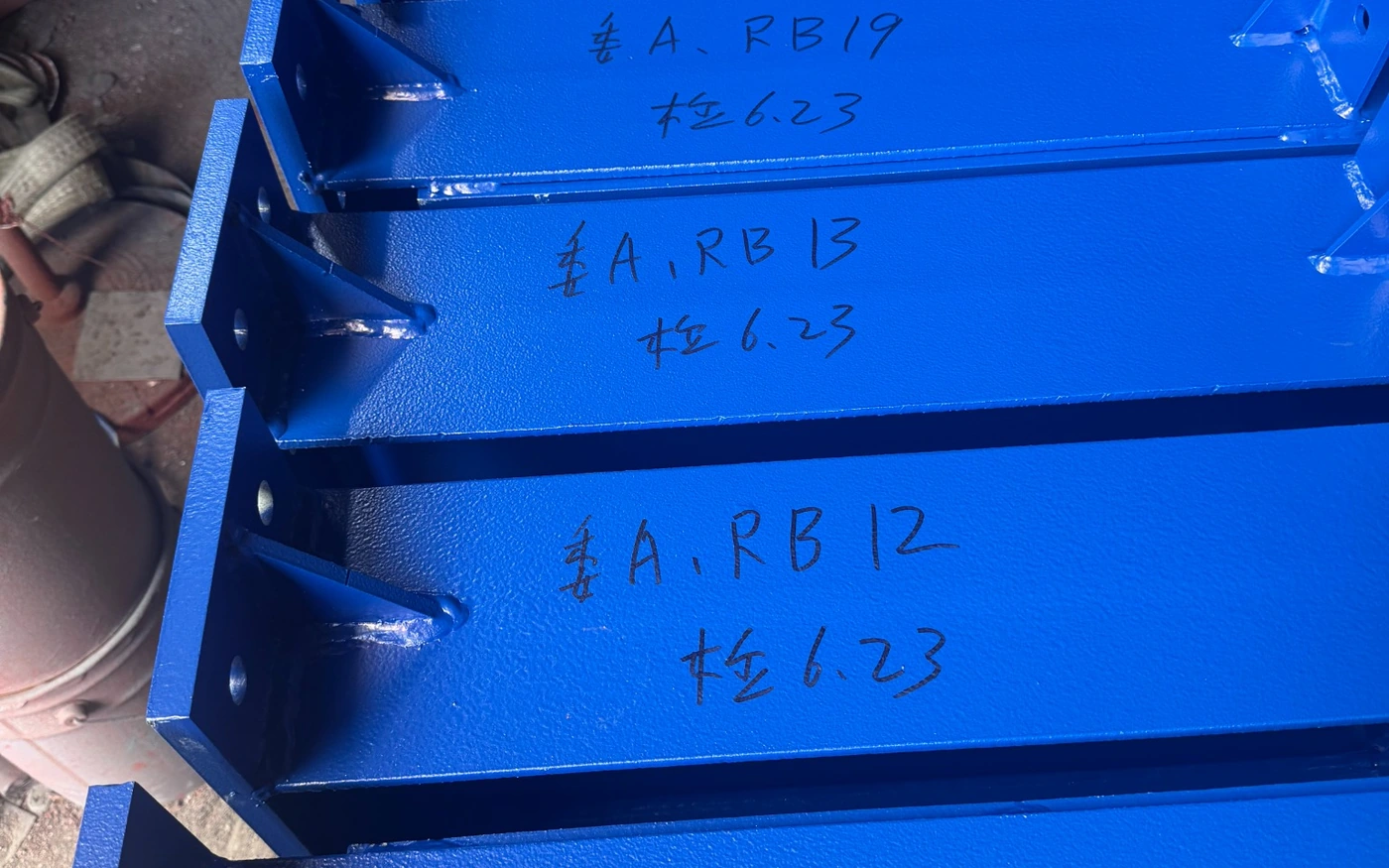
Structural drawings, member schedules, connection details, fabrication drawings, part marks, bolt lists, material lists, erection or assembly references where included, and revision control all support the fabrication and supply process.
- Current drawing revision
- Member identification
- Grade and material requirements
- Connection information
- Openings and interfaces
- Supply boundary
- Required documents
- Foundation, anchor, erection or installation information where included
Buyers should confirm the current drawing revision, member identification, grade and material requirements, connection information, openings and interfaces, supply boundary, required documents, and whether foundation, anchor, erection or installation information is included. Not every project includes the same documents. Document scope should be confirmed against the agreed supply agreement and project requirements.
How Structural Steel Is Prepared for Building Supply
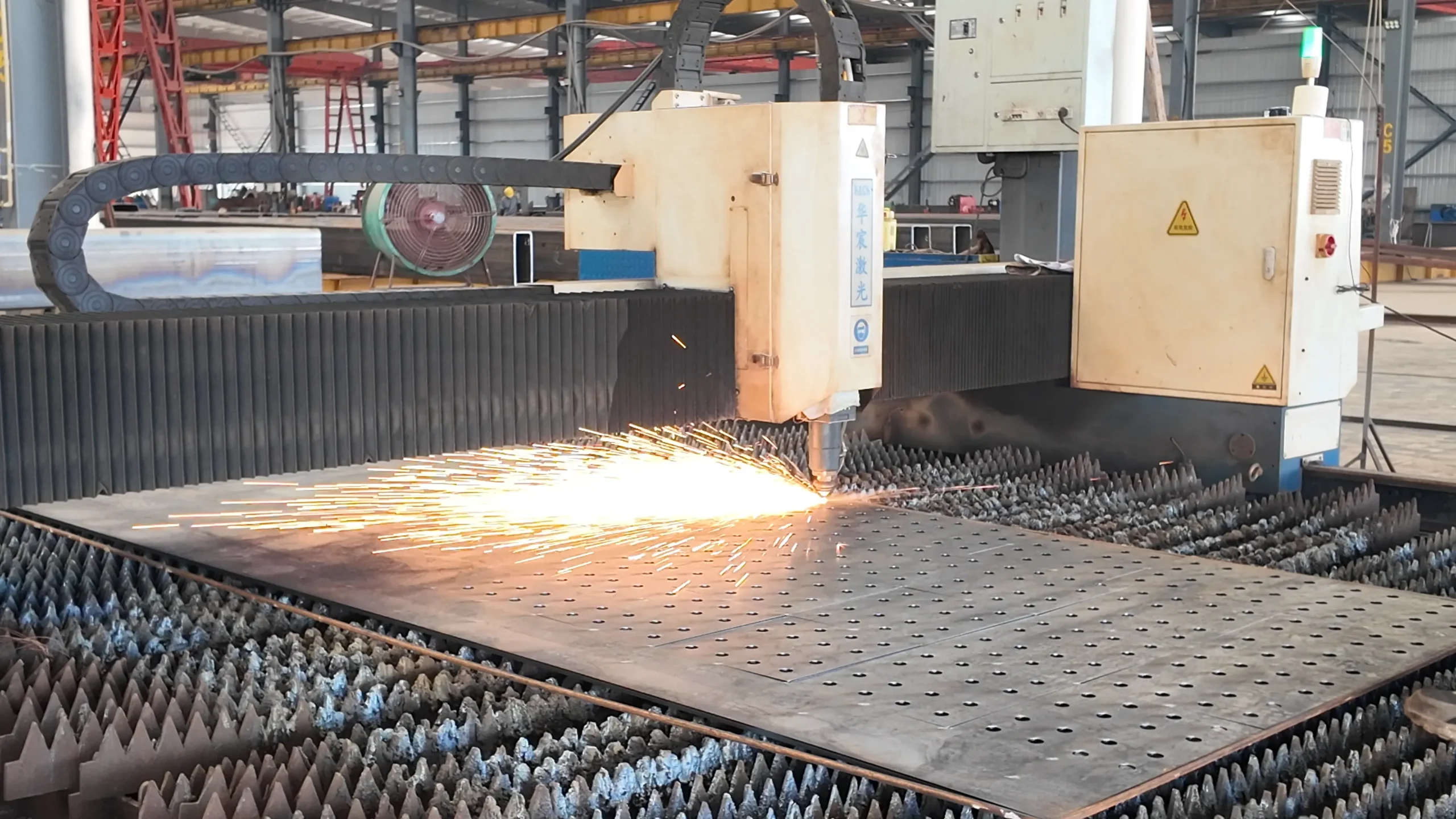
Possible stages may include material identification, cutting, drilling, assembly, welding or bolted-connection preparation, dimensional checks, component marking, surface-protection coordination, packing, and loading and export preparation. The actual process depends on member type, drawings, specifications and agreed supply scope.
Fabrication does not automatically include site erection. Inspection and documentation scope should be confirmed for each project. No universal fabrication process applies to every steel building.
Material identification and preparation
Cutting, drilling, assembly and connection preparation
Dimensional checks, marking and protection coordination
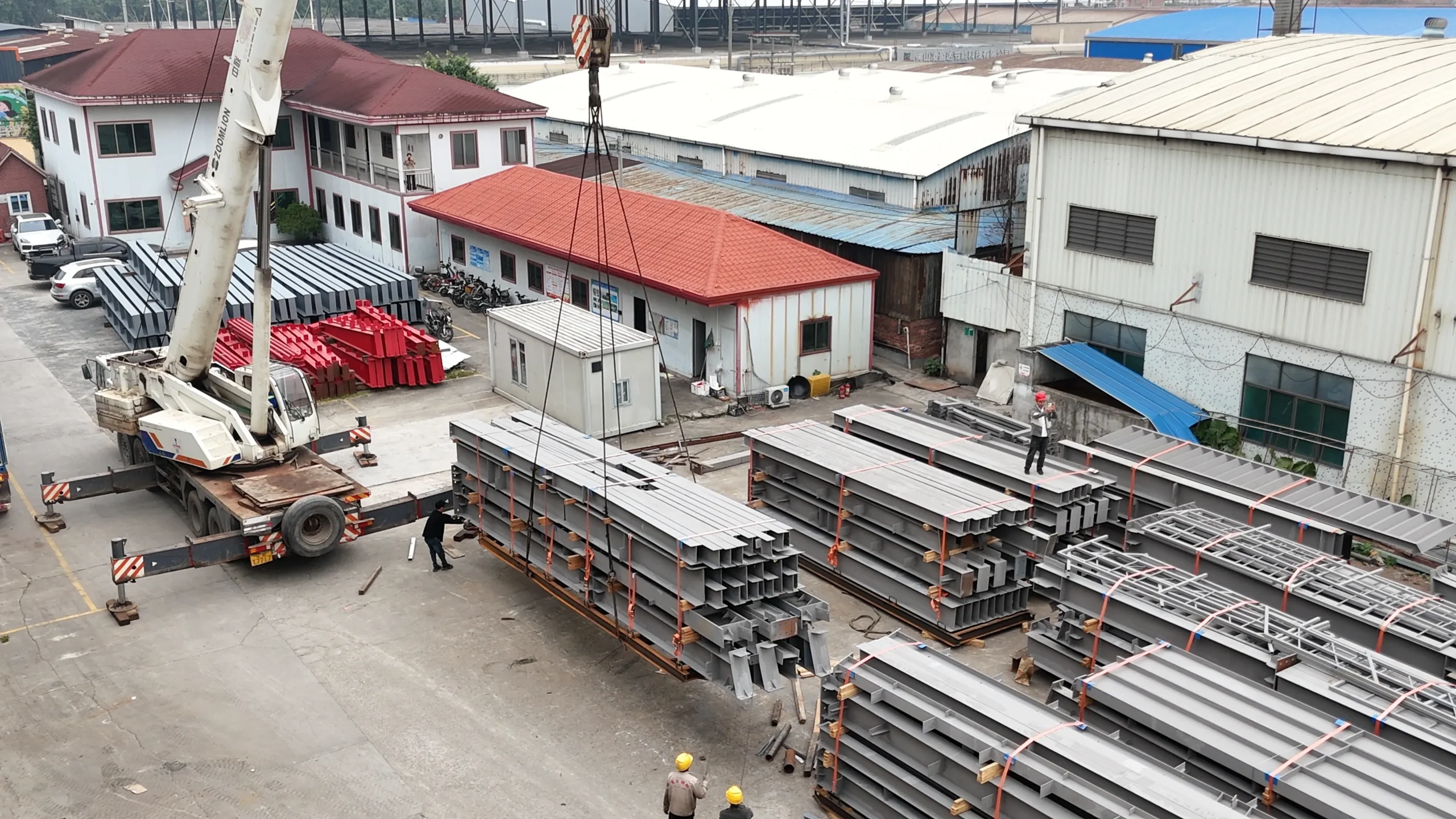
Packing, loading and export preparation
Surface Protection, Fire Protection and Local Design Boundaries
Surface Protection
Structural steel is not automatically corrosion-resistant. Paint, galvanizing or another protection approach may be specified according to exposure conditions, project requirements and agreed scope. Detailed structural-steel paint guidance belongs to the dedicated paint guide, and detailed surface preparation belongs to the dedicated surface-preparation guide.
Fire Protection
Structural steel strength does not make bare steel automatically fire-resistant for every project requirement. Fire protection, where required, is a separate project-specific system.
Local Design and Approval
Local engineering, structural design approval, permits, foundations, anchors, erection and installation should be confirmed by the relevant local engineers, contractors and authorities unless included in an agreed scope. Blanket compliance is not claimed.
Common Building Applications
Structural steel is commonly used in warehouses, workshops, industrial buildings, factories, agricultural buildings, equipment-support structures, mezzanines, canopies, and selected commercial or institutional structures. Member arrangement, material grade, connection design and supply scope vary by application and project requirements. These examples do not mean that one structural solution fits every building.
Information Buyers Should Prepare
- Project location
- Building use
- Approximate length, width and height
- Drawings if available
- Local design requirements if known
- Wind, snow, seismic or other project inputs if specified
- Clear-span or column-layout preference
- Crane, mezzanine or equipment requirements if any
- Roof and wall material requirements
- Steel grade or material specification if provided
- Required certificates or inspection records
- Surface-protection requirements
- Delivery destination
- Required supply scope
Early project information can be reviewed first, even if the final drawings or specifications are not complete.
How Bingfa Can Support Structural Steel Supply
Depending on the confirmed scope, Bingfa can coordinate drawing and supply-scope review, steel fabrication, component marking, QC checks, surface-protection coordination, packing and export preparation. Final structural design depends on project requirements. Document scope should be confirmed. Local approval, foundation, erection and installation responsibilities should be confirmed separately.
Review Your Structural Steel Supply Scope
Send your project location, building use, dimensions, drawings and required structural steel supply scope so Bingfa can review the available project information.
Frequently Asked Questions
What is structural steel?
Structural steel refers to steel products and fabricated members used in load-bearing structural systems according to project drawings, material specifications and engineering requirements. It may include rolled sections, plates, tubes, cold-formed members, welded members and connection components.
Is structural steel the same as a complete steel building?
No. Structural steel refers to the material and fabricated members. A complete steel building also involves connections, secondary framing, enclosure systems, foundations, design requirements and installation scope.
Are I-beams and H-beams the same?
The terms may be used inconsistently in the market, but they should not automatically be treated as identical. Section geometry, flange and web proportions, product standard and project specification should be checked. Detailed section-profile selection requires engineering review.
Does a material certificate confirm that a steel structure is approved?
No. A material certificate may document material identification and test information, but it does not replace structural calculations, drawings, engineering review, connection design or local approval.
What information should I send for a structural steel quotation?
Send the project location, building use, approximate dimensions, drawings if available, local design requirements if known, project loads if specified, layout preferences, special requirements, material specification if provided, required documents, surface-protection requirements, delivery destination and required supply scope. Early information is enough to start the review.
Discuss Your Structural Steel Requirements
Send your project location, building use, dimensions, drawings and required structural steel supply scope so Bingfa can review the available project information.