Q235B Steel Grade: Standards, Properties and Procurement Checks
For a steel-building order, the material grade needs to connect to the specification, the supplied product and its inspection documents. This guide explains what Q235B identifies, how to read its requirements and what to confirm before accepting material or considering a substitute.
Quick Answer
Q235B is a Chinese carbon structural steel grade covered by GB/T 700. Its designation identifies a nominal yield-strength class and a quality grade, but the applicable requirements depend on thickness, product form and testing conditions. ASTM A36 and EN S235 grades are commonly compared with it, not automatically interchangeable. Before ordering, confirm the standard edition, product form, dimensions, quantity, delivery condition, inspection requirements and material traceability. Any proposed substitution needs review against the project specification and written approval.
What Is Q235B Steel?
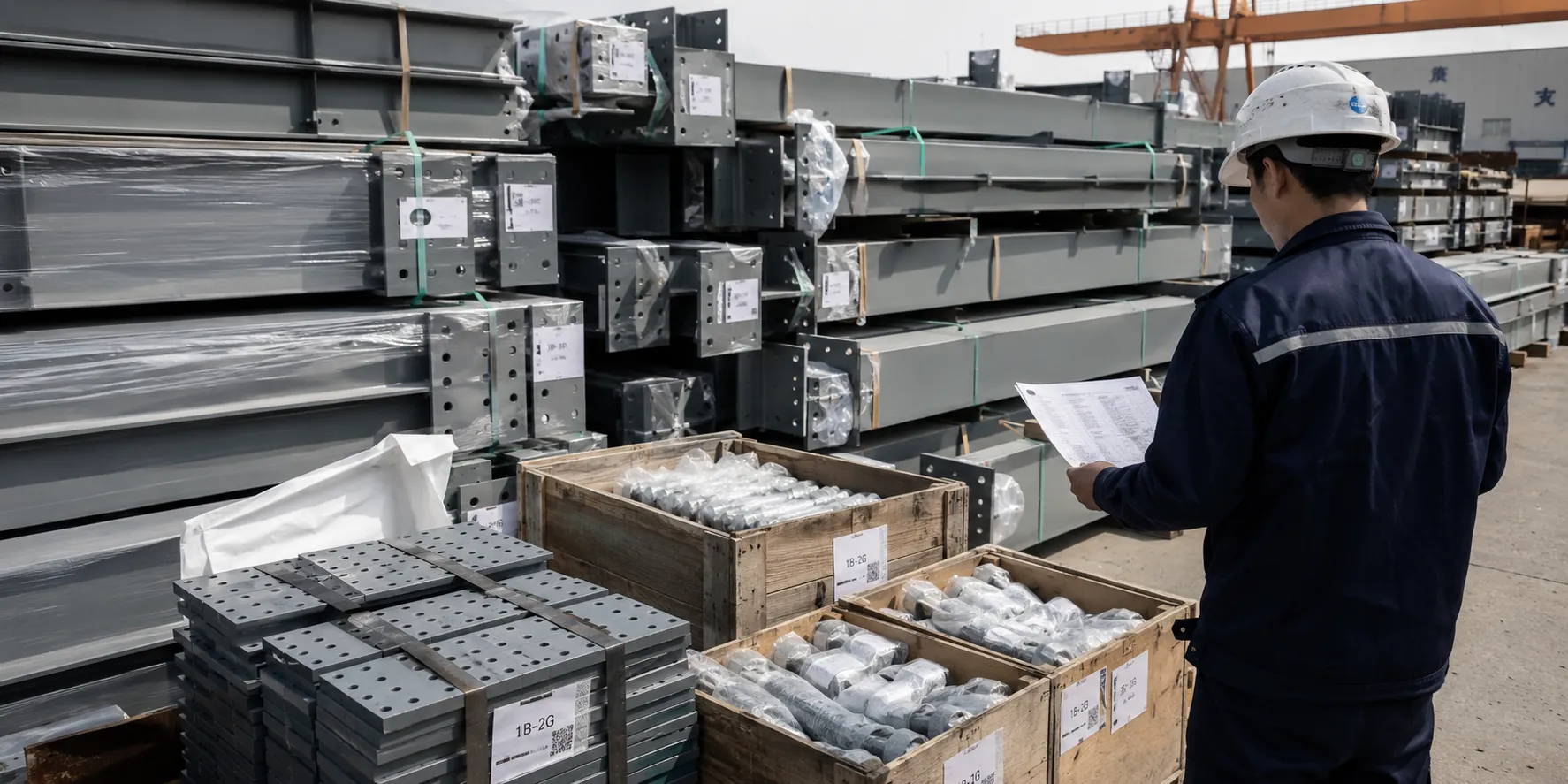
Q235B belongs to the carbon structural steel grades addressed by the Chinese material standard GB/T 700. The grade name is a starting point for specifying material, not a complete description of the product being purchased. An order also needs the applicable product standard, size, delivery and inspection requirements.
How the Q235B Designation Is Structured
The Q identifies yield strength, using the initial of the Chinese word for yield. The number refers to the grade's nominal yield-strength class: the minimum upper yield strength is 235 MPa in the thickness or diameter band up to 16 mm. Other thickness bands have different requirements, as the mechanical table below shows.
B identifies the quality grade. The designation system also includes deoxidation symbols, which may be omitted where the standard permits. Do not treat the shortened grade name as a substitute for the material certificate.
What the B Quality Grade Does and Does Not Mean
B relates to the material's quality requirements, including the applicable impact provisions. It does not identify boron, a higher yield-strength class or a certificate type. Whether a particular order needs an impact result must be read with the standard's applicability, inspection provisions and any additional project requirements. Standard reference: GB/T 700-2006, designation and technical requirements.
Which Standard Defines Q235B?
Material Standard and Product Form Must Be Read Together
The current governing material standard checked for this draft is GB/T 700-2006, Carbon Structural Steels. Its scope includes hot-rolled plate, strip, sections and bars. These forms also have their own dimensional, surface and product requirements.
For example, GB/T 3274-2017 addresses relevant hot-rolled plate and strip products. A tube, hollow section or cold-formed product requires its applicable product standard to be confirmed; a familiar material designation does not make every finished product subject to the same table.
Confirm the Edition and Delivery Condition
Record the standard edition in the purchase requirements. A revision plan is not a replacement standard until its status and applicability have been established.
GB/T 700 lists general delivery in hot-rolled, controlled-rolled or normalized condition. Confirm the ordered condition rather than assuming every Q235B product is supplied in the same state. Coating, galvanizing or surface appearance cannot establish the underlying grade or replace its material documents.
Q235B Mechanical Properties Depend on Thickness
Yield Strength and the Applicable Thickness Band
Start with the product form and nominal thickness or diameter. The table shows the standard's thickness bands, minimum upper yield strength and base elongation requirements. These are material requirements, not structural design strengths, allowable stresses or finished-member capacities. The permitted deoxidation condition and product-specific sampling rules still apply.
Table 1. Q235B mechanical requirements by thickness or diameter
| Thickness or diameter, mm | Minimum upper yield strength ReH, MPa | Base minimum elongation A, % |
|---|---|---|
| Up to 16 | 235 | 26 |
| Over 16 to 40 | 225 | 26 |
| Over 40 to 60 | 215 | 25 |
| Over 60 to 100 | 215 | 24 |
| Over 100 to 150 | 195 | 22 |
| Over 150 to 200 | 185 | 21 |
The base tensile-strength range is 370-500 MPa. The following conditions must accompany the table; do not use its values without them.
Source: GB/T 700-2006, Table 2 and clause 5.4, cross-checked against PolyU CNERC Steel's technical guide, Appendix C.
Tensile Strength and Elongation Need Their Footnotes
For steel thicker than 100 mm, the tensile lower limit may be reduced by 20 MPa. The tensile upper limit is not a delivery condition for wide strip, including plate cut from it.
Sampling direction also matters. The standard specifies longitudinal tensile samples for sections and bars, and transverse samples for plate and strip. The elongation requirement for those transverse samples may be 2 percentage points below the base table. Width-limited narrow strip has a sampling provision of its own. Match the certificate to the applicable conditions rather than comparing every product against one elongation figure.
Impact Requirements and Any Agreed Inspection Waiver
The Q235B longitudinal Charpy V-notch impact entry specifies a minimum of 27 J at +20 degrees C for the full-size specimen reference, subject to the applicable group-result rules. For thickness below 25 mm, inspection may be omitted where the supplier guarantees conformity and the purchaser agrees. That is a conditional inspection waiver, not removal of the material requirement.
Check specimen size, test applicability and how the reported result is evaluated; subsize specimens have separate requirements. A missing impact result needs an explanation against the order and standard; it does not automatically establish another quality grade or justify ignoring an additional project requirement.
Q235B Chemical Composition
Heat Analysis, Product Analysis and Actual Mill Results
The selected main-element limits below are maximum mass fractions for heat analysis, not typical results for an individual batch:
- Carbon, C: 0.20% maximum.
- Silicon, Si: 0.35% maximum.
- Manganese, Mn: 1.40% maximum.
- Phosphorus, P: 0.045% maximum.
- Sulfur, S: 0.045% maximum.
With purchaser consent, the carbon limit may be 0.22%. This is not the default limit. Product-analysis deviations are addressed separately; boiling-steel product-analysis deviations are not guaranteed by this standard. The selected elements above are not the complete residual-element specification. Source: PolyU guide, Table C.1 and GB/T 700-2006, clause 5.1.
Keep the standard limit, any agreed exception and the actual heat result in separate fields when reviewing a certificate.
Do Not Infer Weldability from the Grade Name Alone
Material acceptance and welding approval are different questions. Confirm actual chemistry, product condition and the applicable project welding requirements. Do not infer a carbon-equivalent limit, preheat setting or approved welding procedure from the grade name alone. Those decisions belong to the relevant specification and qualified project procedures.
Where Q235B May Be Specified in Steel Structures
Follow the Approved Material Schedule
For a steel building, Q235B may be specified where the approved design and material schedule identify it for the relevant members or components. The purchase schedule should preserve that assignment, including product form, dimensions and inspection requirements.
The grade name alone does not establish suitability for every load, connection, span or service condition. If the question is which strength grade to select for a project, use the Q235B vs Q355B comparison; this guide addresses the requirements attached to Q235B itself.
Keep Grade Identity Through Fabrication and Supply
Agree how material identity will remain traceable through cutting, fabrication, packing and delivery. Raw-material heat identification and fabricated-member marks serve different purposes, so the records should connect them where project traceability requires it.
Confirm the marking and document handover arrangements before fabrication. If material or records do not match the approved schedule, escalate the discrepancy for documented review rather than relabeling material or assuming a substitute is acceptable.
Q235B and Commonly Compared International Grades
Q235B and ASTM A36
ASTM A36 is commonly compared with Q235B in material inquiries. Its governing specification covers carbon structural steel shapes, plates and bars, but its own requirements control acceptance. A comparison needs the ordered product form, thickness, mechanical properties, chemistry, testing and documentation, not just a similar application description. ASTM A36/A36M official scope.
Q235B and the EN S235 Family
For an EN request, establish the complete grade, including the quality suffix, rather than recording only "S235." The applicable standard, product form, delivery and testing requirements still need checking. The label alone does not establish equivalent toughness or acceptance conditions. BS EN 10025-2 official standard information.
Table 2. Q235B and commonly compared grades
This is not a direct substitution table.
| Grade and governing standard | Comparison context | What still needs verification |
|---|---|---|
| Q235B, GB/T 700 | Chinese carbon structural steel requirements | Product standard, thickness band, delivery condition, testing and order requirements |
| ASTM A36, A36/A36M | A commonly requested comparison for structural shapes, plates and bars | Requirements for the actual product, documented differences and project acceptance |
| S235JR, EN 10025-2 | An example of a complete S235 grade designation | Quality suffix, applicable properties and testing, product condition and approval |
This table identifies what to compare; it does not approve a replacement.
Why Comparable Does Not Mean Interchangeable
A material cross-reference can begin a review, but the project specification determines what can be accepted. Compare product form and thickness, yield and tensile strength, elongation, chemistry, impact or toughness, delivery condition, testing and the mill test certificate. Record differences rather than assuming a matched grade name resolves them.
A practical approval sequence is:
- Identify the specified material and acceptance requirements.
- Obtain the proposed material's certificate and product information.
- Compare the requirements and document any differences.
- Obtain written disposition from the responsible engineer and client, as required by the project.
- Supply the accepted material with the agreed identification and records.
A genuine certificate supports the material evidence. It does not, by itself, authorize substitution. Comparing quotations with alternative materials is easier when the supplier lists each proposed substitution and its approval status separately.
What Buyers Should Confirm Before Ordering Q235B
Send the material requirements with the RFQ so the supplier can identify the requested product and documentation. For a building package, connect this information to the drawing and material schedules used in the steel building procurement process.
Table 3. Buyer verification checklist
| Information to confirm | Supporting document or input | Acceptance question |
|---|---|---|
| Grade and standard edition | Project specification and purchase requirements | Is the complete grade and applicable edition stated? |
| Product form, dimensions, thickness and quantity | Material schedule, drawings and RFQ | Is the requested material described clearly enough to supply and inspect? |
| Delivery condition | Product specification and supplier confirmation | Does the proposed condition match the order? |
| Testing and quality requirements | Inspection requirements and applicable standard | Are impact provisions, additional tests and any agreed waivers clear? |
| Certificate type and content | Agreed document schedule | Which documents must be provided, and against which requirements? |
| Heat and member traceability | Marking requirements and traceability records | Can the supplied material be connected to its evidence? |
| Project acceptance and deviations | Approval requirements and written dispositions | Who must accept a proposed difference before supply? |
This checklist organizes the purchasing discussion; it is not a substitute for the contract or standard. Keep unresolved requirements visible in the quotation clarifications.
Discuss Your Material Documentation RequirementsShare the grade, product schedule, project specification and inspection requirements so the material and document scope can be discussed before ordering.
How to Review a Q235B Mill Test Certificate
Match the Certificate to the Heat and Supplied Material
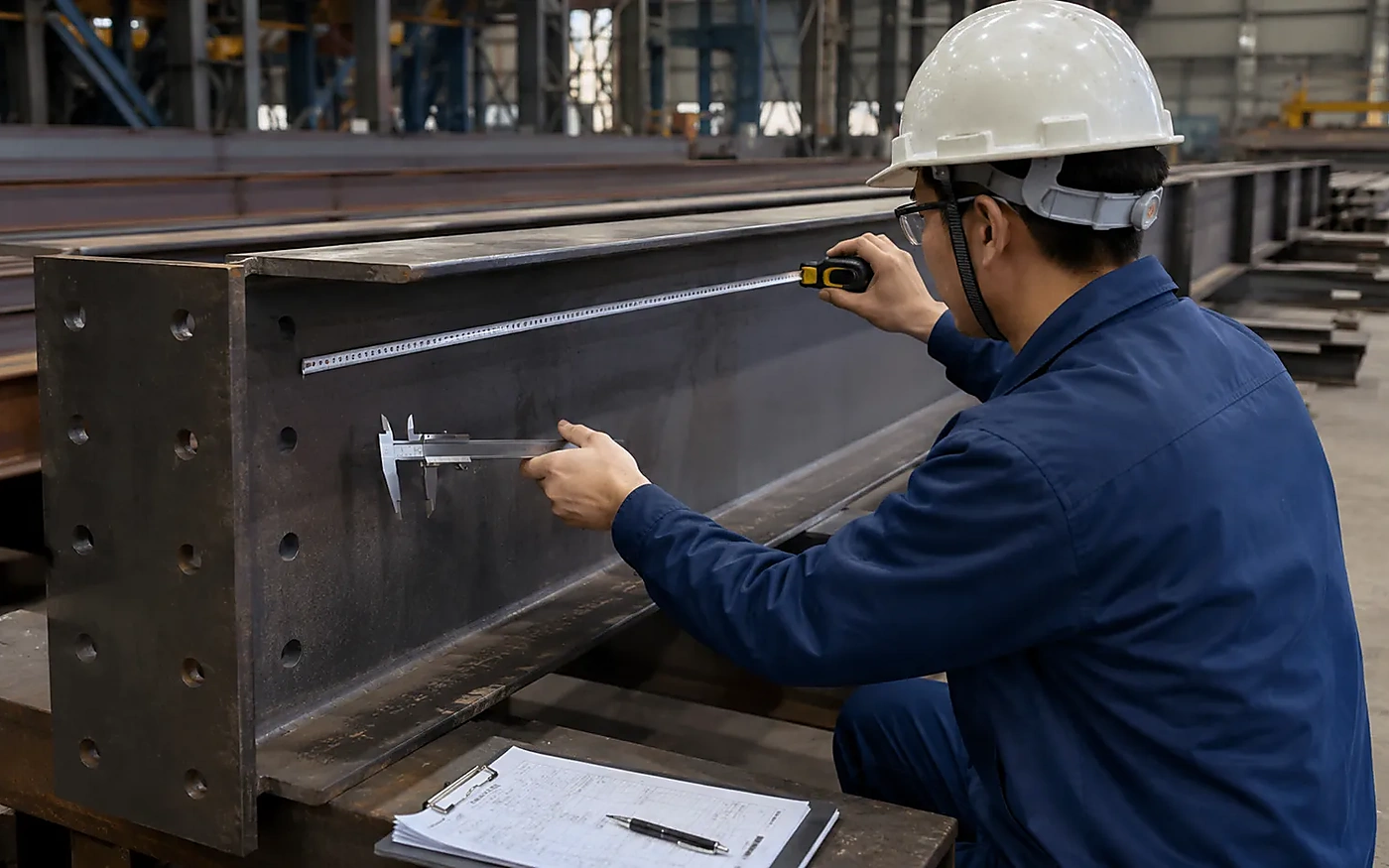
A mill test certificate, or MTC, should be reviewed alongside the material identification, not as an unrelated attachment. Check the mill identity, certificate reference, grade, standard, product description and heat or batch reference against what is being supplied.
For fabricated material, review the connection between the original certificate, material records and member marks. Discuss the required material and quality documents before shipment, including how the records will be handed over to the buyer.
Read Results Against the Applicable Requirements
Compare actual results with the requirements for the product form, thickness and test conditions. Check chemistry, yield, tensile strength, elongation and impact information where applicable. A summary headed only "Q235B" is not enough to establish all those conditions.
For certificate arrangements, confirm the applicable plate/strip or section requirements and any agreed inspection-document type. Relevant references include GB/T 247-2025 and GB/T 2101-2017. The B quality grade does not automatically establish the inspection-document type.
If a result is missing, an inspection waiver is cited or a requirement differs, request the applicable basis and written disposition. Do not change a certificate, infer a different grade or accept a deviation solely from a general cross-reference.
Q235B Steel Grade FAQ
What is Q235B steel?
Q235B is a Chinese carbon structural steel grade covered by GB/T 700. Its name identifies a nominal yield-strength class and a quality grade, but does not describe every requirement for an order. Buyers should also confirm the product form, thickness, standard edition, delivery condition, inspection requirements and material identification before accepting the supplied product.
What standard defines Q235B steel?
The governing material standard checked for this guide is GB/T 700-2006. The supplied product also needs the appropriate product requirements; plate, strip, sections and other finished forms should not be treated as one undifferentiated purchase. Record the applicable editions in the order and verify standard status before supply. A revision plan alone is not a replacement standard.
What does B mean in Q235B?
B identifies the quality grade within the designation system. It does not mean boron, a higher strength class or a particular certificate type. Its impact provisions must be read with the applicable product and test conditions, including any permitted inspection waiver and purchaser agreement. Additional project requirements still need to be stated in the order.
What is Q235B equivalent to?
ASTM A36 and EN S235 grades are commonly compared with Q235B, but a cross-reference is not approval to substitute them. Establish the complete grade and compare product form, thickness, mechanical properties, chemistry, toughness, delivery, testing and documents. Any proposed change must satisfy the project specification and receive the required written engineer and client approval before acceptance.
Is Q235B the same as ASTM A36?
They should not be treated as automatically interchangeable. Each grade is governed by its own specification, with requirements that must be checked for the actual product and order. A supplier’s comparison chart or a similar application is not sufficient approval. Review the documented differences and obtain the project’s required acceptance before supplying one in place of the other.
Is Q235B equivalent to S235 steel?
An incomplete S235 designation is not enough to make that decision. Confirm the full grade and quality suffix, then check the applicable product, thickness, properties, impact provisions, delivery and inspection requirements. Q235B and an S235 grade may be considered in a material review, but acceptance depends on the documented requirements and project approval, not the abbreviated labels alone.
What should buyers verify before ordering Q235B?
Confirm the grade, standard edition, product form, dimensions, thickness, quantity and delivery condition. Agree inspection and impact requirements, the MTC or other required documents, and how heat identification connects to the supplied material. If an alternative is proposed, request the differences and required written approval against the project specification before accepting the material or proceeding with supply.
Review Your Q235B Material Requirements
Prepare the material specification, product schedule, inspection requirements and any proposed alternatives for review. Bingfa can discuss the requested supply and documentation scope; the responsible project engineer and client retain the required material-acceptance and substitution decisions.
Request a Project-Specific Material Review