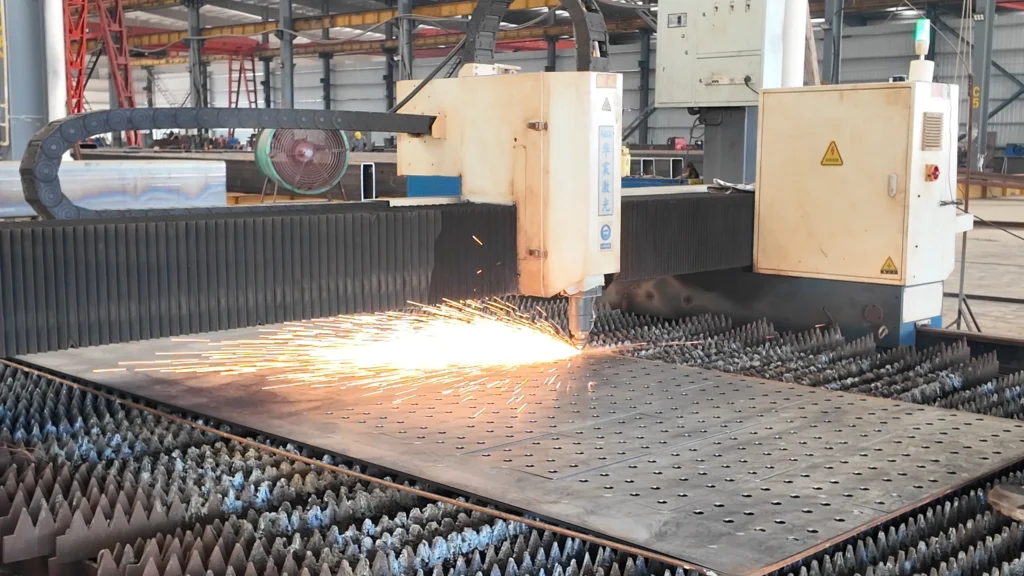
Why Two Material Scenarios Need Separate Quotes
An overseas buyer sends drawings specifying ASTM A992 or EN S355JR steel. The Chinese manufacturer may find that the originally specified material is not immediately available at the required sections, quantities or delivery window. The manufacturer may then propose a candidate alternative material for the buyer’s engineer to review.
At this point, the buyer is comparing two material scenarios: the original specified material and the proposed alternative. These scenarios may have different technical bases, supporting documents, lead times and prices. If they are combined into one total, the buyer cannot tell which price belongs to which material, which items are not quoted, and which material has been approved for production.
The quotation should therefore separate the two scenarios. Each should carry its own scope, its own total or quoted subtotal, and its own approval condition. A blended price that hides the difference should not be accepted.
Four Statuses Buyers Must Track
A material can be in four different states, and they should not be confused:
- Material specified in drawings — the grade or standard shown on the approved drawing. This is a design requirement, not a commercial or production approval.
- Commercial quotation status — whether the material is quoted, not quoted, or pending confirmation, and whether it is included in a scenario total.
- Technical approval status — whether the buyer’s engineer and client have accepted the material for the project. A candidate alternative is not approved merely because it is quoted.
- Production release status — whether the approved material and the approved drawing revision have been released for fabrication. Approval for a material does not automatically release every item for production.
The original specified material on the drawing does not mean the item has been quoted, approved for production, or released. Each status should be recorded separately.
How to Structure the Two Scenarios
The quotation should present Scenario A (original specified materials) and Scenario B (proposed alternative materials) as separate tracks. Each track should state which items are included, which are not quoted, and whether the scenario total is complete or conditional.
The alternative material should be described as a candidate for review. Real grades may be named, but the quotation should make clear that suitability depends on the member form, design requirements, applicable standard, technical data and project approval. No grade should be presented as an automatic equivalent.
Hypothetical Example: Scenario Comparison Table
This is a hypothetical example for illustrating quotation structure. This example does not represent a Bingfa project, real prices or material approval. Listing Q355B alongside ASTM A992 and EN S355JR does not recommend a substitution or establish equivalence.
| Item / Drawing Ref | Scenario A: Original Specified Material | A Quotation Status | Included in A Quoted Subtotal? | Scenario B: Proposed Alternative (Candidate) | B Quotation Status | Included in B Total? | Technical Deviation / Supporting Documents | Technical Approval Status | Production Release Status |
|---|---|---|---|---|---|---|---|---|---|
| Column C1 | ASTM A992 per drawing | Quoted | Yes | Candidate: Q355B (GB/T 1591) for review | Quoted | Yes | For quotation review: property comparison and standard references to be provided | A: specified in drawing, no separate technical decision recorded. B: proposed, awaiting technical approval. | Not released |
| Beam B2 | EN S355JR per drawing | Pending confirmation | No | Candidate: Q355B (GB/T 1591) for review | Quoted | Yes | Standard reference and mechanical properties to be reviewed | A: specified in drawing, no separate technical decision recorded. B: proposed, awaiting technical approval. | Not released |
| Bracing and secondary members | As drawing | Quoted | Yes | No substitution — retain original specification | Included as specified | Yes | No deviation | As specified in both scenarios. No change proposed or separate technical decision recorded. | Not released |
| Connection plates and cleats | As drawing | Quoted | Yes | No substitution — retain original specification | Included as specified | Yes | No deviation | As specified in both scenarios. No change proposed or separate technical decision recorded. | Not released |
Scenario Summary
| Scenario | Total Status | Items Not Quoted | Approval Condition | Production Release Condition |
|---|---|---|---|---|
| Scenario A: Original specified materials | Quoted subtotal for three item groups only. The full Scenario A total is incomplete. | Beam B2 is pending confirmation and excluded from the quoted subtotal. | Per drawing, subject to item-level approval | Not released. Record the actual release of each item against its approved material and drawing revision under the project’s release procedure. |
| Scenario B: Proposed alternatives | Complete for all four listed item groups, conditional on technical review and approval of the two proposed alternatives. | None. Column C1 and Beam B2 use proposed alternatives. The bracing and secondary members retain their original specification, as do the connection plates and cleats. | All alternative items require engineer and client approval | Not released. Record the actual release of each item against its approved material and drawing revision under the project’s release procedure. |
The Scenario A quoted subtotal and the Scenario B total must not be added together. Scenario A and Scenario B are alternative commercial bases for the same drawing scope. Mixing them would produce a total that does not correspond to any approved material scenario. If the original-specification quotation is complete and satisfies the project approval conditions, it can proceed without waiting for the alternative review, provided the project agreement allows it. The alternative track does not automatically stop an otherwise approved original-specification order.
Commercial Quotation Boundaries
The quotation does not need to disclose individual material prices or component-by-component totals. The buyer needs to know:
- Which items are included in each scenario total.
- Which items are not quoted, and why.
- Whether each scenario total is complete or conditional.
- Whether the alternative material has been approved for the project.
The supplier may provide a scenario total and a scope list without exposing unit prices. The commercial boundary should be stated clearly: what is included, what is excluded, and what remains pending.
Supporting Documents and Material Certificates
At quotation stage, the supplier may provide standard references, material data sheets, sample certificates or test report summaries that support the proposed alternative. These are for technical review, not a guarantee that the exact production heat will match the sample.
After the material is purchased for the order, the supplier can provide the batch or heat-specific mill certificate according to the agreed supply scope. The buyer should not assume that every quotation automatically includes a project-specific mill certificate for every item. The document requirement should be confirmed during the quotation and order process.
Approval and Production Release
When the buyer’s engineer and client have reviewed the alternative proposal, the approval should be documented in writing. The approval should identify the approved material, the items covered, the drawing revision, any conditions and the approving party.
Until the approval is documented, the alternative material should not be released for production. The original-specification items that are not approved for production should also be held. Production release should be based on the approved material and the approved drawing revision, not on a verbal instruction or an assumed equivalence.
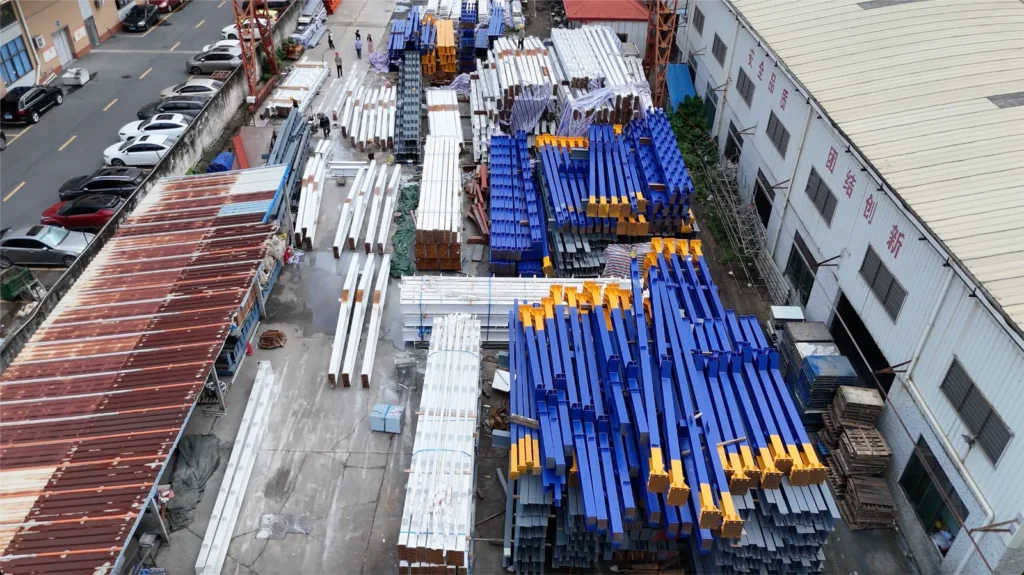
For context on Chinese standard steel grades, see Q235B steel grade and Q235B vs Q355B. These pages provide background, not a substitute for project-specific material approval. For the quotation and order sequence, see the steel building procurement process. For drawing-based fabrication scope, see structural steel fabrication from drawings.
What Buyers Should Prepare Before Sending an RFQ
- The drawings and the specific material specification, with the standard and grade clearly stated.
- The project country and the applicable design code.
- Whether the project permits alternative materials subject to engineer approval, or requires the exact specified material.
- The required documentation for material review and for the purchased batch.
- The required delivery schedule, because the availability of the specified material may affect the lead time.
When the RFQ is clear, the supplier can prepare Scenario A and Scenario B as separate tracks and the buyer can compare them on a consistent basis.
Frequently Asked Questions
Can a Chinese standard material be treated as equivalent to ASTM or EN material?
No material should be treated as automatically equivalent without technical review. At quotation stage, the proposal should identify the relevant standard, compare the properties that matter to the project and distinguish any sample documentation from a certificate for purchased material. A heat- or batch-specific certificate can be provided after purchase according to the agreed supply scope. The buyer’s engineer should confirm whether the alternative is acceptable for the specific application and design code.
Should the original and alternative quotations be combined into one total?
No. Combining them obscures which price belongs to which material and which items are not quoted. The two scenarios should be quoted separately, with their own status, scope and approval condition. Any final order total should cover only the selected scope under the approved scenario.
What should the quotation state if the original material is not available?
The quotation should state that the item is not quoted or pending confirmation, with the reason. The item should not be omitted silently or priced at zero. If an alternative is proposed, it should be quoted separately with its technical deviation and supporting documents.
When can production start on an alternative material?
The buyer’s technical authority must first approve the alternative in writing for the specific items and drawing revision. Production can start only when those items have then been released for fabrication under the project’s release procedure. Verbal approval or assumed equivalence is not sufficient for production release.
Technical References
- Bingfa Steel — Q235B steel grade (background on a Chinese standard grade; not a project approval)
- Bingfa Steel — Q235B vs Q355B (general comparison context; not an equivalence ruling)
- Bingfa Steel — Steel building procurement process (quotation and order confirmation sequence)
- Bingfa Steel — Structural steel fabrication from drawings (drawing-based fabrication scope)