
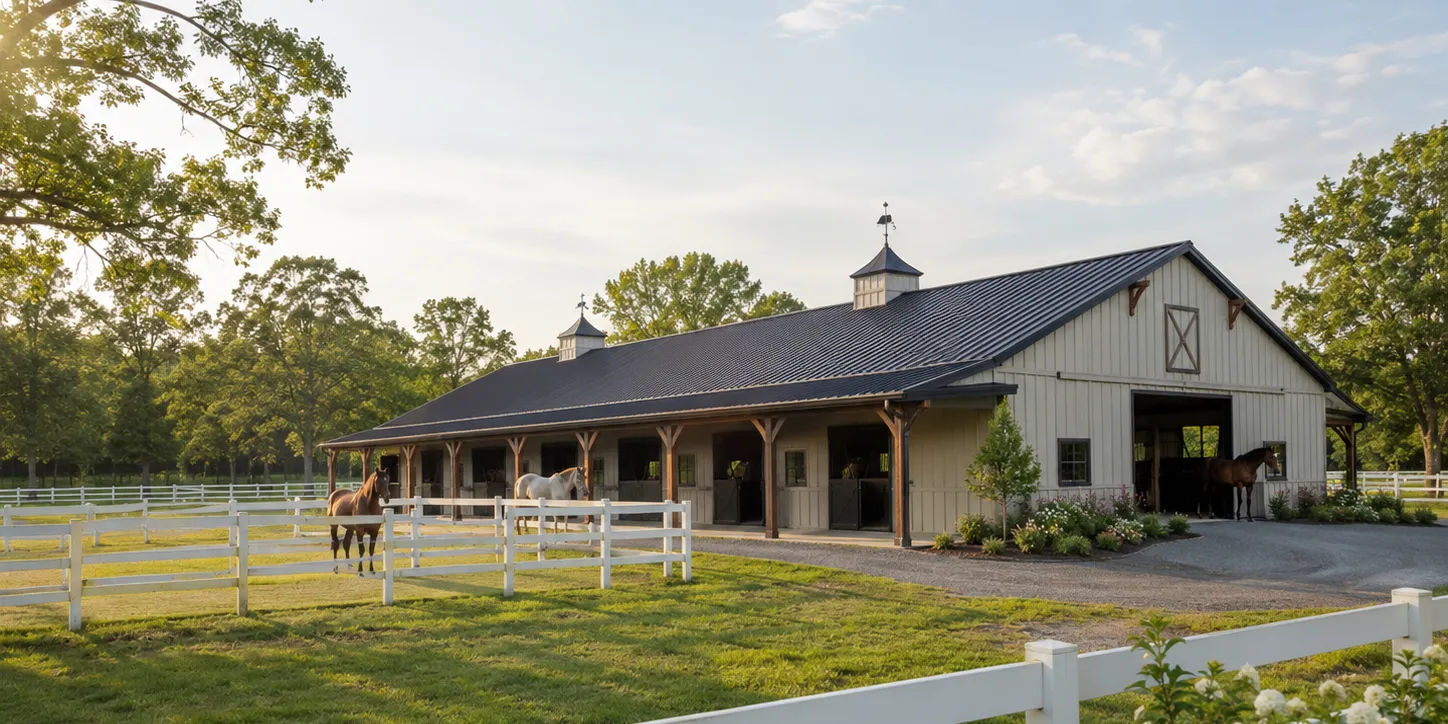
Steel Horse Barn Building for Stalls and Equestrian Facilities
Plan the steel building around the stalls, aisles, support rooms and enclosure your horse barn actually needs.
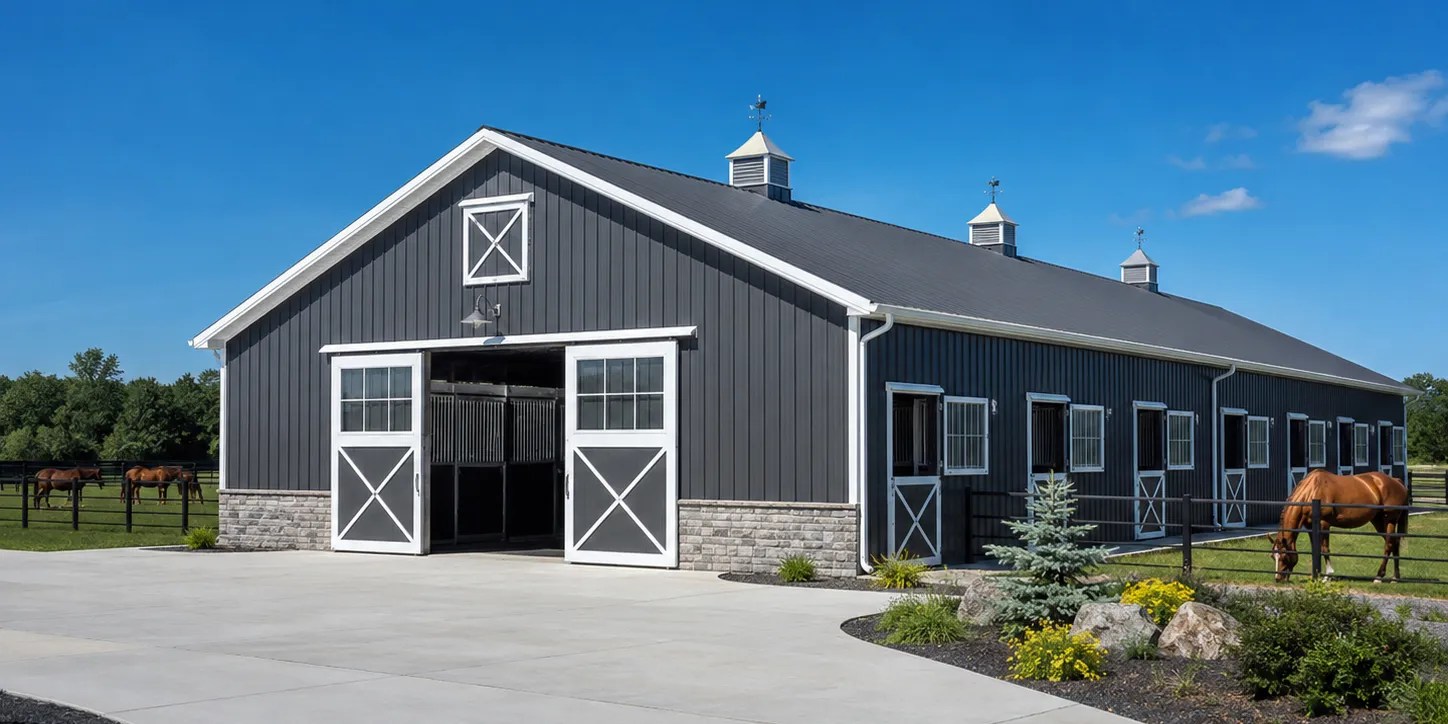
A steel horse barn can provide space for stalls, aisles, tack and feed rooms, wash areas and storage. A useful quotation starts with the stall count, preferred circulation, doors, ventilation and daylight openings, roof and wall enclosure, building dimensions and project location.
Common Horse Barn Layout Options
Horse barn layouts should follow the number of horses, daily movement and the support space needed for care and storage. These options are starting points, not prescribed dimensions.
Center Aisle
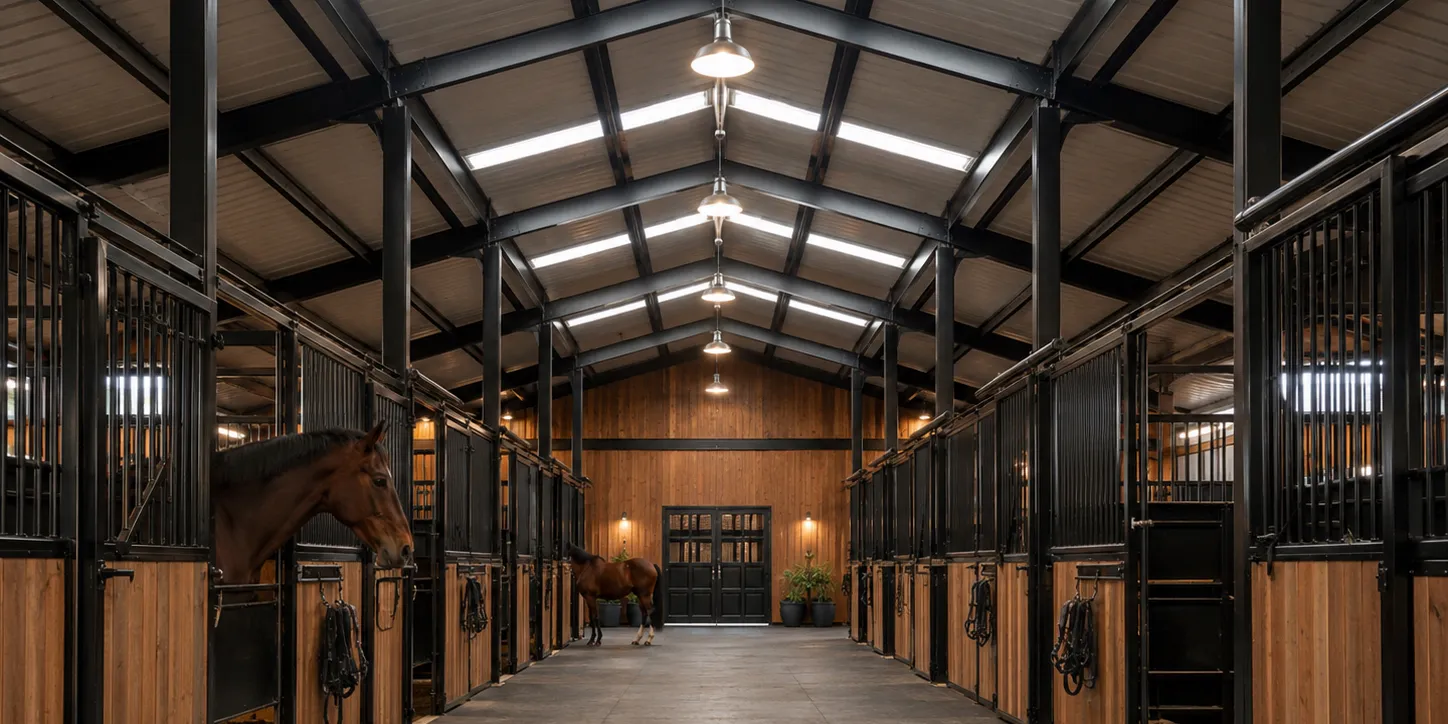
Stalls can line one or both sides of a central circulation route. Confirm horse, staff and equipment access before the building grid is fixed.
Side Aisle
A side route may suit the site shape or the way horses and equipment move through the barn.
Single or Double Row
Single-row and double-row stall arrangements affect building depth, enclosure openings and the location of support rooms.
How Stall Layout and Aisle Width Affect the Building
The number of stalls and their arrangement influence barn length, internal circulation and the structural grid. A wider aisle changes usable floor area and the relationship between stalls, doors and support spaces.
Stall and aisle dimensions should be confirmed according to the owner’s operational layout, horse-management requirements and applicable local requirements.
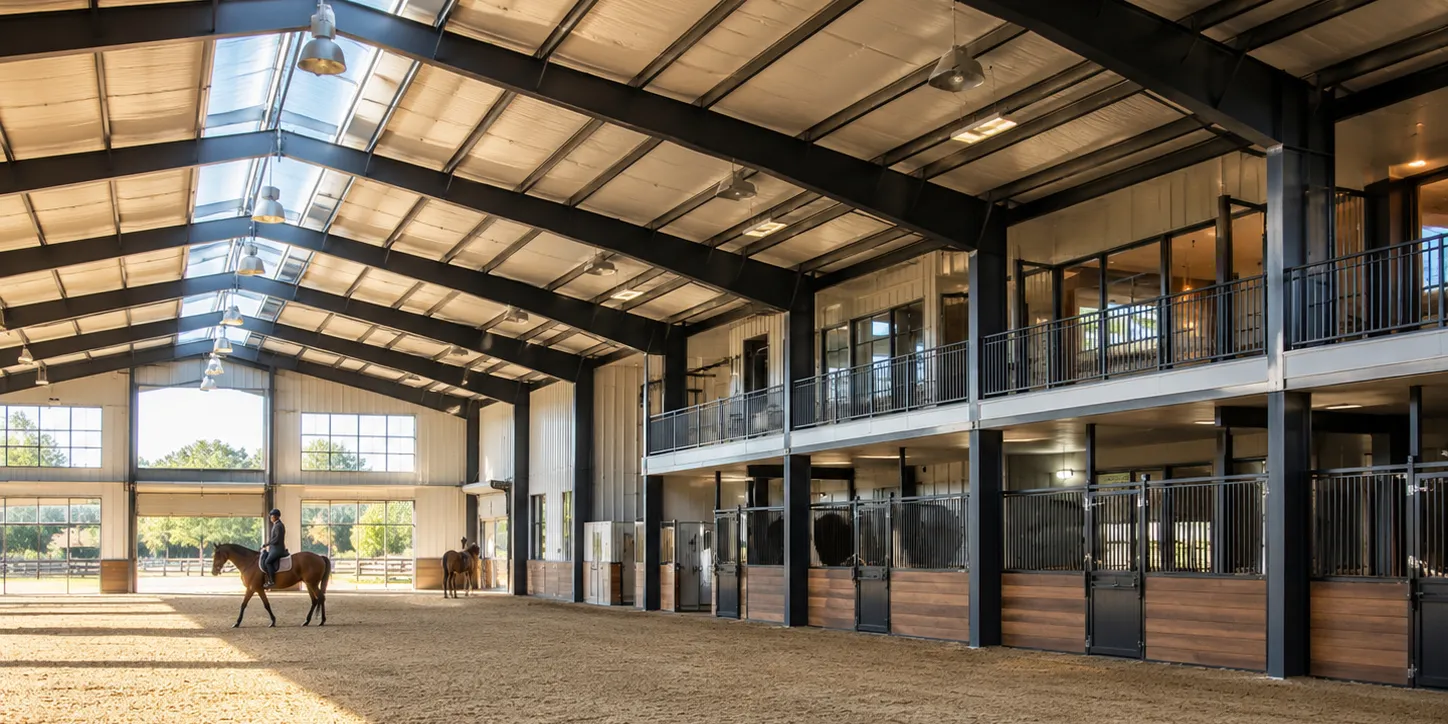
A horse barn is planned differently from a steel riding arena building. Barn layouts prioritize stalls and care spaces; riding spaces follow a separate use brief.
Tack, Feed, Wash and Storage Spaces
Tack and feed rooms, wash areas, bedding storage and equipment rooms should be located alongside the stall and aisle plan. Their positions affect doors, partitions, usable floor area and the steel building interface.
- Tack and feed: confirm the required rooms and access points.
- Wash and care: identify the space and any local drainage or service interfaces.
- Storage: separate bedding, tools and equipment where the operating layout requires it.
Bingfa’s steel supply scope does not by itself include veterinary planning, feed-system engineering or sanitary engineering.
Ventilation, Daylight, Moisture and Doors
Opening positions, doors and roof or wall interfaces should be coordinated with daily barn use. Natural ventilation, ridge or eave openings, louvers and daylight openings may be considered where they suit the building and site.
Ventilation, moisture and thermal requirements should be confirmed according to climate, barn operation and project-specific design requirements. Door type, size and location should also reflect horse and equipment access.
The steel building quotation should identify the relevant openings and interfaces; it is not a universal airflow, HVAC or animal-health design.
Roof and Wall Panel Options for Horse Barn Buildings
Horse barn projects may use color steel sheet for cladding or sandwich panels where insulation is required. Partially open or more enclosed walls depend on climate, weather exposure and the operating brief.
Enclosure Inputs
Confirm roof and wall areas, opening positions, insulation needs, weather exposure and the intended barn use before comparing panel options.
Fire-Performance Review
Where fire-performance requirements apply, review the selected roof or wall system against the project specification and documented product classification or test data.
Structural and Location Inputs
Project information helps Bingfa review the steel structure and enclosure scope without assuming fixed spans, member sizes or loading values.
- Project country, location and local design basis if known
- Building width, length and usable height
- Stall quantity, arrangement and aisle plan
- Tack, feed, wash and storage room layout
- Door and other opening requirements
- Roof and wall enclosure preferences
- Wind, snow and seismic criteria where applicable
- Future expansion needs and destination port
Future Expansion
If more stalls or support rooms may be needed later, identify the likely expansion direction, future stall count and possible changes to doors or circulation at the planning stage. Any structural provision for expansion must be confirmed for the specific project.
Keep the barn brief distinct
A barn should not be treated as a generic farm shed or an indoor riding arena. Compare the building types through the Equestrian Steel Buildings hub when the project includes multiple uses.
Bingfa Steel Horse Barn Project Support
Bingfa can review the project information for steel structure design coordination, fabrication drawings, steel fabrication, roof or wall material supply where included, quality-control records and export packing preparation. The confirmed supply schedule should identify what is included before fabrication.
Project-specific certificates and quality documents can be reviewed during procurement. The broader services page explains Bingfa’s project support.
Local Scope Stays Separate
Foundation, concrete slab, drainage, stall equipment, local erection, site supervision, permits, approvals and other civil works are not automatic parts of the steel supply package.
Responsibilities should be confirmed separately under the agreed project scope. See the installation readiness guide for overseas project coordination.
Review Your Horse Barn Layout
Send the available stall and aisle plan, support-room needs, building dimensions and project location so Bingfa can review the steel building supply scope.
What Information Is Needed for a Horse Barn Quotation?
The more clearly the layout and scope are described, the easier it is to compare quotations on the same basis. Drawings can be shared if available.
- Project country and destination port
- Approximate barn length, width and height
- Required stall count and preferred arrangement
- Stall and aisle dimensions to be confirmed by the owner
- Tack, feed, wash and equipment-room needs
- Door quantities, sizes and access requirements
- Ventilation, daylight and other opening needs
- Roof and wall enclosure or insulation preferences
- Applicable local load or code information if known
- Future expansion requirements and drawings if available
When comparing suppliers, check that stall arrangement, openings, panels, packing and the local construction boundary are described consistently, not only the price per square meter.
Steel Horse Barn FAQ
How many stalls can a steel horse barn include?
The number of stalls depends on the barn dimensions, stall size, aisle layout and support rooms. Buyers should provide the required stall quantity and preferred layout before quotation.
What aisle layout can be used in a horse barn?
Horse barns can use center aisle, side aisle, single-row or double-row layouts. The suitable option depends on stall quantity, access, cleaning and equipment movement.
Can a steel horse barn include tack and feed rooms?
Yes. Tack rooms, feed storage, wash areas and equipment rooms can be included when the internal layout is confirmed before structural design and quotation.
What roof and wall panels are suitable for horse barns?
Options include color steel sheet, EPS sandwich panel, PU sandwich panel and rock wool sandwich panel. The suitable option depends on climate, insulation, fire and enclosure requirements.
What information is needed for a horse barn quotation?
Please provide the project country, barn dimensions, stall quantity, stall size, aisle layout, support rooms, door requirements, panel type and destination port.
Discuss Your Steel Horse Barn Project
Send your project location, required building dimensions, stall and aisle layout, support-room requirements and roof or wall preferences so Bingfa can review the structural steel supply scope.