A customer requested independent quality inspection for a steel fabrication project. In response, Bingfa coordinated an external inspection organization to carry out project-specific ultrasonic testing (UT) of steel component welds.
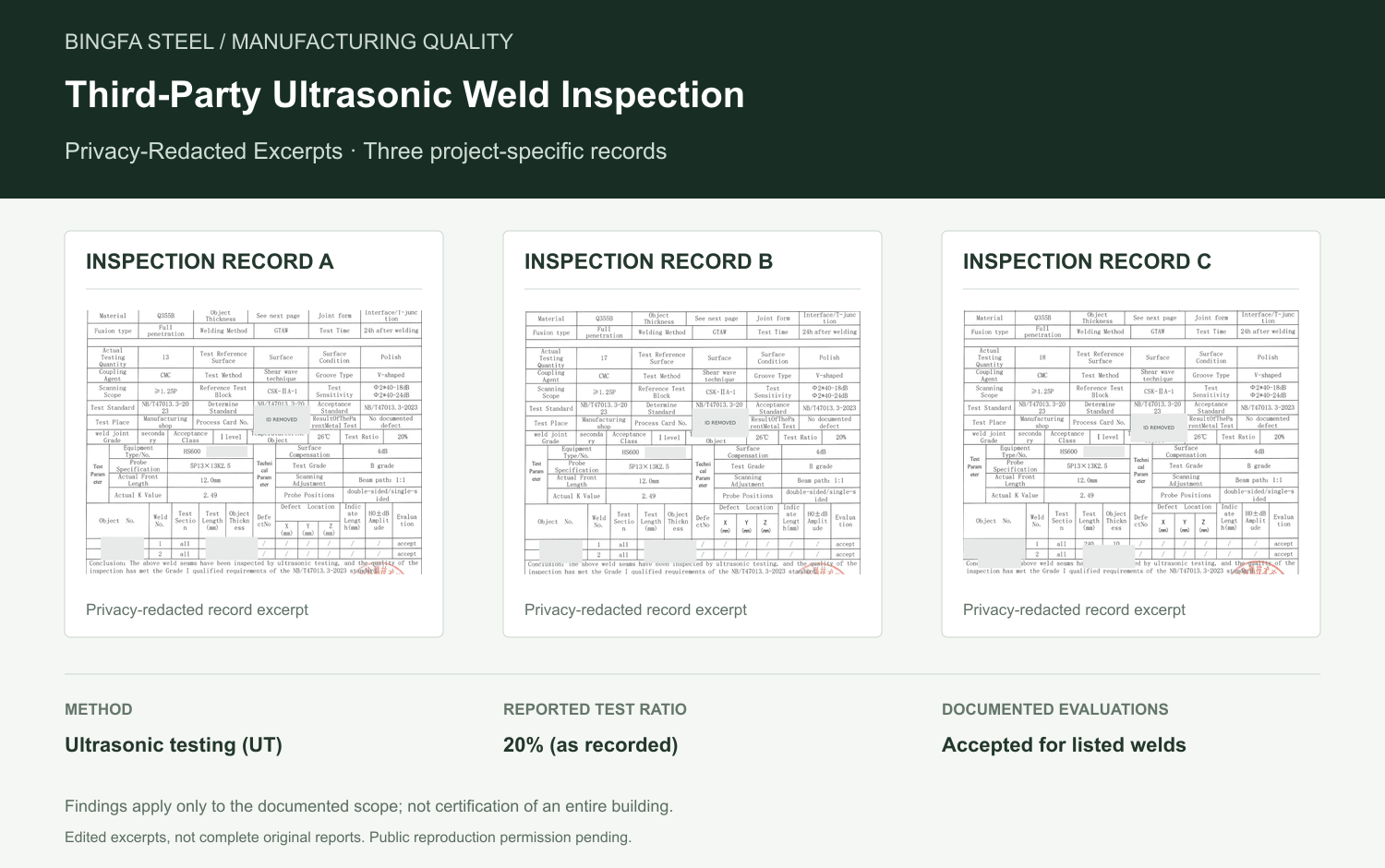
Three inspection reports recorded different scopes of inspected welds. This case describes the customer’s request, Bingfa’s coordination role and the documented findings, while keeping the inspection results separate from broader claims about the factory or the complete project.
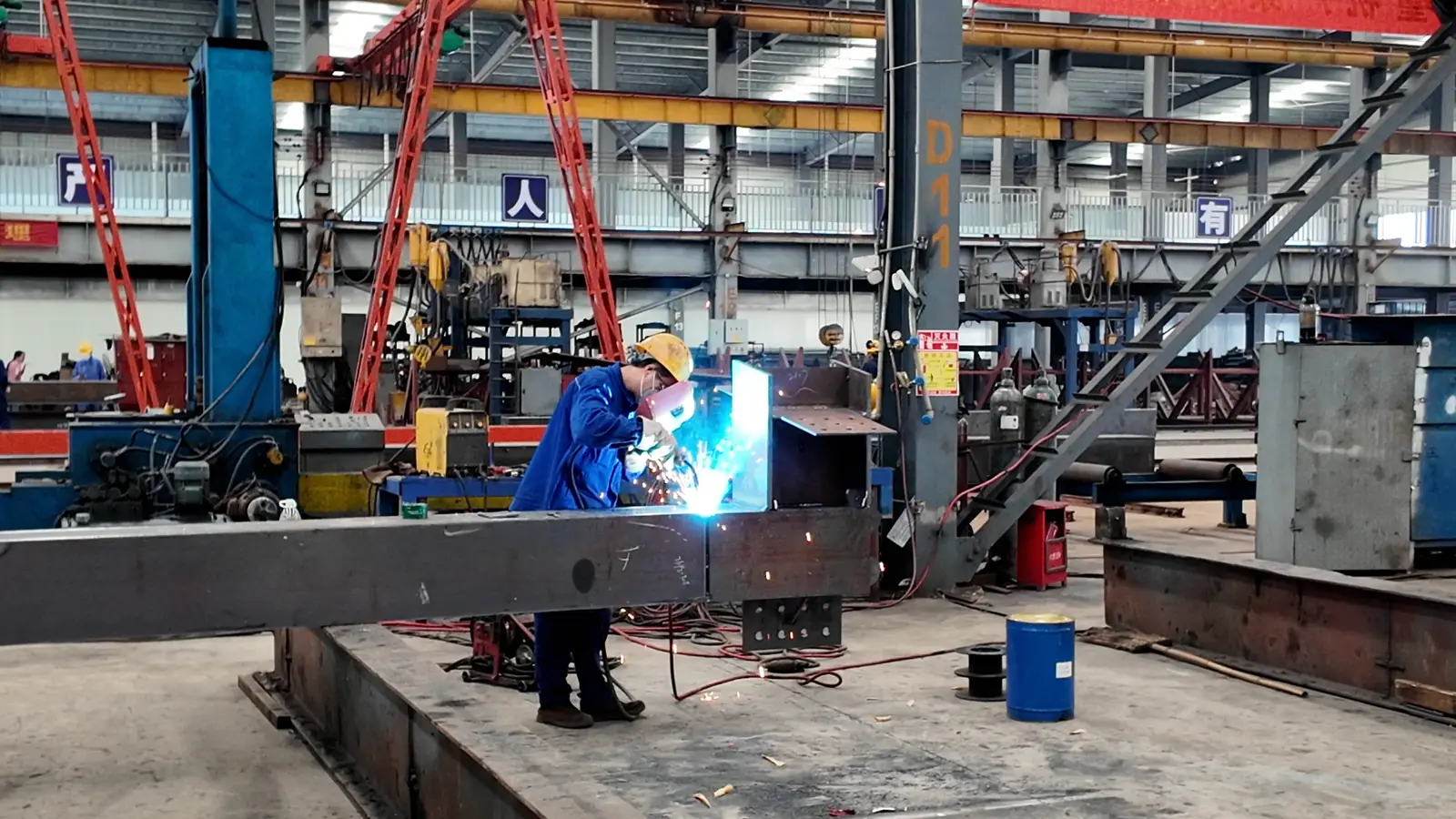
From a Customer Request to Project-Specific Inspection
The starting point was the customer’s requirement for an independent inspection. Bingfa responded by coordinating an external organization to perform the requested UT work for the project.
This was an inspection of specified welds, not a third-party factory audit or certification of Bingfa’s entire production operation. The distinction matters to contractors and procurement teams: reviewing selected fabricated welds answers a different question from assessing a supplier’s overall management systems or manufacturing capability.
For buyers arranging similar work, the practical priority is to define what the inspection must cover and what evidence the customer expects to receive.
What the Three Inspection Reports Recorded
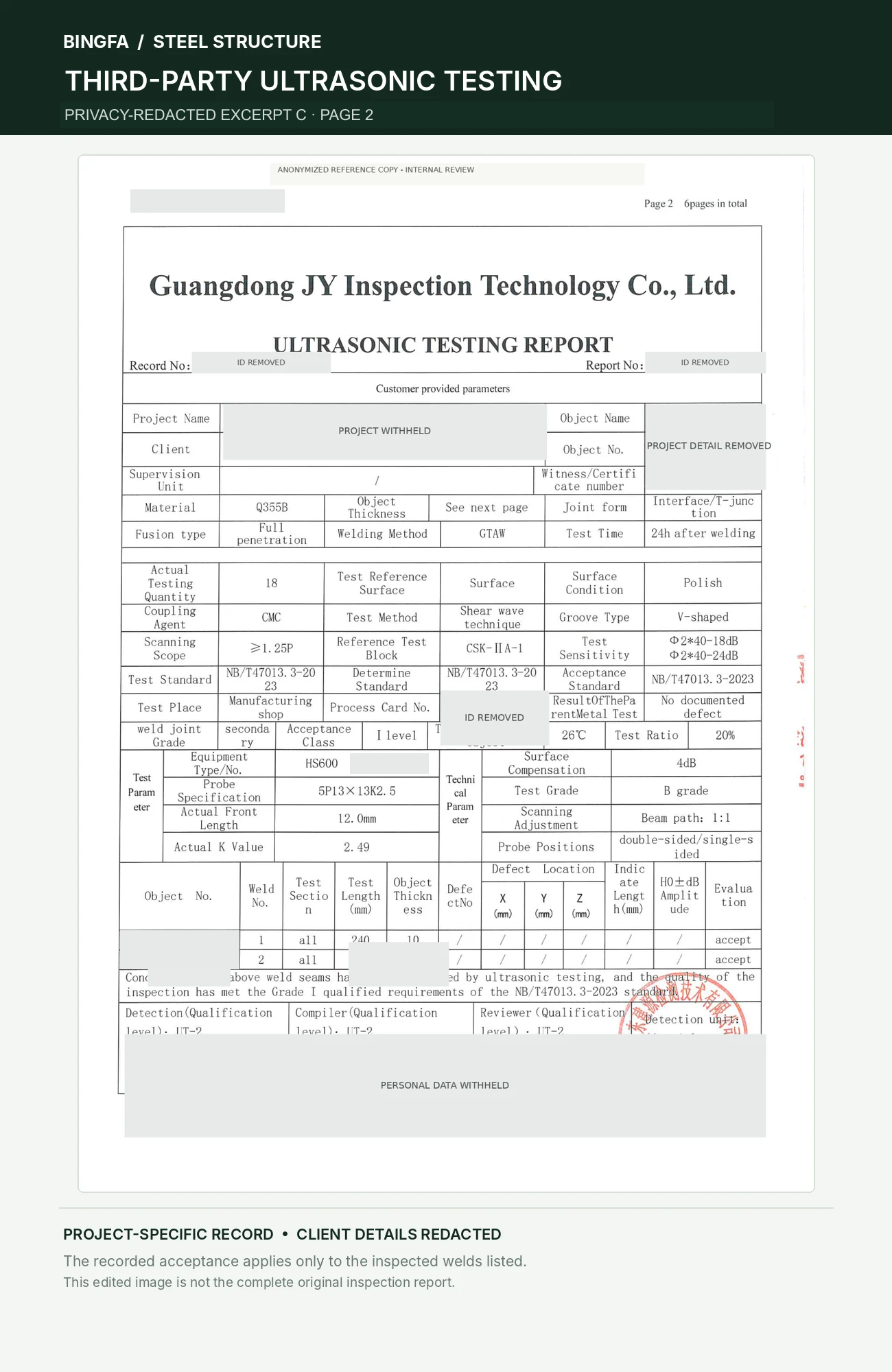
This case draws on three reports covering different ranges of inspected steel component welds. Each report relates to its own inspected scope.
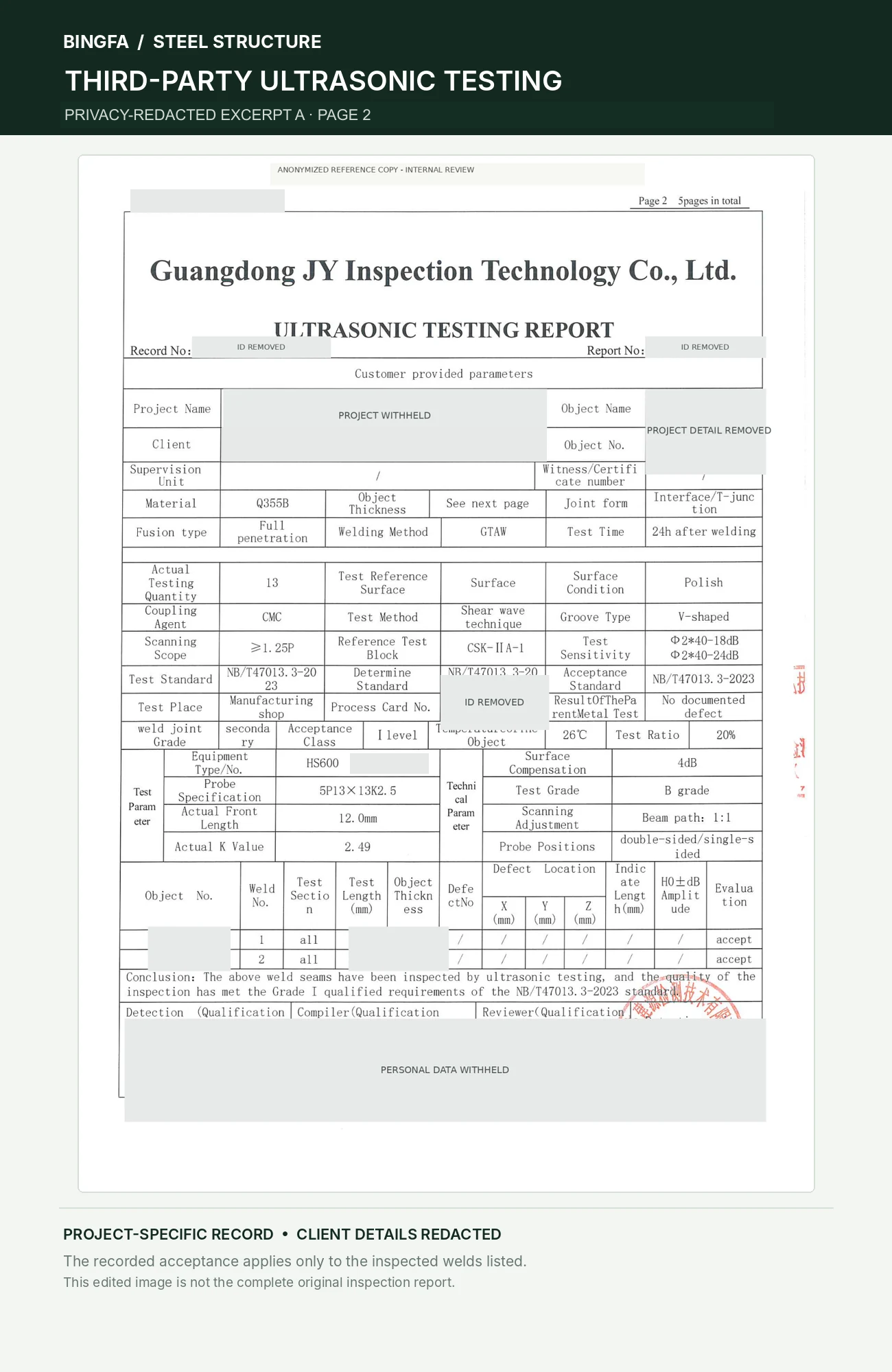
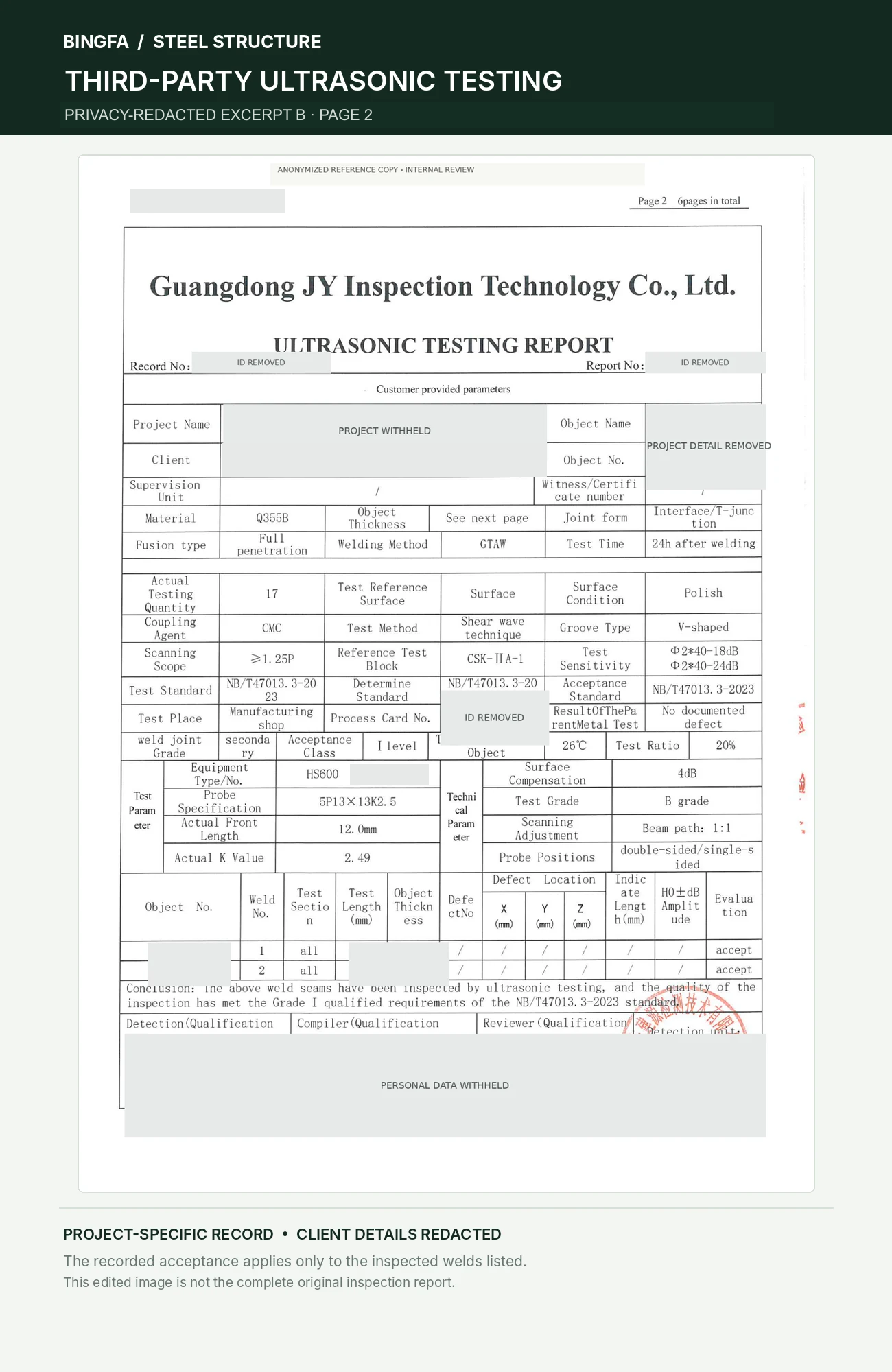
The reports list Q355B as the material. This is the material designation recorded in the documents; it is not a steel grade independently verified by the UT examination.
The reports also record an inspection ratio of 20%. That figure is retained here as a reported value, not as a confirmed coverage rate for the complete project.
The reports cite NB/T 47013.3-2023 as the inspection reference.
The evaluations recorded for the inspected welds were acceptable within the report-defined scope. This does not establish that all components, all welds or the complete building passed inspection, or that the customer granted final project acceptance.
Third-Party Ultrasonic Inspection Evidence
The following images show privacy-redacted excerpts from third-party ultrasonic testing records. Customer-identifying information has been removed. The recorded findings apply only to the documented inspection scope.
What Buyers Should Confirm Before Quotation or Production Scheduling
This case highlights a practical purchasing issue: a request for "third-party inspection" needs a defined scope before its cost and production implications can be assessed. Buyers should confirm the following during quotation review or production planning:
- Inspection scope and ratio: Identify the welds or component groups to be considered, how the inspection ratio is defined and how the inspected scope will be recorded.
- Inspection standard: Confirm the proposed reference and its applicability to the project, including any contractual or engineering requirements.
- Acceptance requirements: Establish the criteria against which findings will be evaluated and who is responsible for resolving technical questions.
- Cost responsibility: Clarify responsibility for the inspection fee, attendance arrangements and any additional work that may be requested.
- Report delivery: Agree on the required language, format, recipients and delivery arrangements, including how each report will relate to the inspected work.
These are purchasing considerations for future projects, not claims that this customer’s order followed a particular standard package or fixed inspection policy.
Keep the Report Connected to the Purchase Decision
For an overseas contractor or engineering company, the value of an independent report depends on whether its scope answers the project’s actual inspection requirement. A recorded acceptance result is most useful when the buyer can connect it to the relevant fabricated work and understand any limits on coverage.
The reports should be considered alongside the project’s other required documents and contractual checks, rather than used as a substitute for unrelated verification.
Discuss Inspection Requirements With Your Project Information
Bingfa coordinated this external UT inspection in response to a customer’s project-specific request. Buyers considering similar arrangements can share available drawings, the intended supply scope and any inspection requirements during the initial project discussion.
Defining these requirements early helps establish what needs to be inspected, which technical references require confirmation and how inspection responsibilities should be reflected in the supply agreement.