
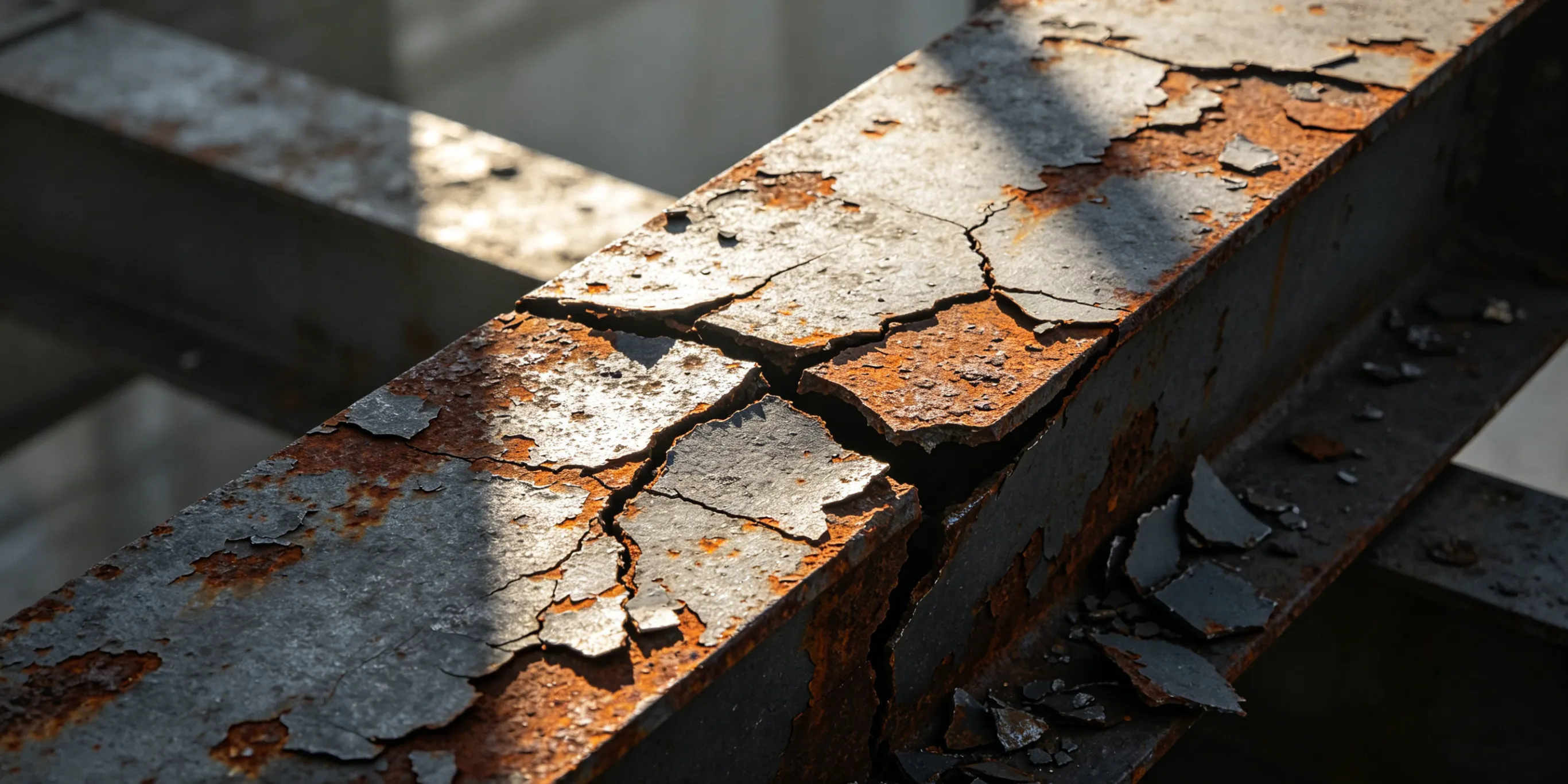
Why Does Paint Peel Off Your Steel Structure?
Paint Peeling Does Not Have One Universal Cause
Paint peeling on a steel structure does not have one universal cause. It may be related to contamination, moisture, surface preparation, coating incompatibility, recoat-window issues, application or curing conditions, transport or handling damage, cutting or field modifications, site touch-up, or service exposure not matched to the coating system. The failure pattern, location and project records should be reviewed before deciding on a repair scope. No fixed failure timeline applies to every project.
What Paint Peeling Means on a Steel Structure
Coating may separate from the steel substrate, from a previous coating layer, from another layer within the coating system, or from a repaired or touched-up area. Identifying the separation point helps narrow the possible causes. Adhesion testing may be used where required, but it is not mandatory for every case. The failure location and pattern provide important clues for the review.
Peeling, Blistering, Flaking and Other Failure Types
Peeling
Coating lifts or separates in sheets or strips.
Flaking
Smaller coating pieces detach from the surface.
Blistering
Raised areas or bubbles appear beneath the coating.
Delamination
One coating layer separates from another layer or from the substrate.
Underfilm Corrosion
Corrosion develops beneath the coating and may lift or break the coating.
Chalking or Fading
Appearance deterioration that is not automatically the same as peeling.
Where the Coating Has Failed
Possible failure planes include the steel-to-primer interface, primer-to-intermediate-coat interface, intermediate-to-topcoat interface, within one coating layer, the old-to-new coating interface, and repaired-area interfaces. Where adhesion testing is performed, the results should record the failure location rather than only a numerical value. No fixed test thresholds are provided here.
Common Causes of Paint Peeling
The following are possible causes, not automatic diagnoses.
A. Surface Contamination
Oil, grease, dust, soluble salts or moisture may interfere with coating adhesion or performance.
B. Existing Rust or Loose Material
Rust, loose mill scale or deteriorated old coating may remain beneath or around the coating system.
C. Surface-Preparation Mismatch
The preparation method or surface profile may not suit the selected primer or coating system. Abrasive blasting is not required for every case and is not the only possible preparation method.
D. Coating Incompatibility
Possible incompatibility may exist between old and new coatings, primer and topcoat, repair material and original coating, or layers without a compatible intermediate or tie coat where specified.
E. Recoat-Window Issues
A new coat may have been applied outside the product-data-sheet recoat conditions.
F. Moisture and Condensation
Moisture may have been present during application, curing or service.
G. Application and Curing Conditions
Conditions may have been outside product-specific guidance, or the coating may not have cured sufficiently before handling.
H. Transport, Cutting and Installation Damage
Abrasion, impact, drilling, cutting, welding or field modification may damage the coating.
I. Site Touch-Up Mismatch
Different preparation methods, materials or application conditions may have been used during repair.
J. Edges, Welds, Bolts and Difficult Details
Preparation and coating coverage may be more difficult in these areas.
K. Exposure-System Mismatch
The coating system may not match the actual humidity, coastal, industrial, chemical or operational exposure.
The likely cause depends on the failure pattern, failure plane and project conditions.
Areas That Need Closer Inspection
Inspection may focus on welds, cut edges, bolt areas, connection plates, base plates, roof and wall interfaces, gutters and water-prone areas, transport contact points, loading or lifting points, repaired areas, field-cut or drilled areas, and exterior surfaces exposed to humidity, salt air or industrial contaminants. Inspection priorities depend on where and how peeling appears.
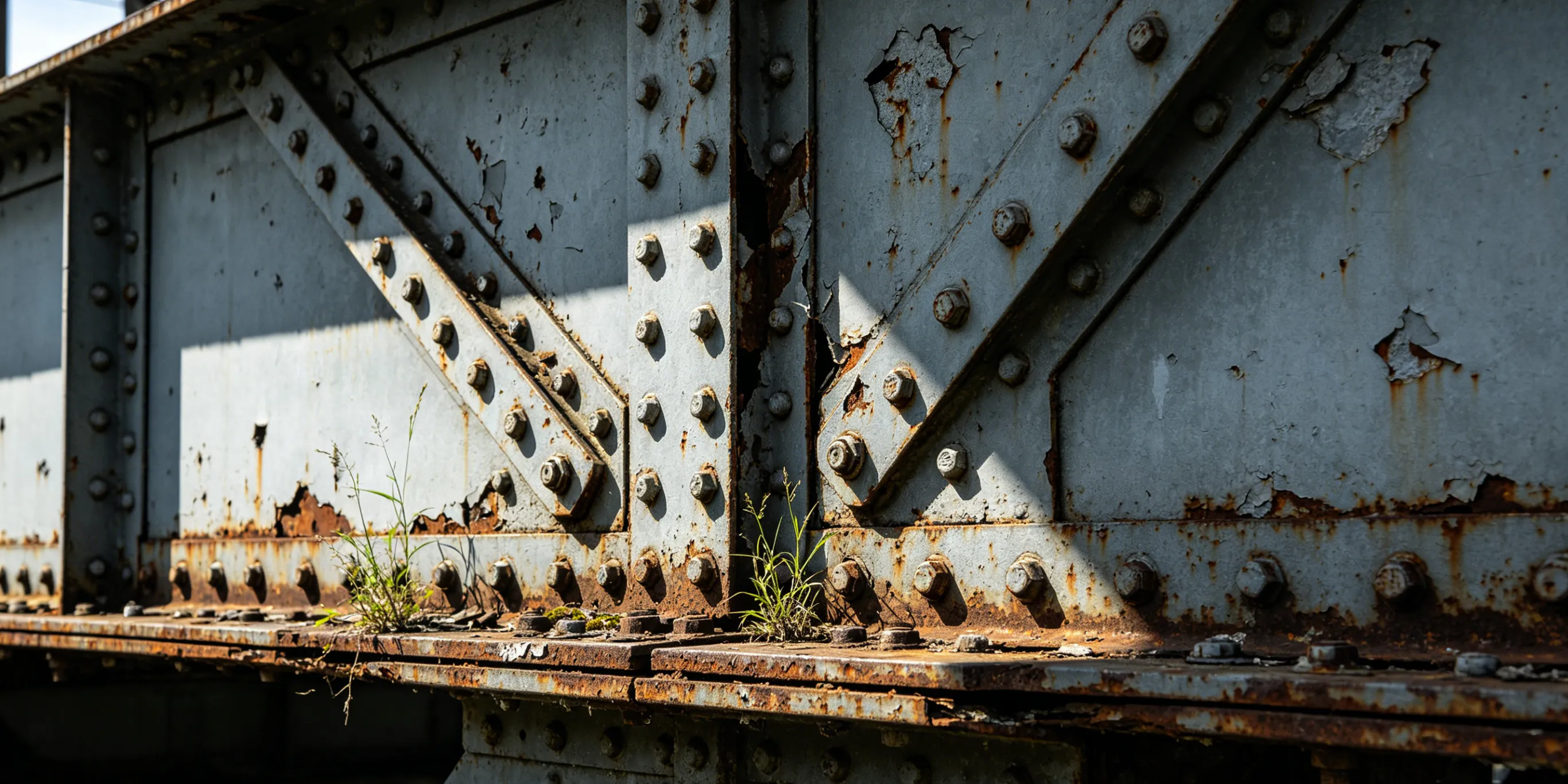
Information and Evidence to Collect
Useful information may include:
- Close-up photos
- Wider location photos
- Affected member identification
- Indoor or outdoor exposure
- Peeling location and extent
- Whether rust, moisture or contamination is visible
- Coating specification if available
- Product names or product data sheets if available
- Surface-preparation records
- Coating batch or inspection records if available
- Application and curing history if known
- Transport and storage history
- Installation or field-modification history
- Site touch-up information
- Maintenance and previous repair history
An initial review can begin even if some records are unavailable. Photos can support the review, but they do not establish a final diagnosis by themselves.
How to Review the Existing Coating System
A review may consider substrate condition, the number and type of coating layers, compatibility between layers, the visible failure pattern, failure-plane information where available, adhesion-test records where required, remaining sound coating, exposure environment, project specification, previous repairs and the intended repair scope. No single repair system is prescribed here.
Repair-Review Boundary
Repair requirements depend on the extent of failure, condition of the steel, coating type, remaining sound coating, exposure environment, project specification, installed-building condition, responsibility and agreed repair scope. Localized touch-up may be appropriate in some cases. Broader coating removal and recoating may be needed in other cases. Serious or widespread failure should be reviewed by qualified project professionals. No repair outcome should be assumed before the affected area and coating system are reviewed.
How Bingfa Can Support a Coating-Failure Review
Bingfa can review available photos, drawings, affected-member locations, coating information, exposure conditions, fabrication or supply records where available, and the requested replacement-component or new-build supply scope. Bingfa can review information within the confirmed supply or support scope. Responsibility for an installed coating failure and the final repair design should be confirmed separately by the relevant project parties unless included in the agreed scope.
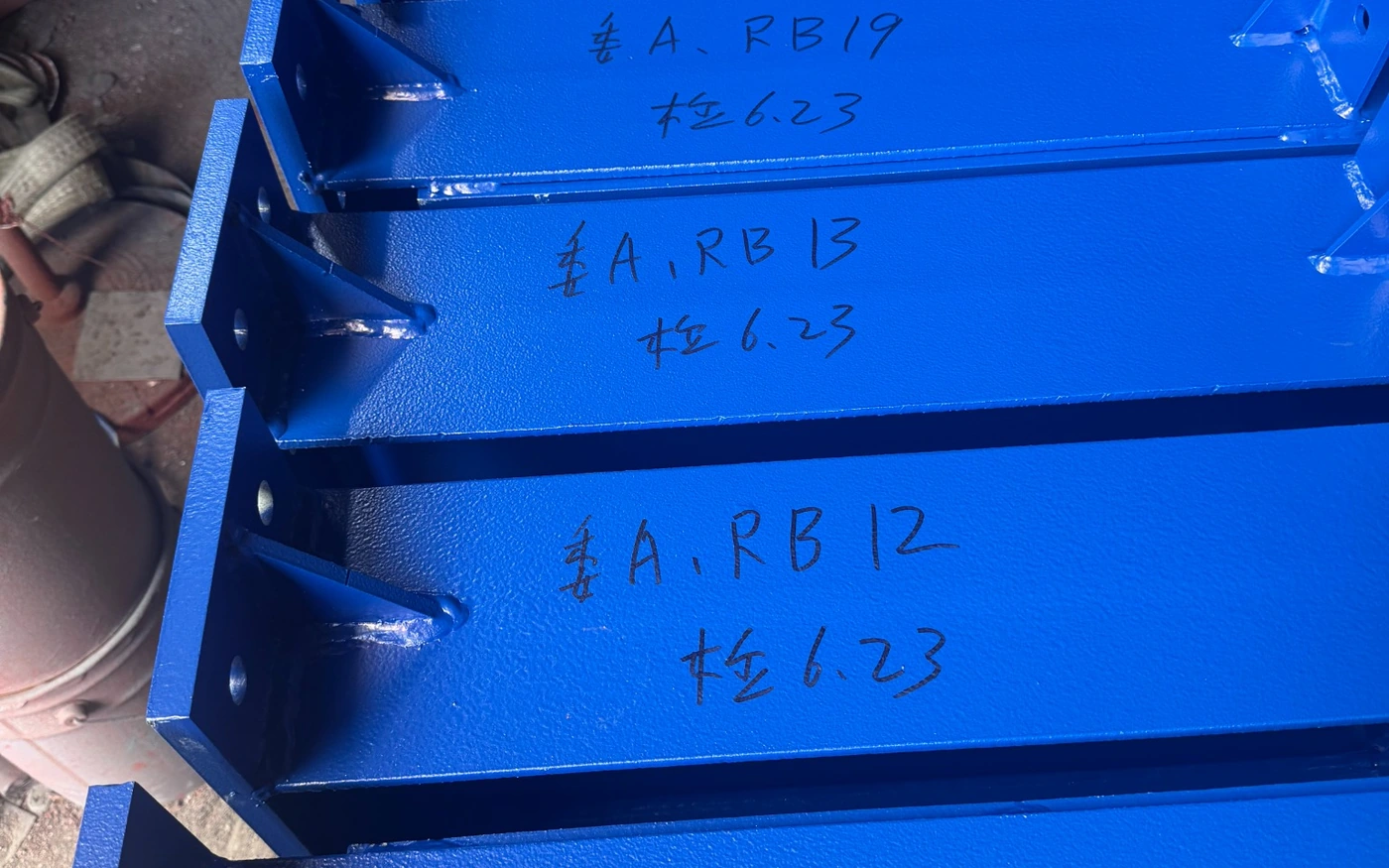
Information to Send for Review
Please provide:
- Project location
- Building use
- Peeling photos
- Wider photos showing the affected area
- Affected member locations or identification
- Indoor or outdoor exposure
- Coastal, industrial or chemical exposure if any
- Coating specification if available
- Product data sheets if available
- Surface-preparation information
- Application or curing information if known
- Transport and installation history
- Previous repair history
- Drawings if available
- Required repair, replacement or new-build supply scope
Early project information can be reviewed first, even if some coating records are unavailable.
Request a Coating-Failure Review
Send peeling photos, affected member locations, project exposure conditions and available coating information so Bingfa can review the surface-protection and supply-scope requirements.
Steel Coating Peeling & Adhesion-Failure FAQ
Why is paint peeling off my steel structure?
There is no universal cause. It may be related to contamination, moisture, surface condition, coating compatibility, recoat conditions, curing, handling, site touch-up or exposure. The failure pattern and location should be reviewed with project records before deciding on a repair scope.
Does peeling always mean the steel was not shot blasted?
No. Surface preparation may be one factor, but moisture, contamination, coating incompatibility, recoat-window issues, curing, handling and site touch-up may also contribute. Abrasive blasting is not required for every case and is not the only possible preparation method.
Is paint peeling the same as rusting?
No. Peeling is separation of the coating. Rusting is corrosion of the steel. They may occur together, but one does not automatically prove the other.
Can peeling paint be repaired with local touch-up?
It may be possible in some cases, depending on the extent of failure, steel condition, coating compatibility, exposure and surrounding coating condition. The affected area should be reviewed before selecting a repair scope. Localized touch-up is not suitable for every situation.
What information should I send for a coating-peeling review?
Send the project location, building use, peeling photos, wider photos, affected member locations, exposure conditions, coating specification if available, product data sheets if available, surface-preparation information, application or curing history if known, transport and installation history, previous repair history, drawings if available, and the required repair or supply scope. Early information is enough to start the review.
Send Your Coating-Failure Information
Send peeling photos, affected member locations, project exposure conditions and available coating information so Bingfa can review the surface-protection and supply-scope requirements.