
COLD-CLIMATE STEEL COATING GUIDE
What Is The Best Paint For Steel Structure Buildings In Cold Climates?
Cold climates affect coating selection, surface preparation, application, curing and handling for steel structure projects. This guide explains why product data sheets, steel surface temperature, dew point, condensation risk and curing conditions matter before selecting a coating system.
Introduction
Cold climates affect steel coating selection, application, curing and handling. There is no single “best paint” for every cold-climate steel building. The correct coating approach depends on project conditions, product data sheet limits and the confirmed coating specification. Cold weather can influence how a coating behaves during application and how quickly it cures. Buyers should plan around actual project conditions and the coating manufacturer’s instructions rather than relying on generic product names or fixed performance claims.
Why Cold Climates Change Coating Requirements
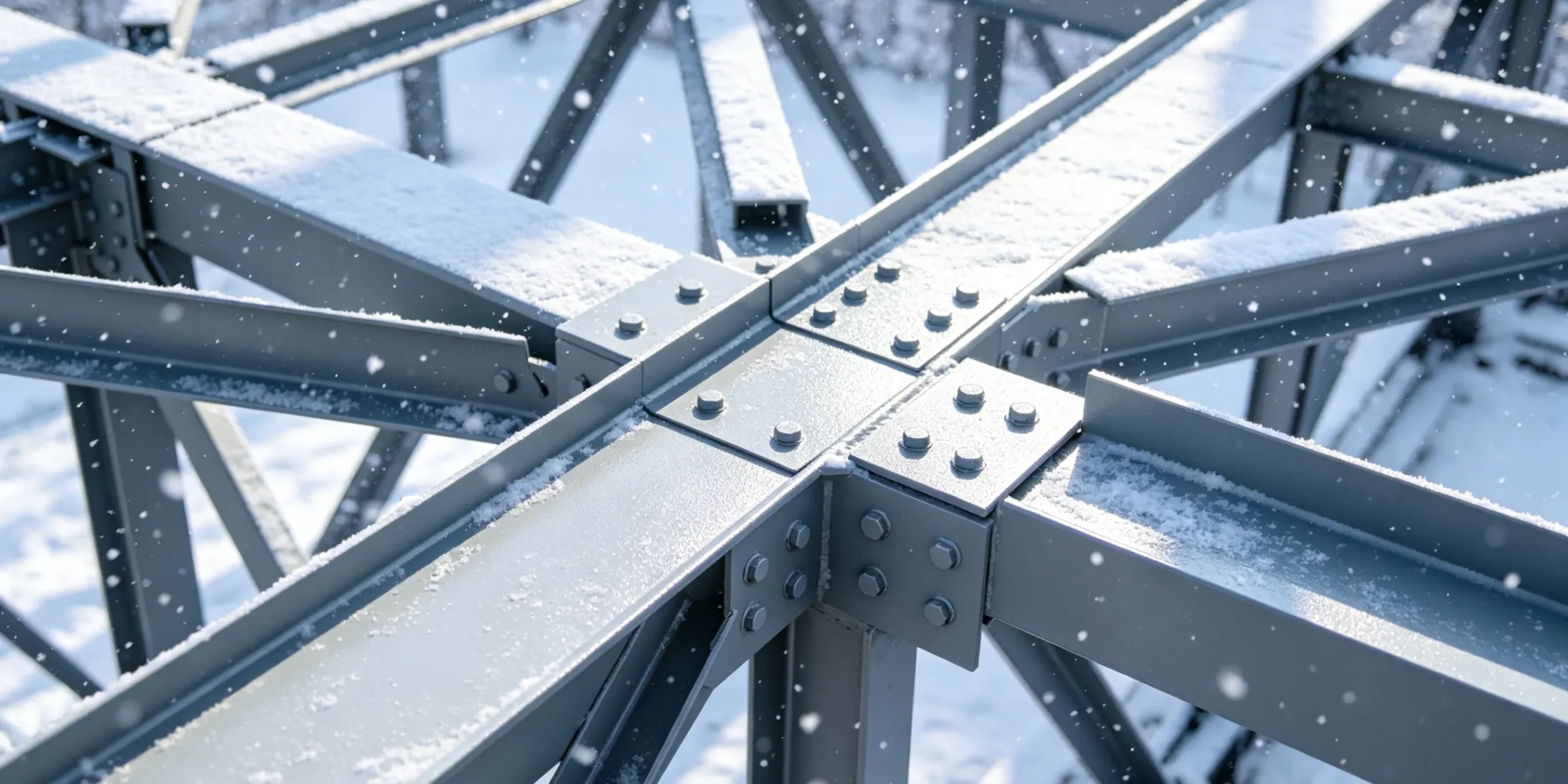
Low temperatures affect both the coating material and the steel surface. Cold conditions can slow drying and curing, increase the risk of condensation, and make surface preparation more difficult. Steel surface temperature, ambient air temperature and coating material temperature all interact. Dew point and relative humidity determine whether moisture may form on the steel surface. Frost, ice or snow can contaminate the surface before coating. Handling coated members before full cure can damage the coating. These factors should be reviewed before application begins.
What to Check Before Selecting a Coating System
Before selecting a coating system for a cold-climate project, the following information should be confirmed:
- Project location
- Expected cold-season conditions
- Indoor or outdoor exposure
- Steel surface temperature during coating if known
- Ambient air temperature during coating if known
- Dew point and relative humidity if known
- Condensation or frost risk
- Coating product data sheet
- Project coating specification
- Required surface preparation if specified
- Curing and handling requirements
- Storage and delivery conditions
This information helps the project team evaluate whether the coating can be applied and cured under the expected conditions.
Product Data Sheet Limits Matter
Every coating product has its own application and curing requirements. Buyers should not rely on generic coating names alone. The product data sheet defines the application condition limits, recoat window, curing time before handling, ventilation requirements, mixing and thinning instructions, coating material storage or conditioning requirements, and other manufacturer recommendations. These limits vary between products and should be reviewed for the specific coating system being considered. Final application requirements must follow the project specification and the coating manufacturer’s guidance.
Surface Preparation in Cold Conditions
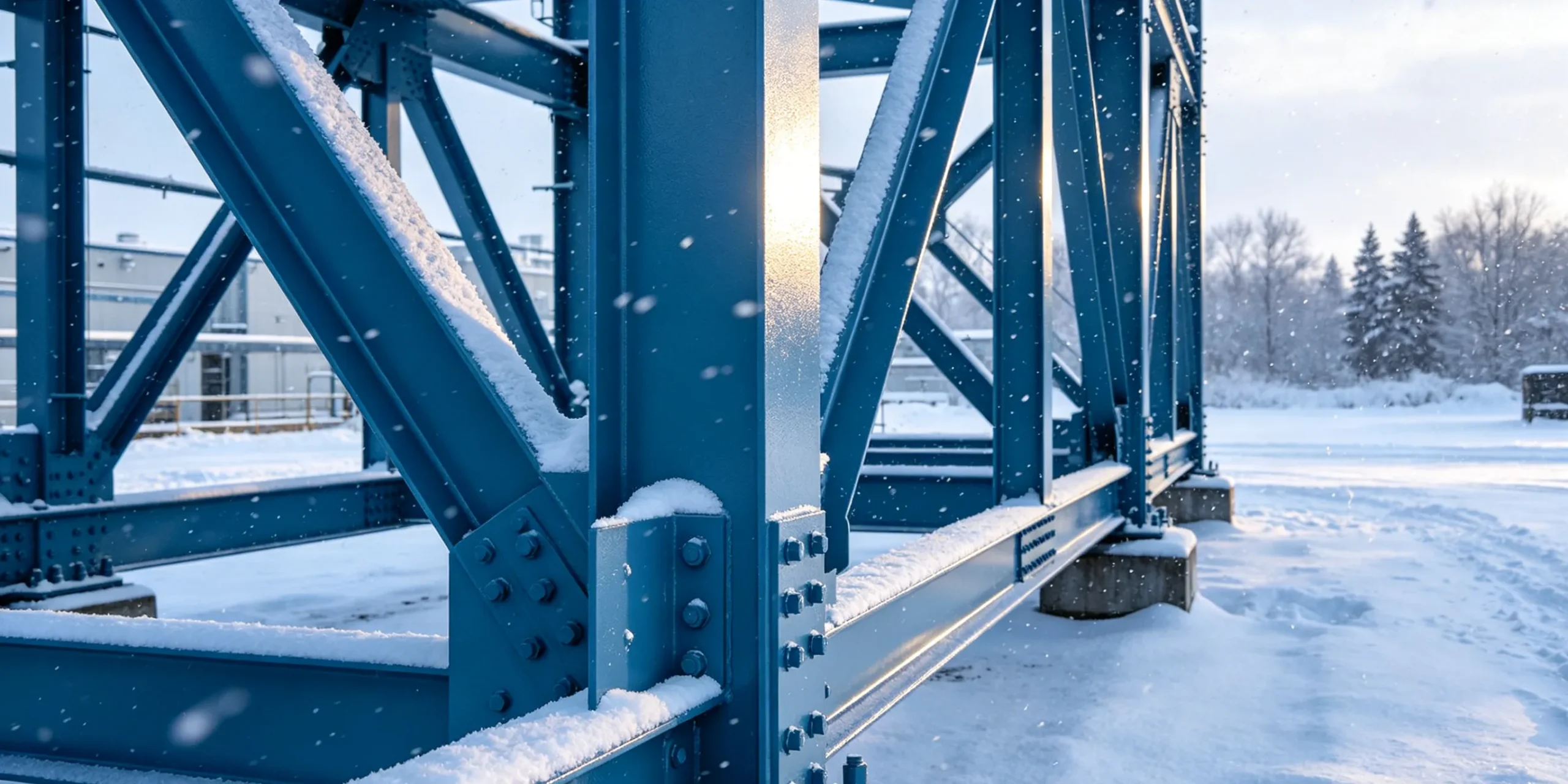
Surface preparation still matters in cold climates. The steel surface should be dry and clean before coating. Moisture, frost and condensation can affect coating adhesion and curing. Dust, rust, oil and mill scale should be removed according to the specified preparation grade. Grades such as Sa 2.5 may be specified for some projects, but the required grade depends on the coating specification, project standard and exposure environment. The prepared surface should be inspected before coating begins.
Coating System Options for Cold Climates
Different projects may use different coating systems depending on exposure, specification and supply scope. Common approaches include primer and topcoat systems, primer with intermediate coat and topcoat systems, galvanizing where specified, or combined protection where required. The number of coats and the dry film thickness depend on the project requirements. There is no universal system that applies to every cold-climate project. The coating system should be confirmed according to the exposure environment, coating product data sheet and agreed supply scope.
Application Environment and Curing Control
The application environment should be controlled as far as practical. Temperature monitoring, humidity and dew point monitoring, ventilation, and heating or dehumidification where required can help support proper application and curing. The steel should be kept dry before coating. Sufficient curing time should be allowed before packing or handling. Inspection information should be recorded where required by the project specification. Specific application thresholds depend on the coating product data sheet and project requirements.
Handling, Packing and Transport Before Full Cure
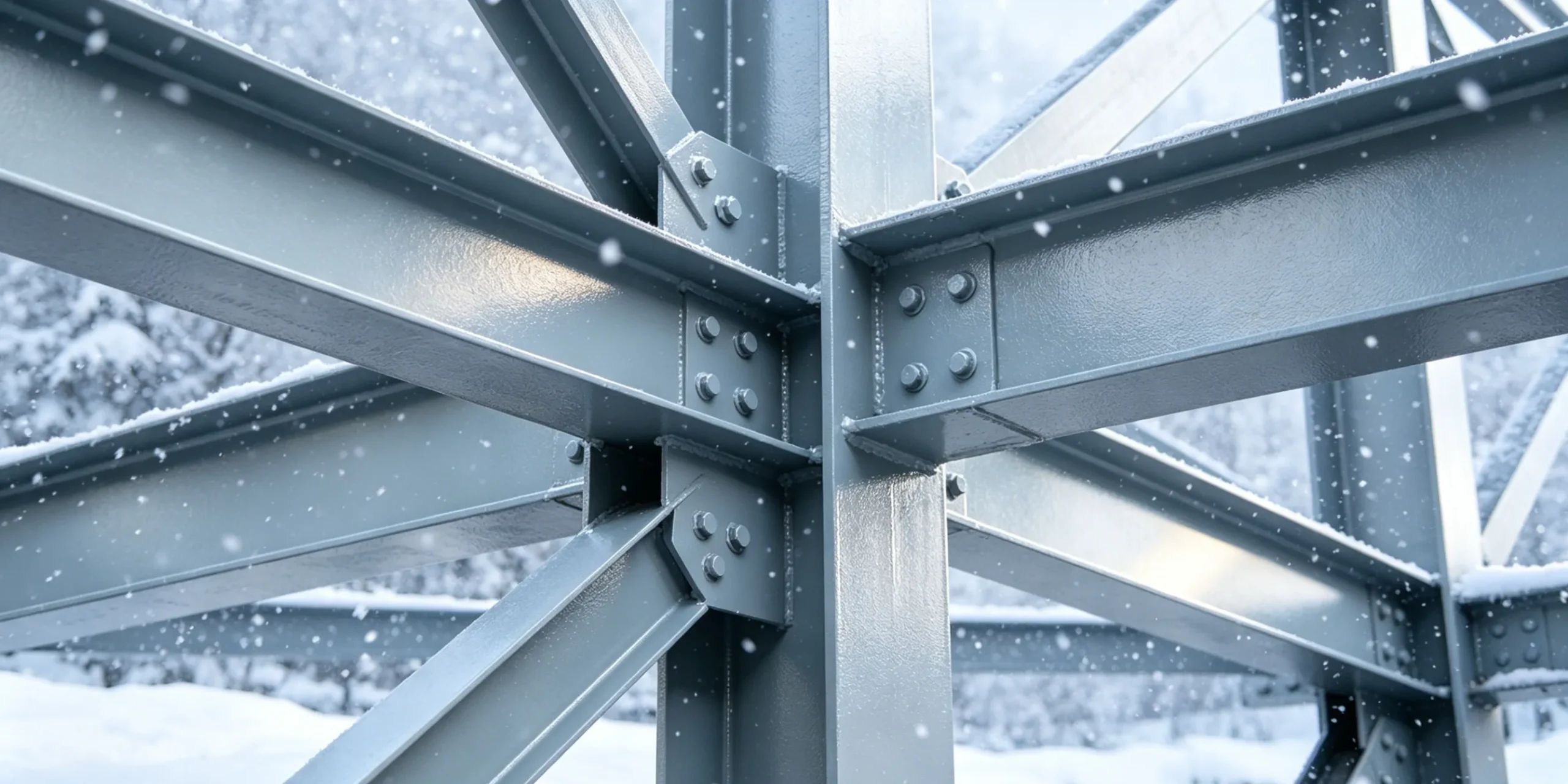
Coated steel members may be damaged if handled, stacked or packed before the coating has reached the required handling condition. Abrasion should be avoided, members may need to be separated, and trapped moisture should be prevented. Coating condition should be checked before loading. Damaged coating should be repaired according to the project specification. Packing and transport arrangements should consider the curing status of the coating.
Common Mistakes in Cold-Climate Steel Coating
Common mistakes include choosing paint only by product name, ignoring product data sheet limits, coating when the steel surface is too cold or wet, ignoring dew point and condensation, packing before the coating is ready for handling, using a generic coating thickness for every project, assuming one system fits every cold climate, and ignoring storage and transport conditions. These mistakes can affect coating performance and may lead to rework or early corrosion.
How Bingfa Can Support Coating Coordination
Bingfa can review project location, coating specification, exposure conditions, drawings and supply scope, then coordinate steel-building surface-protection requirements. Requirements such as coating type, surface preparation, dry film thickness, inspection records, handling conditions and packing requirements should be confirmed during quotation and order review. Bingfa coordinates coating scope according to confirmed project requirements, coating specification and agreed supply scope.
Information to Send for a Cold-Climate Coating Review
To support a cold-climate coating review, please provide:
- Project location
- Lowest expected temperature or cold-season condition if known
- Building use
- Indoor or outdoor exposure
- Drawings if available
- Coating specification if available
- Coating product or brand requirement if specified
- Required surface preparation if specified
- Required dry film thickness if specified
- Condensation or humidity concerns
- Storage and transport conditions
- Delivery destination
Early project information can be reviewed first, even if the final coating specification has not been confirmed.
Request a Cold-Climate Coating Review
Send the project location, cold-climate exposure conditions, drawings and coating requirements so Bingfa can review the steel-building surface-protection scope.
Frequently Asked Questions
What is the best paint for steel buildings in cold climates?
There is no single best paint for every project. The coating system depends on exposure, product data sheet, surface preparation, curing conditions, project specification and supply scope. The appropriate coating should be confirmed for the specific project conditions.
Can steel structures be painted in cold weather?
It depends on the coating product data sheet, steel surface temperature, air temperature, dew point, humidity, surface dryness and curing conditions. Final application requirements must follow the project specification and coating manufacturer guidance. Cold weather may require additional controls or may limit when coating can proceed.
Why does dew point matter when painting steel?
If the steel surface condition allows condensation to form, coating adhesion or curing may be affected. Surface condition, dew point and moisture risk should be checked before coating. The acceptable dew point margin depends on the coating product and project specification.
Is galvanizing better than paint in cold climates?
Not always. Galvanizing, paint or combined protection may be considered depending on exposure, member type, specification, handling and budget. It is not a universal replacement for coating review. The appropriate protection system should be confirmed for the project conditions.
What information should I send to Bingfa for a cold-climate coating review?
Send the project location, expected cold-season conditions, building use, indoor or outdoor exposure, drawings if available, coating specification if available, coating product or brand requirement if specified, required surface preparation if specified, required dry film thickness if specified, condensation or humidity concerns, storage and transport conditions, and delivery destination. Early information is enough to start the review.
Send Project and Coating Requirements
Send the project location, cold-climate exposure conditions, drawings and coating requirements so Bingfa can review the steel-building surface-protection scope.