What Does a Steel Fabrication Cost per Tonne Actually Include?
A quoted cost per tonne for steel fabrication is not a standalone price. It must be read together with the supply scope. Two suppliers may both quote “per tonne,” but one may include steel material and the other may charge only for processing buyer-supplied steel. One may include surface preparation and primer; another may exclude coating. One may include packing and loading; another may quote those separately.
This guide explains how to check weight and supply scope in a per-tonne quotation; it is not a universal market price list.
The per-tonne figure is only meaningful when the following are clear:
- Whether steel material is included or supplied by the buyer
- Which fabrication operations are included
- Which coating or surface treatment is included
- Which accessories, if any, are included
- What weight basis is used
- What delivery term applies
For buyers with confirmed structural drawings or a member schedule, the first step is to define the fabrication scope before comparing rates. For a detailed discussion of drawing-based fabrication, see Structural Steel Fabrication from Drawings.
How to Calculate and Compare Per-Tonne Quotations
The basic calculation for a fabrication quotation is:
Base quoted amount = Agreed chargeable tonnes × Agreed rate per tonne
The total quotation is then:
Total supplier quotation = Base quoted amount + Agreed separately priced items not already included in the base amount
Separately priced items may include coating, packing, accessories, documentation or delivery charges within the supplier’s agreed scope. Add each item only once; do not add it again if it is already included in the per-tonne rate or another line item. Excluded work is not subtracted from this total. Costs paid directly by the buyer to other parties belong in a separate buyer budget, not in the supplier’s quotation.
Three weight terms are often confused:
- Theoretical steel weight — calculated from the agreed drawings or member schedule, using the stated dimensions, quantities and calculation basis. Confirm whether plates and other components are already included.
- Chargeable weight — the weight the supplier uses for pricing. It may include or exclude certain items.
- Shipping gross weight — the total weight of the shipment, including packing, crates, pallets and transport materials.
These three weights are not necessarily identical. A quotation should state which weight basis is used. One metric tonne equals 1,000 kg. Confirm the unit and the components counted, without treating shipping gross weight as chargeable steel weight unless expressly agreed.
Hypothetical Comparison: Why Different Weight Bases Prevent Direct Rate Comparison
This example is hypothetical and does not represent any real Bingfa quotation.
Supplier A quotes a rate that includes steel material, fabrication, primer and packing. The agreed chargeable weight is based on a theoretical member schedule. Connection plates must be identified in that schedule; if already counted, their weight must not be added again. Any omitted components or allowances require an explicit agreement.
Supplier B quotes a lower per-tonne rate for fabrication only. The buyer supplies the steel. Coating is excluded. Packing is quoted separately. The quotation must specify whether processing is charged on incoming material, finished members or another agreed basis, and how offcuts, scrap and allowances are treated. Incoming weighed material is not automatically the chargeable weight.
Even if Supplier B’s rate is lower, the two rates cannot be compared directly. Supplier B covers less scope. To compare them, the buyer must normalize the material basis, fabrication operations, coating, packing and delivery term. Only then does the per-tonne rate become meaningful.
Material-and-Fabrication vs Fabrication-Only Quotes
A material-and-fabrication quote includes the steel material and the fabrication work. A fabrication-only quote covers processing of steel that the buyer supplies. These are fundamentally different scopes.
| Scope item | Material-and-fabrication supply | Fabrication-only processing |
|---|---|---|
| Steel material | Included by supplier | Supplied by buyer |
| Cutting and drilling | Confirm in quotation | Confirm in quotation |
| Assembly and welding | Confirm in quotation | Confirm in quotation |
| Surface preparation | Confirm in quotation | Confirm in quotation |
| Primer / coating | According to agreed scope | According to agreed scope |
| Member marking | Confirm in quotation | Confirm in quotation |
| Packing | According to agreed scope | According to agreed scope |
The table is illustrative. Actual inclusion depends on the quotation and the agreed scope.
For fabrication-only work, material ownership, material quality, allowances, scrap and responsibility for shortages must be agreed where applicable. Bingfa does not necessarily offer every fabrication-only service described. The quotation should state what is included and what is excluded. For a broader comparison method, see Steel Structure Quotation Comparison.
Which Fabrication Operations Are Included?
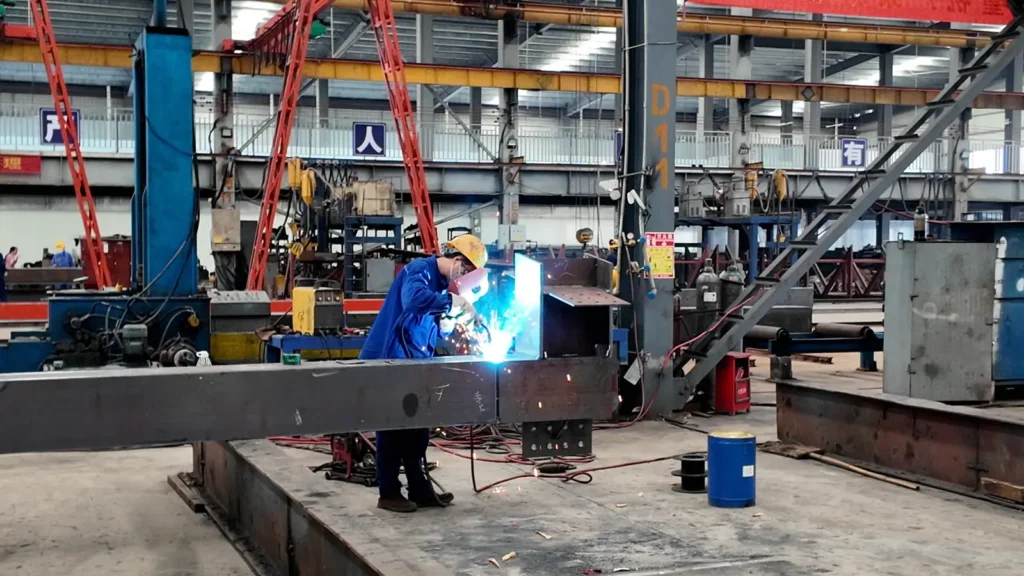
Buyers should confirm which fabrication operations are included in the per-tonne rate. Common items include cutting and drilling, assembly and welding, straightening where applicable, surface preparation, primer and finish coating, member marking, quality documentation, and packing and loading.
Not every project requires every operation. Some quotations may exclude coating, special surface preparation, or packing. The inclusion or exclusion should be stated in the quotation. For drawing review and approval procedures, see Drawing Review.
Which Costs May Be Quoted Separately?
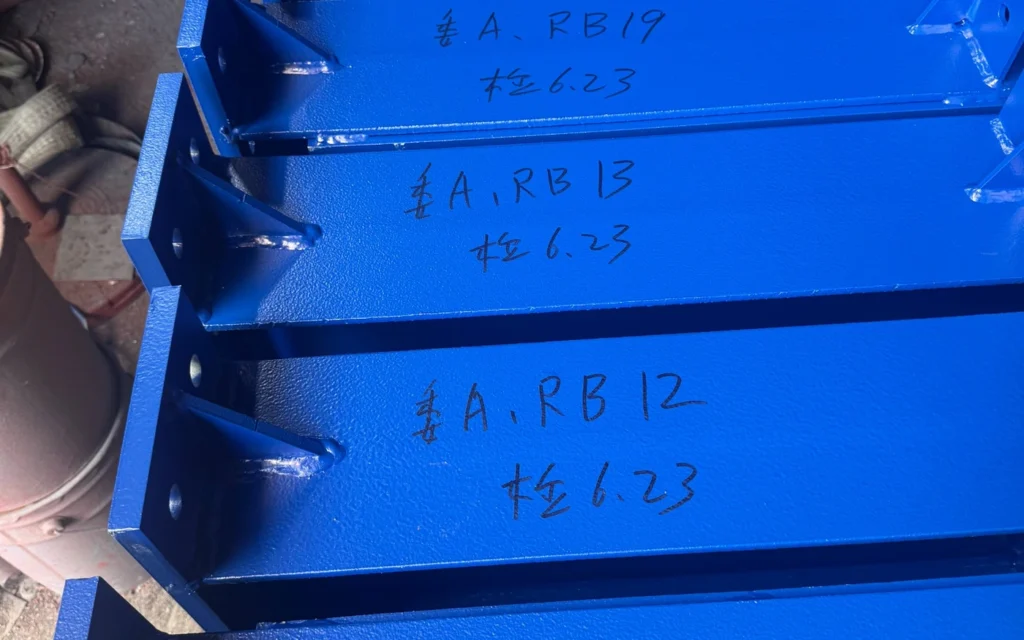
Some items may be quoted separately from the base per-tonne rate. These can include special steel grades or specifications, coating systems beyond standard primer, C/Z purlins and accessories, sandwich panels and cladding, project-specific engineering or drawing services, special packing, inland freight and international shipping, and applicable delivery terms.
Bingfa does not automatically supply every listed accessory or service. The quotation should clearly state what is included and what is excluded.
Buyer Worksheet: Supplier A vs Supplier B Comparison
Use the following worksheet to compare two supplier quotations on a consistent basis.
Swipe horizontally to compare Supplier A and Supplier B.
| Comparison item | Supplier A | Supplier B |
|---|---|---|
| Drawing revision | ||
| Structural members covered | ||
| Steel grade | ||
| Estimated member weight | ||
| Chargeable weight and calculation basis | ||
| Currency and rate per metric tonne | ||
| Material included or excluded | ||
| Fabrication operations | ||
| Surface preparation and coating | ||
| Purlins, fasteners and accessories | ||
| Quality documentation | ||
| Packing and loading | ||
| Delivery basis | ||
| Separately priced items | ||
| Exclusions and unresolved questions |
This worksheet helps ensure that each quotation is compared on the same basis.
Request a Fabrication Scope Review
Send your drawings, member schedule, steel specifications, quantity and delivery requirements for a fabrication scope review. The review will clarify the weight basis and included scope before quotation.
Delivery Terms: EXW, FOB and CIF
Under Incoterms® 2020, specify the rule and named place or port. Delivery, risk transfer and payment for transport are different questions.
- EXW: The seller makes the goods available to the buyer at the named place, not loaded on the collecting vehicle. Risk transfers there; loading, carriage and export clearance are normally the buyer’s responsibilities. Any seller loading assistance must be expressly agreed.
- FOB: For sea or inland waterway transport, the seller clears the goods for export and delivers them on board the buyer-nominated vessel at the named shipment port. Risk transfers on board; the buyer arranges and pays for main carriage.
- CIF: For sea or inland waterway transport, the seller clears the goods for export and pays for carriage and the required cargo insurance to the named destination port. Risk nevertheless transfers when the goods are on board at the shipment port, not on arrival. CIF requires minimum insurance cover unless greater cover is agreed.
Confirm destination charges and any separately arranged services in the quotation and contract. None of these rules includes overseas installation. For container or multimodal movements, agree the appropriate rule with the parties handling the shipment.
What a Real Export Supply Case Can Demonstrate
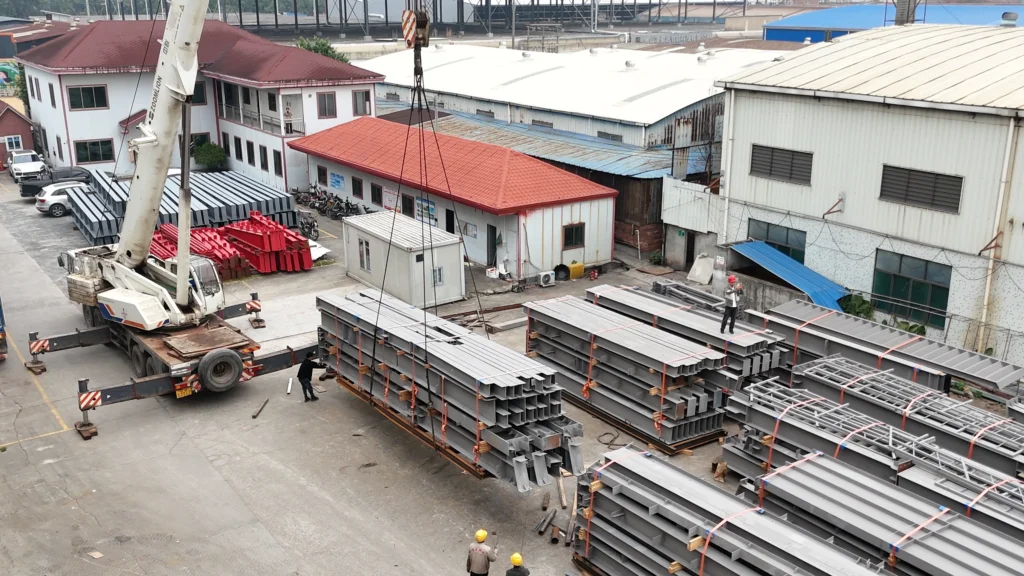
Bingfa’s Venezuela 8,964 m² four-workshop supply case demonstrates actual fabrication and supply operations. The project used customer-provided drawings. Approximately 550 tonnes of structural steel were supplied, together with sandwich panels. The delivery term was EXW, and the customer arranged subsequent logistics. The case shows how a fabrication and supply project can be organized, but it does not provide a per-tonne price. No per-tonne price should be calculated from this case. For more details, see Venezuela Supply Case.
Request a Project-Specific Fabrication Quotation
To receive a quotation with a clear weight and scope basis, buyers should provide drawings and drawing revision, member schedule or bill of materials, steel specifications, estimated quantity, required fabrication operations, coating and surface preparation requirements, packing requirements, delivery term, and destination.
With this information, the supplier can prepare a quotation that states the weight basis, the included scope and the exclusions.
Frequently Asked Questions
1. What does a steel fabrication cost per tonne include?
It depends on the quotation. It may include steel material and fabrication, or only fabrication labor. It may include coating, packing and delivery, or exclude them. The per-tonne rate must be read together with the stated supply scope.
2. Which weight is used for the quotation?
The weight basis should be stated in the quotation. It may be theoretical weight from drawings, bill of materials weight, or an agreed chargeable weight. Buyers should confirm the basis before comparing rates.
3. Can I compare a material-and-fabrication quote with a fabrication-only quote?
Not directly. The scopes are different. You must first align the material basis, fabrication operations, coating, packing and delivery term before comparing the rates.
4. What information should I provide for an accurate quotation?
Provide drawings, member schedule or bill of materials, steel specifications, estimated quantity, required fabrication operations, coating requirements, packing requirements, delivery term and destination.
Request a Project-Specific Steel Fabrication Quote
Send your project information and required scope. The quotation will be prepared on the confirmed weight basis and supply scope.