

How to Compare Steel Structure Quotations
Compare the design basis, steel and enclosure scope, documents, delivery terms and local responsibilities before comparing the quoted totals.
A smaller quoted total does not establish that two offers cover the same building. Compare quotations only after confirming the same dimensions, design criteria, structural and enclosure scope, surface treatment, documents, packing, delivery basis, local responsibilities and exclusions.
Why Like-for-Like Comparison Matters
Steel buildings are project-based products. Quotations can look similar at first glance while using different design assumptions, material scope, enclosure systems or delivery terms. Compare the confirmed project basis before comparing the final total.
For pricing factors rather than comparison of received offers, see the prefabricated steel building cost guide. Supplier evidence is a separate decision; use the supplier due-diligence guide for that review.
Confirm the Same Building Dimensions and Design Basis
Quotation comparison should start with the same building use, project location, length, width, height, clear height, span and column layout, openings, equipment and expansion assumptions. Similar floor area does not establish the same structural scope.
Confirm the applicable project design criteria, including wind, snow, seismic, crane or equipment inputs where relevant, and identify the drawings or assumptions used by each supplier. Two offers based on different structural design assumptions are not directly comparable.
- Building geometry and clearances
- Openings, doors and access
- Crane, mezzanine or equipment inputs if applicable
- Project-specific design criteria and drawing basis

Compare Structural Steel Scope and Material Specifications
Compare the structural scope item by item rather than by total weight alone. Confirm whether primary frames, secondary steel, bracing, purlins, girts, connections, bolts, anchor bolts and accessories are included, excluded or separately priced. Stairs, mezzanine or crane-related steel should be checked only where relevant to the project.
Steel grade, member sizes, plate thickness, material standard, connection method and fabrication scope should be read against the same agreed design basis. A difference in quantity may reflect a difference in assumptions or included work.

Compare Roof, Wall and Opening Scope
Roof and wall scope often explains why totals differ. Compare the material and profile or panel system, coating, insulation or core material where relevant, trims, flashing, gutters, downpipes, doors, windows, skylights, ventilation and other agreed openings. Panel thickness alone is not a complete comparison.
Documented performance requirements should follow the specific project. If material options remain open, review sandwich panel materials separately before comparing offers.
- Roof and wall material/system
- Insulation or panel core where required
- Trims, drainage and accessories
- Doors, windows and ventilation openings
Compare the Coating and Corrosion-Protection Basis
Check the specified surface preparation, primer and paint system, additional coats where explicitly required, galvanizing where specified, and the agreed inspection scope. Exposure conditions and project documents determine the needed treatment; there is no universal coating schedule for every quotation.
The structural steel paint guide covers paint-system fundamentals beyond this procurement comparison.
Compare Drawings, Records and Technical Support
Check what each quotation actually includes: structural or calculation basis, design drawings, fabrication drawings, component identification, installation drawings, material and inspection records, packing lists and shipping documents where agreed. These are contract-scope questions, not automatic deliverables from every supplier.
For the separate buyer approval decision, read the drawing approval guide. The pre-shipment QC guide addresses inspection evidence.
Compare Packing, Freight and Delivery Responsibilities
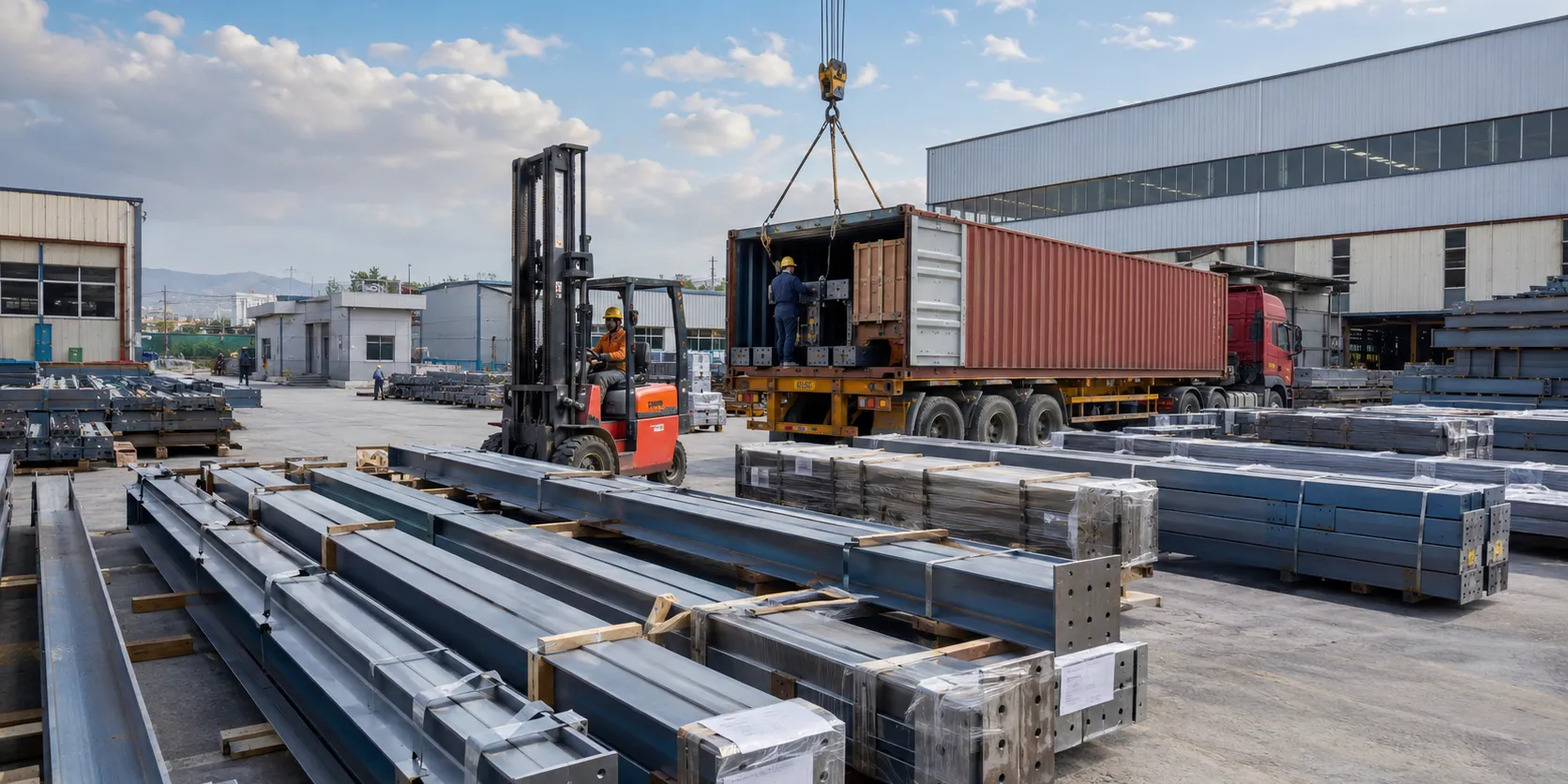
Ask each supplier to state the agreed delivery basis, such as EXW, FOB or CIF where applicable. Compare factory and container loading, export packing, component numbering, packing lists, ocean freight, insurance, destination charges, inland transport and unloading. Totals are not like-for-like when these responsibilities differ.
The packing and container-loading guide covers shipment preparation in more detail.
Confirm Foundations, Installation and Local Work Exclusions
Foundation, concrete work, site preparation, permits, local approvals, taxes, customs duties, unloading, lifting equipment, local labor, erection, supervision, MEP and fire systems may be outside the supplier’s formal scope unless stated. Confirm each included and excluded responsibility in the quotation and contract scope.
Local construction and site responsibilities should be confirmed explicitly. The installation readiness guide covers coordination after the scope is agreed.
Compare the Commercial Terms, Not Only the Material Price
The same materials can be quoted on different commercial terms. Record these differences beside the technical scope before drawing a conclusion from the totals.
Confirm important exclusions and later changes in writing, including revised dimensions, roof or wall materials, cranes, mezzanines, openings, design criteria, freight or local-site work.
Steel Structure Quotation Comparison Checklist
Use the same criteria for every received offer. Mark each item as included, excluded, separately priced or awaiting confirmation.
| Quotation item | What to compare | Why it matters |
|---|---|---|
| Building dimensions | Length, width, height, clear height and layout basis | Similar floor area may still involve different structural scope. |
| Design criteria | Project-specific wind, snow, seismic, crane, mezzanine and equipment inputs | Different assumptions can change member sizes and quantities. |
| Main steel frame | Columns, rafters and primary members against the same design basis | The primary-frame scope is a major part of the offer. |
| Secondary steel and connections | Purlins, girts, bracing, plates, bolts and anchor bolts if supplied | A lower total may exclude secondary or connection items. |
| Roof and wall systems | Sheets or panels, insulation, trims, gutters and accessories | Enclosure choices change the supply and site-work boundary. |
| Doors and optional equipment | Openings, skylights, ventilation, crane or mezzanine items | Optional systems may be priced separately or excluded. |
| Surface treatment | Preparation, coating or galvanizing and inspection basis | Compare treatment against the specified exposure conditions. |
| Packing and markings | Packing method, accessory packing, numbering and shipping marks | The export-preparation scope may differ. |
| Freight and delivery terms | Incoterm, port, freight, insurance and inland transport | Transport responsibility changes the delivered-cost basis. |
| Installation responsibilities | Unloading, lifting equipment, local labor and erection scope | Some quotations cover supply only; others include more support. |
| Foundation and local work | Concrete work, permits, duties and local systems | Excluded site work can change the overall project budget. |
| Drawings and documents | Design, fabrication, inspection, installation and shipping documents | Document deliverables should match the agreed scope. |
Review Your Steel Structure Quotation
Have multiple quotations that are difficult to compare? Send the available drawings, key specifications and quotation scope so Bingfa can review the major structural, enclosure, delivery and responsibility differences.
Provide the Same Inputs to Every Supplier
For a meaningful comparison, each supplier should receive the same confirmed project location, building use, dimensions, design criteria and scope assumptions. The accurate steel building quote guide owns the detailed RFQ-input checklist; use it before collecting comparable offers.
Steel Structure Quotation Comparison FAQ
Why do steel structure quotations differ between suppliers?
Steel structure quotations may use different building dimensions, design loads, steel quantities, material specifications, enclosure systems, surface treatments, packing methods, delivery terms and installation responsibilities. Buyers should confirm that the compared quotations cover the same scope.
Should buyers compare only the total price?
No. The total price is meaningful only when the quotations use the same design basis and supply scope. A lower total may exclude secondary steel, accessories, surface treatment, packing, freight, installation or local work.
What should be included in a steel structure quotation?
A quotation should clearly state the building dimensions, design basis, structural steel scope, roof and wall system, doors and accessories, surface treatment, packing, delivery terms, drawings, documents and exclusions.
Are foundation, shipping and installation always included?
No. Foundations, concrete work, ocean freight, inland transport, unloading, lifting equipment, local labor and installation may be quoted separately. Each responsibility should be confirmed before comparing totals.
What information is needed before comparing quotations?
Buyers should provide the same project location, building use, dimensions, design requirements, roof and wall scope, door layout, equipment loads, surface treatment, shipping destination and installation responsibilities to every supplier.
Discuss Your Steel Building Requirements
Share the available drawings and quotations, along with the intended building use and delivery destination, so Bingfa can review the quoted supply and responsibility boundaries.