
How Much Does a Prefabricated Steel Building Cost in 2026?
There is no reliable universal price for a prefabricated steel building. Building type, geometry, design conditions, options and the agreed supply and delivery scope must be defined before quotations can be compared.
What Actually Changes Prefabricated Steel Building Cost?
A useful cost discussion starts with the inputs that change the structure and the quotation scope, not a single public unit rate.
Building Type
Warehouses, workshops and factories can require different internal layouts, equipment interfaces and envelope systems.
Building Geometry
Length, width, clear span, internal columns and usable height influence the structural arrangement.
Design Conditions
Project location and the confirmed wind, snow, seismic and other design inputs guide engineering decisions.
Structural Options
Cranes, mezzanines, large openings and equipment interfaces can change members, connections and fabrication scope.
Envelope and Finish
Roof and wall systems, insulation needs and the selected surface treatment affect the agreed material scope.
Supply and Delivery
Packing, destination, Incoterm and locally supplied work determine what is and is not included.
Building Type Matters
Start with the intended operation. The building type changes the layout questions that must be resolved before pricing.
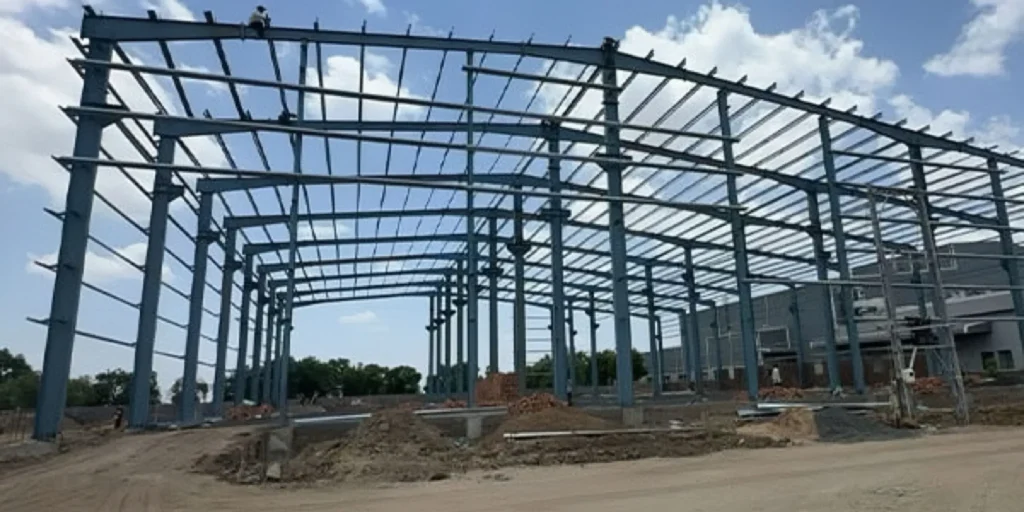
Warehouse
Storage density, racking, loading flow, clear span and door positions can change the structural and enclosure scope.
Steel warehouse cost guide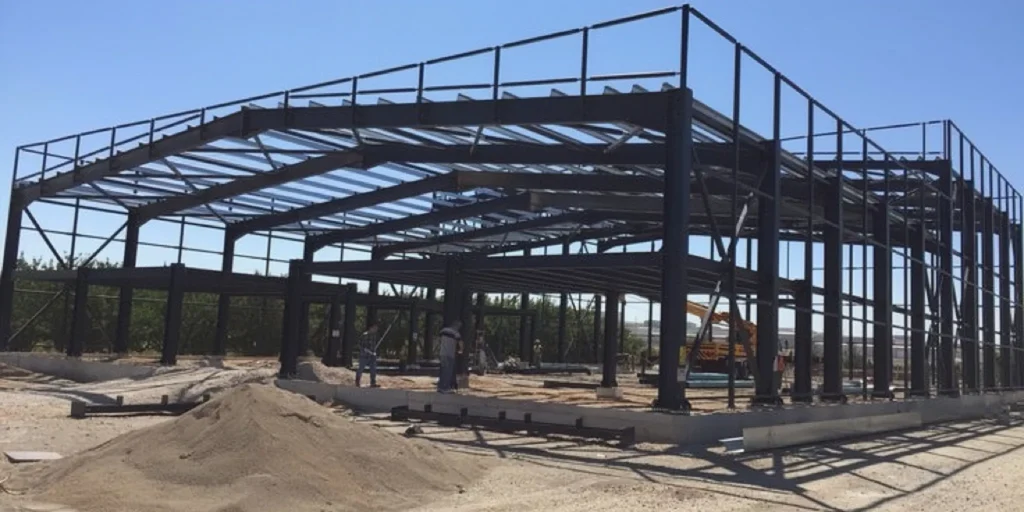
Workshop
Production equipment, material flow, crane interfaces and service clearances may require a different planning basis.
Steel workshop cost guide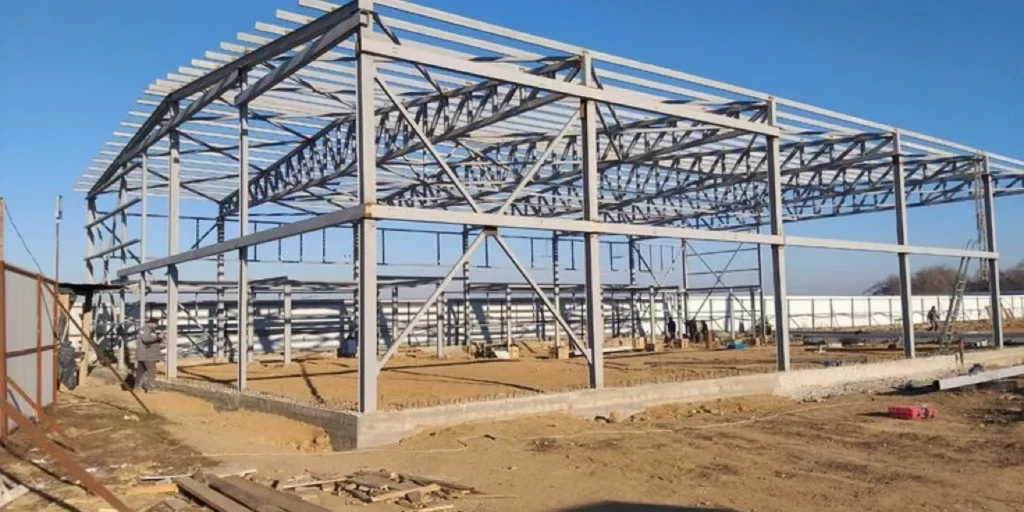
Factory or Industrial Building
Process equipment, production zoning, utility interfaces and expansion planning can affect the complete building scope.
Industrial steel factory buildingSize, Span, Height and Design Conditions
Dimensions must be reviewed together. A wider clear span, greater usable height or different column arrangement can change load paths, member sizing, steel quantity and fabrication complexity.
Overall Size
Length and width establish floor area, but they do not define the structural scheme on their own.
Span and Columns
Clear-span requirements and permitted internal columns affect framing options and member design.
Usable Height
Eave height, clear height and equipment clearances should be stated separately where relevant.
Design Basis
Wind, snow, seismic and other applicable inputs must be confirmed for the project location and governing requirements.
Structural Options That Change Scope
These options are quotation-scope variables. Their effect depends on the selected layout and engineering solution, so they should not be treated as fixed surcharges.
Crane Interfaces
Crane capacity, runway level, duty requirements and support responsibility need coordination.
Mezzanines
Use, loading, access, openings and integration with the main frame should be defined.
Large Openings
Door sizes and locations can require local framing and connection changes.
Equipment Interfaces
Process equipment and service loads may affect clearances, supports and foundation coordination.
Special Framing
Canopies, platforms, partitions and future expansion provisions should be listed in the scope.
Roof, Wall and Material Options
The enclosure choice should follow the required use, indoor environment, available documentation and complete system design.
Roof and Wall Systems
Profiled sheets and insulated panels create different material, flashing, joint and accessory scopes. Compare sandwich panel materials by complete configuration.
Color Steel Sheet
Profile, coating, thickness and accessory details should be confirmed against the quotation. Review the color steel sheet product scope.
Surface Treatment
Paint or galvanized requirements should be specified for the project environment and procurement documents.
What May Be Included or Kept as Local Scope?
The same total cannot be compared fairly when suppliers quote different boundaries. Confirm every inclusion and exclusion in the quotation.
Supplier scope may include
- Fabricated primary and secondary steel
- Agreed roof and wall materials
- Specified accessories and flashings
- Drawings and documents as agreed
- Packing and delivery under the quoted term
May be local or excluded
- Foundations and civil works
- Erection labor and lifting equipment
- Permits, taxes and duties
- Utilities and fire systems
- Other local trades and site work
Packing, Shipping and Incoterm
Packing method, destination, route and the agreed delivery basis affect what appears in a quotation. An EXW, FOB, CIF or other agreed Incoterm can represent a different commercial boundary.
Packing Basis
Confirm how structural members, panels and accessories will be protected and identified.
Destination
Port, inland destination and site access should be stated before logistics scope is compared.
Delivery Term
Use the same Incoterm and named place when comparing quotations.
Responsibility Split
Clarify customs, duties, inland transport, unloading and site storage responsibilities.
Information Needed Before Pricing
A first review does not require a complete engineering package, but the following inputs make the scope clearer.
Project
- Country and location
- Building use
- Length, width and height
Structure
- Clear span or columns
- Design conditions
- Crane or mezzanine needs
Envelope
- Roof and wall system
- Openings
- Coating or finish
Commercial
- Available drawings
- Destination and Incoterm
- Local scope responsibilities
Review Your Steel Building Cost Inputs
Share the building use, dimensions, location and required scope so the team can identify the information still needed for a project-specific quotation.
Choose the Right Cost Guide
Steel Warehouse Building Cost Guide
Use this guide when storage flow, racking, loading access and warehouse enclosure choices are the main planning questions.
Open the warehouse cost guideSteel Workshop Building Cost Guide
Use this guide when production layout, cranes, equipment interfaces and workshop operations drive the scope.
Open the workshop cost guideCompare Quotations on the Same Basis
Before comparing totals, align the dimensions, design basis, materials, options, surface treatment, packing, Incoterm and exclusions. Then use the steel structure quotation comparison guide for a like-for-like review.
Prefabricated Steel Building Cost FAQ
Is there a standard price per square metre for a prefabricated steel building?
No single price per square metre applies reliably to every prefabricated steel building. Cost depends on project-specific factors such as span, clear height, design inputs, steel quantity, enclosure system, openings, optional features, fabrication scope and delivery requirements. A project-specific quotation is more useful than a universal unit price.
Why can two steel buildings of the same size have different costs?
Buildings with the same floor area can require different structural schemes and steel quantities. Span, height, loads, framing arrangement, cranes, mezzanines, openings, roof and wall systems, surface treatment and shipping scope can all change the final quotation.
What affects the cost of a prefabricated steel manufacturing plant?
Manufacturing-plant cost can be affected by building dimensions, clear spans, usable height, production equipment, crane or mezzanine interfaces, design requirements, enclosure systems and the confirmed supply scope. The final cost should be based on the actual plant layout and project requirements.
Do span and clear height affect prefabricated steel building cost?
They can. Span and usable height influence the structural arrangement and may affect steel quantity and member design. Their cost impact depends on the complete building geometry, design requirements and intended use rather than one dimension alone.
What should be included in a steel building supplier quotation?
A quotation should clearly identify the structural scope, enclosure system, included accessories, surface treatment, fabrication scope, packing, delivery terms and major exclusions. Buyers should compare suppliers using the same confirmed project inputs and scope.
What information is needed for a project-specific steel building quote?
Useful information includes building length, width and height, project location, intended use, required clear span or internal columns, major doors, equipment, cranes or mezzanines where applicable, enclosure requirements and available drawings. Complete engineering drawings are not required for the first inquiry.
Request a Project-Specific Cost Review
Send your building type, location, dimensions and intended supply scope for a structured quotation review.