A quotation that says “bolts included” may leave important questions unanswered. Does it cover complete connection assemblies or bolts alone? Which drawing revision determines the quantities? Are the specified finish, documents and packing included? These omissions can remain hidden until the steel arrives and the erection team sorts the accessories.
This guide helps overseas contractors and procurement teams define the structural fastener portion of a steel building order. It is a purchasing checklist, not a connection design method or an installation torque guide.
Separate Structural Connections from Other Fasteners
Start with three separate schedules: structural connection bolts, foundation anchors, and roof or wall fixings. They serve different interfaces and should not be treated as interchangeable items simply because each uses a threaded component.
Connection assemblies join steel members. Foundation anchors connect the steel base interface to the supporting civil works. Cladding fixings secure the selected enclosure system. Keep their drawings, specifications, quantities and responsible suppliers identifiable. Use our foundation and anchor bolt checklist for the civil-to-steel handover; it does not replace a structural connection fastener schedule.
Ask whether the supplier’s quantity is based on approved drawings, a preliminary estimate or a buyer-issued bill of materials. Record the issue date and revision. A change to connection details can alter the accessory order even when the building’s overall dimensions remain unchanged.
Specify the Assembly, Not Only a Strength Grade
The responsible structural designer should identify the connection requirements and applicable specifications. Procurement should carry those requirements into the RFQ, not infer them from a familiar grade marking or the cheapest available bolt.
For example, EN 15048 concerns non-preloaded structural bolting assemblies, while EN 14399 addresses high-strength assemblies for preloading. These are specification examples, not interchangeable labels or a statement that every Bingfa order includes either system. Supplier literature also separates these product families from foundation and other fixings. Andrews Fasteners’ product categories illustrate that distinction.
Specify the required bolt, nut and washer arrangement together, including the applicable product specification, size, thread and finish. Follow the selected assembly’s requirements rather than assuming every connection needs the same number of washers. Do not substitute an ASTM, EN or other product merely because its nominal diameter or stated strength appears similar; obtain the responsible designer’s acceptance first.
Resolve Dimensions, Finish and Installation Responsibilities
Check the scheduled diameter and length against the approved connection detail, including the connected parts and required engagement. Identify who resolves missing lengths, unclear thread requirements or inconsistent schedules before the order is released. A procurement team should flag these gaps, not invent dimensions.
Finish and assembly condition also matter. The RFQ should identify the specified coating and any manufacturer instructions relevant to the selected system. Do not assume that adding a coating or changing a nut after delivery leaves the original assembly suitable. The BAPP Structural Bolting Guide gives assembly-specific examples of batch and lubrication controls; these should not be generalized to every fastener family.
Agree separately who supplies the installation procedure, carries out required verification, provides suitable tools and inspects the completed connections. The 2025 RCSC Specification, where adopted for a project, addresses structural joint requirements, installation and inspection separately from component procurement. The governing project documents and specified edition remain controlling. This article does not prescribe a universal torque value or installation method.
Illustrative Example: Two Quotations with Different Levels of Detail
The following is a hypothetical purchasing comparison, not a Bingfa quotation or product offer. Supplier A writes “connection bolts included.” Supplier B identifies the drawing schedule, lists complete assemblies by size and quantity, states the finish, identifies proposed documents and flags unresolved details.
Supplier B’s description is easier to review, but detail alone does not prove compliance. Ask Supplier A for the same information, then compare both offers against the buyer’s approved requirements. Do not assume that a detailed offer includes testing, site installation, spare quantities or a particular certificate unless those items are explicitly confirmed.
Structural Fastener RFQ Worksheet
Use one worksheet for each quotation. Replace “to be confirmed” with a named owner and a decision date before the affected order is finalized.
| Item | Buyer Requirement | Supplier Response | Evidence or Open Question |
|---|---|---|---|
| 1. Drawing basis | Connection schedule, drawing numbers and revision. | List the exact issues used for the offer. | Which details are still preliminary? |
| 2. Specification | Applicable product standard, edition, grade and specified assembly system. | Identify the offered product without generic equivalence claims. | Who approves any proposed substitution? |
| 3. Dimensions | Diameter, length, thread and required connection detail. | Provide an itemized size schedule. | Which dimensions need designer confirmation? |
| 4. Assembly contents | Required bolts, nuts, washers and any specified accessories. | State the contents and compatibility basis. | Is the price per component or complete assembly? |
| 5. Finish | Specified finish and assembly condition. | Name the offered finish and relevant instructions. | Record any departure from the specification. |
| 6. Quantities | Scheduled quantity and separately agreed spares. | Separate installed quantities, spares and exclusions. | Which drawing revision controls the count? |
| 7. Documents | Required records, lot identification and delivery stage. | Confirm available documents and how they relate to supplied items. | Who reviews the records before release? |
| 8. Packing | Separation by specification, size and required lot identity. | Describe package labels and packing-list references. | Can the receiving team identify each package? |
| 9. Site work | Installation, verification and inspection responsibilities. | State included support and excluded site services. | Which appointed party supplies procedures and records? |
| 10. Delivery boundary | Delivery point, shipment split and responsibility for shortages. | List exclusions and any items supplied separately. | Are accessories available before their required erection stage? |
Keep Records Connected to the Delivered Packages
Agree on the required documentation before ordering, including what identifies the product or lot and when the buyer will receive it. A mill test certificate for structural plate is not automatically a certificate for the connection bolts. Our structural steel mill test certificate checklist explains the separate material-document review.
Keep package labels, packing-list lines and relevant supplier records linked during receiving and storage. A practical receiving sheet can record package reference, stated specification, quantity received, condition and any open discrepancy. Retain the supplier’s identification when packages are divided for different erection areas.
Counting packages and checking labels cannot replace technical acceptance of the selected assembly or the specified site checks. Escalate unclear identity, missing documents, damaged threads or unexplained substitutions to the appointed responsible party. Do not resolve a mismatch by mixing unverified parts or changing the approved specification informally.
Define the Fastener Scope with the Steel Fabrication Order
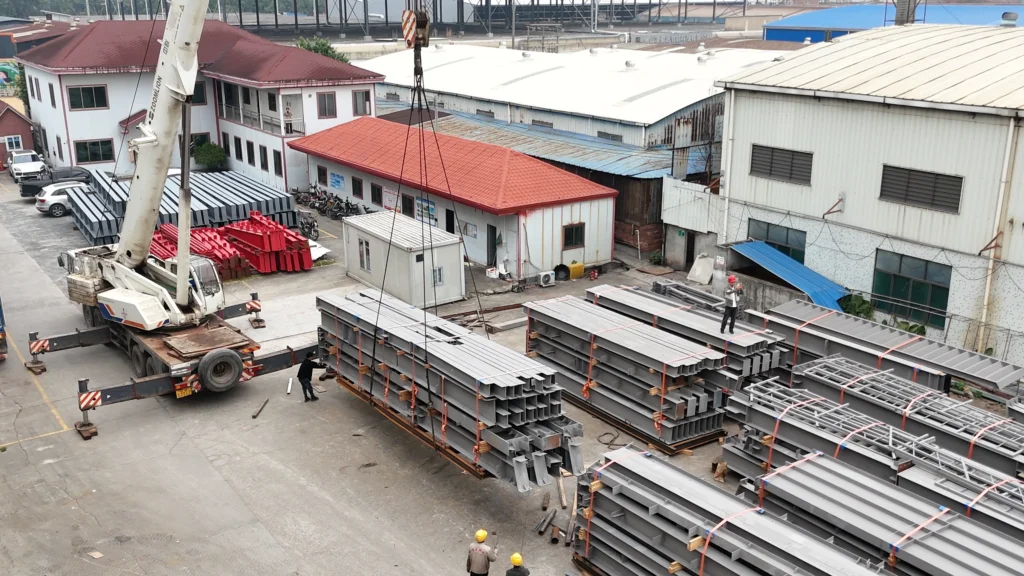
Bingfa’s steel fabrication and supply scope can be discussed against the project drawings and agreed requirements. Include the connection schedule when requesting structural steel fabrication from drawings, so fasteners supplied with the steel package, buyer-supplied items and site responsibilities can be distinguished.
The quotation should confirm the offered fastener scope and available documentation. Do not assume a default bolt standard, certificate type, in-house fastener test or installation service. If complete connection drawings are not yet available, submit the current information and identify what must be resolved before the relevant purchasing or fabrication release.
Frequently Asked Questions
Does “bolts included” mean nuts and washers are included?
Not necessarily. Ask for the assembly contents and quantity basis in writing. The offer should identify whether pricing covers individual components or the complete arrangement specified for the connection.
Can a locally available bolt of the same grade replace the specified one?
Do not assume it can. Submit the proposed product details and supporting information to the responsible designer for review. Grade alone does not resolve dimensional, assembly, finish or installation requirements.
Should a buyer require one particular certificate for every order?
The required document set depends on the project specification, selected products and contract. Confirm it before order placement; this guide does not promise a universal EN 10204 certificate type or testing package.
What information should accompany the first inquiry?
Send the project location, available connection drawings or schedule, drawing status, required specifications, quantities and delivery scope. Mark unknown items clearly so their review can be assigned before the order is finalized.