

Steel Structure Paint Inspection Checklist Before Shipment
Quick answer: Before shipment, buyers should review the approved coating requirements, product and layer traceability, surface-preparation evidence, visible finish, dry film thickness records, applicable conditional tests, touch-up areas, handling damage and packing-release evidence. Results should be traceable to the inspected components and reviewed against the agreed project criteria rather than one universal acceptance rule.
This page focuses on coating quality before dispatch rather than weld acceptance, dimensions, material quantities or the complete packing-document review. For the broader factory check, see the overall steel structure quality inspection guide. Coating inspection should also be reviewed against the approved structural steel paint system. Buyers comparing layer functions or low-temperature planning can review primer, intermediate coat and topcoat roles and the cold-climate coating guide.
Before Inspection: Confirm the Approved Requirements
Inspection should begin with the requirements agreed for the project. Depending on the contract and quality plan, the review basis may include the approved coating specification, the product data sheet, an inspection and test plan, the agreed coating system and project-specific acceptance criteria.
These documents establish what was ordered and how the evidence should be assessed. They should not be replaced by a generic online checklist or a single universal coating value.
- Confirm the specified preparation and coating scope.
- Confirm which coating layers and colors apply to each component group.
- Confirm required inspection stages, records and witness points where applicable.
- Confirm how deviations, repairs and final release should be documented.
Review Paint Product, Batch and Layer Traceability
Where traceability is part of the agreed quality process, buyers can review the coating product name, manufacturer, batch or lot number and the identification of primer, intermediate coat and topcoat. Component or part marking can help connect inspection records with the steel members being released for shipment.
Product evidence
Product name, manufacturer and batch or lot information where required by the project.
Layer identification
Primer, intermediate coat and topcoat identification aligned with the approved system.
Component reference
Part marks or component groups that connect readings and photos with inspected steel.
Application records
Relevant application, interval and curing evidence when included in the agreed QC process.
Review Surface-Preparation Evidence
Coating inspection before shipment does not replace the earlier preparation process. It should verify that the specified preparation requirement and relevant records or inspection evidence are available where required. Visible contamination, remaining rust, moisture or loose material can affect later coating performance.
This page does not prescribe one blasting method or preparation grade. Detailed preparation methods belong in the steel surface preparation guide; Page 4585 should only review the evidence needed for the approved project basis.
Inspect Primer, Intermediate Coat and Topcoat Coverage
The inspection should confirm that the required coating layers cover the specified steel surfaces and match the approved system. Primer coverage deserves attention around weld zones, edges, corners, bolt holes, connection plates, base plates, bracing details, cutouts and small parts. Where an intermediate coat is specified, its product and application record should be identified rather than assumed.
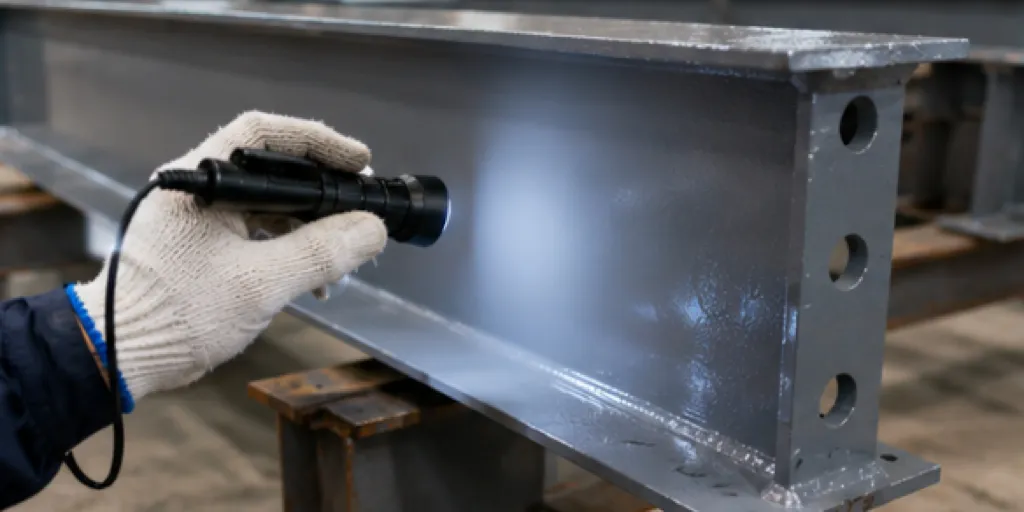
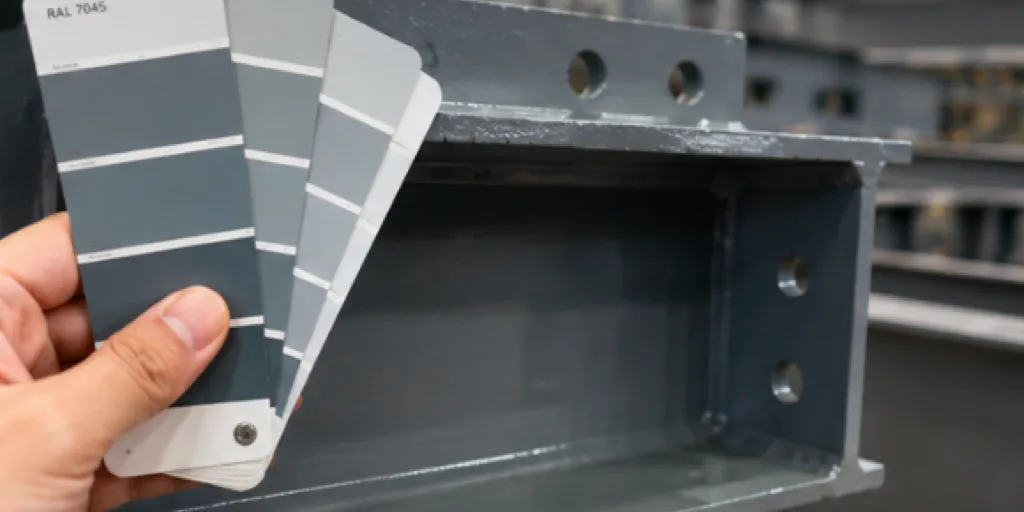
Topcoat inspection should review color consistency, uniform finish and complete coverage while also checking for runs, sagging, scratches, blistering, peeling, pinholes, contamination and exposed steel. Appearance alone does not prove coating quality, but visible defects can identify areas that need review before packing.
Check Critical Details and Visible Coating Defects
Edges, weld areas, bolt holes, end plates, gusset plates, base plates and hidden corners are harder to coat uniformly than large flat surfaces. Inspectors should review coating continuity and visible handling damage around these details without confusing the coating check with separate weld or connection acceptance.
Visible peeling, blistering, rust or mechanical damage should be recorded and dispositioned before release. Root-cause analysis after a visible failure belongs in the coating peeling and adhesion-failure diagnosis guide, not in this pre-shipment checklist.
Review WFT and DFT Records
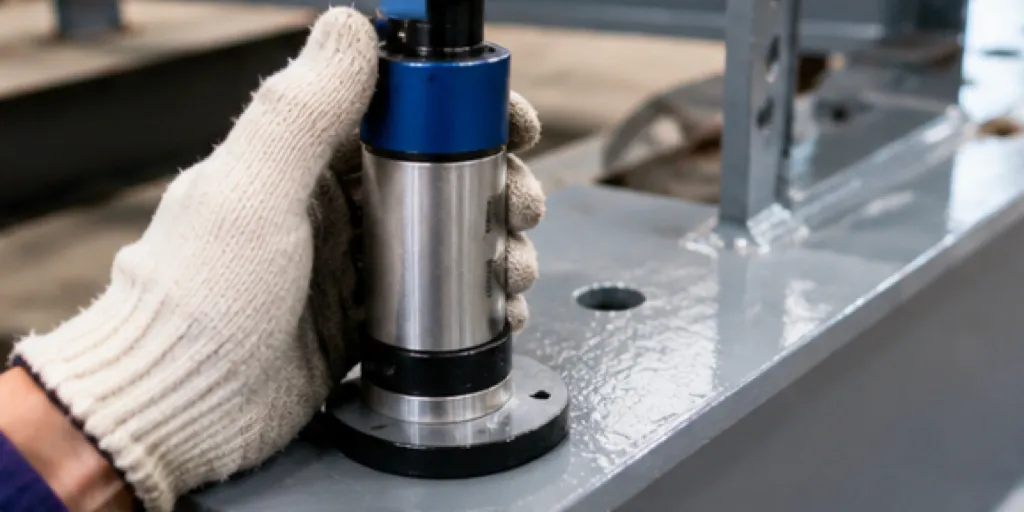
Dry film thickness should be measured with a suitable gauge at representative locations and compared with the approved project criterion. Multiple traceable readings are more useful than one isolated measurement, especially across main members, edges, corners, detail areas and locations affected by touch-up or rework.
- Record the component or component group.
- Record the measurement location and reading.
- Confirm whether the result relates to an individual layer or the total system.
- Review the readings against the approved coating requirement.
- Record the disposition of areas that require rework or additional review.
Wet film thickness may be checked during application when required by the coating procedure or project specification. It is not a universal pre-shipment re-test requirement, and this page does not set fixed WFT, DFT or tolerance values.
Use Conditional Tests Only When They Apply
Adhesion testing
Adhesion testing may be required when it is specified in the project requirements, inspection plan or agreed test procedure. The selected method, interpretation and repair of a tested area depend on the agreed procedure, so adhesion testing should not be presented as mandatory for every order.
Holiday or discontinuity testing
Holiday or discontinuity testing may be required for applicable coating systems on conductive substrates where it is specified. It is not a universal requirement for every painted steel structure.
Third-party inspection
A buyer or project may arrange third-party inspection when it is contracted or otherwise required. The scope, witness points, records and release authority should be agreed before inspection.
Confirm Your Coating Inspection Scope
Share the project specification, coating system and required inspection records so the review basis can be aligned before production release.
Check Curing, Touch-Up and Handling Damage
The coating should reach the handling or curing condition required by the approved product and project procedure before components are stacked, packed or loaded. Drying and curing depend on the coating product, layer build and application environment, so one fixed waiting time is not suitable for every project.
Before packing, review visible scratches, exposed steel, rust spots, damaged coating around edges or weld areas and touch-up locations. Repair photos or disposition records may be requested where they form part of the agreed QC process. For problems that develop after delivery or installation, use the separate early steel rust diagnosis guide.
Prepare the Inspection Report and Packing Release
The final evidence package should reflect the agreed project scope rather than a universal report format. A concise inspection record may include:
- Visual inspection result and inspected component references.
- Traceable dry film thickness readings.
- Applicable conditional-test results.
- Defect, touch-up and rework disposition.
- Inspection photos linked to components or locations.
- Inspector, date and sign-off where included in the quality process.
Packing release should follow confirmation that required repairs are complete, the coating is ready for handling and painted contact areas are protected against avoidable friction, impact, moisture and contamination. This is the interface between coating inspection and packing, not a replacement for the full packing and loading plan.
What Buyers Should Confirm Before Ordering
To compare quotations and inspection scope on the same basis, buyers should provide the project location, exposure environment, approved or requested coating system, color, required project criteria, inspection documentation needs, packing conditions and drawings or specifications where available.
Clear inputs help separate the coating requirement from optional tests and documentation, reducing assumptions before fabrication and shipment.
Steel Structure Paint Inspection FAQ
What should buyers inspect before painted steel is shipped?
Buyers should review the approved coating requirements, product and layer identification where applicable, surface-preparation evidence, visual condition, dry film thickness records, critical edges and connection details, touch-up areas, curing condition, handling damage and packing-release evidence.
How should dry film thickness be checked?
Dry film thickness should be measured with a suitable gauge at representative locations and compared with the approved project criterion. The readings, measurement locations and component references should be recorded so the result is traceable rather than based on one isolated reading.
Is adhesion testing required for every project?
No. Adhesion testing may be required when it is included in the project specification, inspection plan or agreed test procedure. The method, acceptance basis and any repair after testing should be confirmed for the specific project.
What coating defects should be checked before packing?
The inspection should review missed coating, runs, sagging, blistering, peeling, pinholes, contamination, exposed steel, rust spots, scratches, mechanical damage, incomplete curing and damaged areas around edges, welds, holes and connection details.
What inspection records should buyers ask for?
Depending on the agreed quality plan, useful records may include product and batch identification, component references, visual inspection results, dry film thickness readings, applicable conditional test results, defect and touch-up disposition, inspection photos, inspector name, date and sign-off.
Review Your Pre-Shipment Coating Requirements
Send the available coating specification, drawings and inspection requirements so Bingfa can review the project scope with you.
REQUEST A PROJECT REVIEW