
CLEAR SPAN STEEL WAREHOUSE
Clear Span Steel Warehouse Building for Unobstructed Storage Space
Bingfa Steel supplies project-specific clear span steel warehouse buildings designed around building width, storage layout, racking, equipment movement, loading access and structural requirements without internal columns where the engineering arrangement allows.
REQUEST A CLEAR SPAN WAREHOUSE REVIEWQuick Clear Span Summary
A clear span steel warehouse is a warehouse structural configuration designed without interior columns across the required building width where feasible for the project. This arrangement can provide unobstructed floor space for racking, forklift circulation, equipment movement and loading operations. When pallet storage drives the layout, the steel warehouse racking layout should be reviewed alongside clear-span feasibility. However, clear-span feasibility depends on building width, project loads, building use, structural system, roof and wall system, openings, crane requirements where applicable and engineering requirements. There is no universal clear span that applies to every warehouse. The final arrangement should be reviewed for the actual project geometry, operational needs and structural design.
What Is a Clear Span Steel Warehouse Building?
A clear span steel warehouse building is a warehouse structural configuration in which the primary frames span the required building width without intermediate columns where feasible for the project. For the broader core product scope, see the Prefab Steel Warehouse Building page.
This creates an open interior that can be coordinated for storage, equipment placement, forklift routes, vehicle movement and loading operations.
Key characteristics may include:
- No internal columns across the required clear width — Where the structural design allows
- Flexible storage planning — Racking and storage zones can be coordinated with fewer structural obstructions
- Open circulation — Forklift and vehicle routes can be planned without internal-column interruptions
- Equipment access — Large equipment or goods can be positioned with fewer internal structural constraints
A clear span warehouse is not a fixed standard product. The feasible arrangement depends on building width, project loads, use, structural system, enclosure, openings, crane requirements where applicable and engineering review.
For broader comparison across steel warehouse building types, review the warehouse hub before selecting a specific clear-span system.
Where Clear Span Layouts Are Useful
A clear span layout may be useful where unobstructed operating space has clear commercial or operational value.
Typical situations include:
- High-density racking — Where column-free rack zones are preferred
- Forklift circulation — Where continuous aisles and turning areas are important
- Equipment movement — Where internal columns would interfere with machinery or large goods
- Loading operations — Where open circulation supports material movement
- Flexible storage planning — Where rack or equipment layouts may change over time
- Open operational areas — Where the building use benefits from fewer internal structural obstructions
Equipment placement can be planned with fewer internal column constraints. Racking layouts may have greater planning flexibility where internal columns are eliminated.
The decision to use a clear span arrangement should follow the actual operational requirements rather than the assumption that clear span is always the best option.
Clear Span vs. Multi-Bay Warehouse
Clear span and multi-bay warehouses use different structural layouts.
Clear Span Layout:
- No interior columns across the required clear width
- Open floor area for storage and operations
- Fewer column constraints on racking and circulation
- Primary frames span the required width
Multi-Bay Layout:
- Interior columns divide the total building width into multiple structural bays
- Racking, equipment and circulation are coordinated around the internal column grid
- Structural spans are divided into smaller bays
- May offer different structural and cost trade-offs for wider buildings, depending on the project requirements
Neither arrangement is universally better.
The appropriate solution depends on operational requirements, building width, project loads, equipment layout and structural design.
Structural System for Clear Span Warehouses
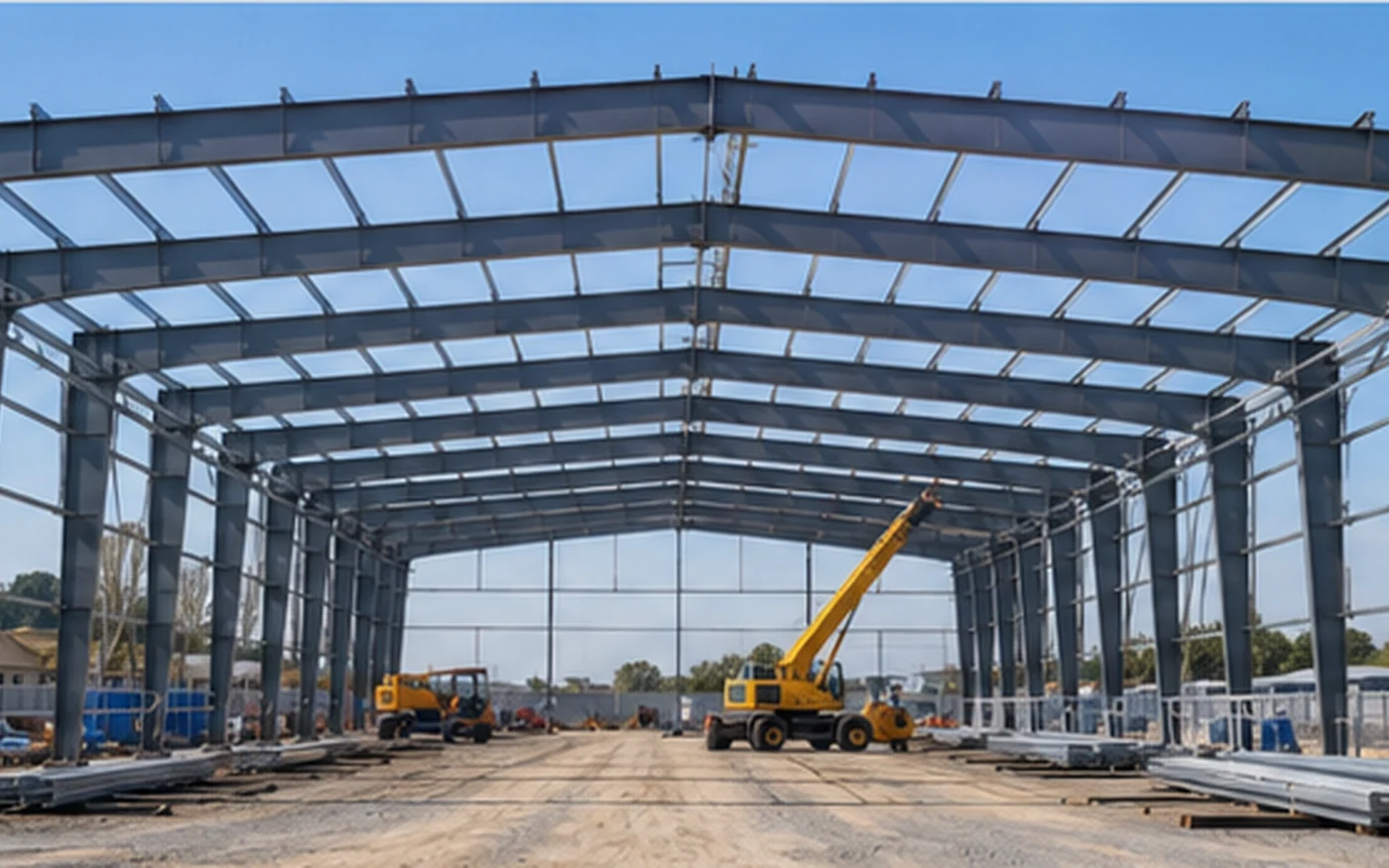
The structural system is developed so the required warehouse width can be spanned without intermediate supports where the project conditions allow.
Primary Frames
Primary frames are the main structural members spanning the building width.
Depending on the project, the structural concept may use portal frames, rigid frames, truss arrangements or another engineered system.
Frame geometry and member sizes depend on:
- Building width
- Project loads
- Eave height and roof geometry
- Openings
- Crane requirements where applicable
- Applicable engineering requirements
No single frame arrangement is appropriate for every clear span warehouse. For non-warehouse wide-span industrial structures, see Large Span Industrial Steel Building.
Secondary Framing and Bracing
Secondary framing supports the roof and wall enclosure and provides the required structural stability.
Typical elements may include:
- Roof purlins
- Wall girts
- Bracing
- Eave members where applicable
The final secondary framing and bracing arrangement should be coordinated with the primary structure, enclosure, openings and project loads.
Clear Span Warehouse Configuration Options
| Project Item | Possible Configuration | What Must Be Confirmed |
|---|---|---|
| Building layout | Clear-span warehouse arrangement where feasible | Total width, length, operational requirements |
| Clear-span requirement | No interior columns across the required clear width | Required clear area and operational need |
| Structural frame | Portal, rigid, truss or project-specific frame | Width, loads, geometry and engineering basis |
| Secondary framing | Purlins, girts and bracing | Support arrangement, connections and enclosure |
| Roof system | Steel sheets or sandwich panel systems | Profile, insulation, slope and project requirements |
| Wall system | Steel sheets or sandwich panel systems | Profile, insulation, openings and project requirements |
| Racking / storage layout | Pallet racks, bulk storage or other project-specific layout | Rack position, aisles, operating requirements |
| Large doors | Roller shutter, sectional, sliding or project-selected door | Size, quantity, location and operation |
| Loading areas | Loading bays or other loading arrangements where required | Vehicle type, loading operation and door layout |
| Crane provision | Overhead-crane provision where applicable | Crane parameters and structural design |
| Ventilation | Natural, mechanical or hybrid concept | Building use, heat/moisture sources and project requirements |
| Surface protection | Painted, galvanized or project-specified system | Environment and project specification |
| Future expansion | Planning provisions where identified | Expansion direction and engineering basis |
The final configuration is project-specific and should be confirmed before engineering and fabrication.
Building Width and Structural Planning
The required total width and clear-span requirement should be confirmed before preliminary structural planning.
Important considerations include:
- Total building width
- Required clear width
- Eave height / internal clearance
- Roof geometry
- Project loads
- Openings
- Racking and equipment
- Crane provisions where applicable
Wider clear spans can increase structural demand on the primary framing, but no universal width threshold applies to every project.
The final clear-span arrangement depends on building geometry, design loads, building use and engineering requirements.
Racking, Equipment and Forklift Circulation

One of the main reasons buyers consider clear span warehouses is the potential for fewer internal structural obstructions.
Racking Layout
Racking layouts may have greater planning flexibility where internal columns are eliminated.
Important inputs include:
- Rack direction
- Aisle arrangement
- Loading and unloading zones
- Rack heights and operational requirements if known
Equipment Placement
Equipment placement can be planned with fewer internal column constraints.
The final layout should still be coordinated with:
- Doors
- Fire / safety routes where applicable
- Service zones
- Equipment access
- Structural and operational requirements
Forklift and Vehicle Circulation
Vehicle routes can be planned without internal-column obstructions.
Circulation planning may be simplified where columns do not interrupt the operating area, but aisle widths, turning requirements and traffic routes still depend on the selected equipment and operation.
A clear span arrangement does not automatically guarantee greater storage capacity. The actual benefit depends on the project layout.
Doors, Loading and Vehicle Access
Large doors and loading areas should be coordinated with the structural frame and warehouse operation before fabrication.
Project inputs may include:
- Door size
- Door type
- Door position
- Truck access
- Forklift access
- Loading-bay requirements
- Equipment movement
- Wall-panel and girt coordination
Not every clear span warehouse requires a loading dock. Where loading docks are part of the project, their position should be coordinated with the structural layout and operational circulation.
For more detailed loading-dock planning, review the Steel Warehouse Loading Dock Design guide.
Crane Requirements Where Applicable
Overhead-crane provisions may be incorporated where required, subject to the crane parameters, clear-span arrangement and structural design.
Useful crane inputs may include:
- Crane capacity
- Crane span
- Hook height
- Duty requirements
- Runway arrangement
Crane requirements should be confirmed before structural engineering so their effects can be coordinated with the warehouse frame.
A clear span warehouse should not be assumed to support a crane unless the crane requirements have been incorporated into the project design.
Roof, Wall and Ventilation Systems
The enclosure and ventilation strategy should be selected for the actual project requirements.
Roof and Wall Enclosure
Possible systems may include:
- Color steel sheets
- Sandwich panel systems where applicable
The final system depends on project use, climate, insulation requirements, openings and procurement scope.
For insulated panel options, review the Sandwich Panel Materials page.
Ventilation
The ventilation concept may include:
- Natural ventilation
- Mechanical ventilation
- Hybrid ventilation
The appropriate strategy depends on building use, internal heat or moisture sources, outdoor conditions and operating requirements.
No universal ventilation rate, fan quantity or opening size applies to every warehouse.
For more detail, review the Steel Warehouse Ventilation Design guide.
Future Expansion and Operational Flexibility
A clear span layout may provide greater flexibility for future racking or equipment changes because there are fewer internal structural obstructions.
However, future structural expansion should be identified during initial project planning and reviewed as part of the engineering basis.
Potential planning items may include:
- Future building extension
- End-wall arrangement
- Bracing coordination
- Future equipment changes
- Future door or loading requirements
Existing buildings should not be assumed to be expandable without engineering review. If a partial internal platform is required instead of a full clear-span layout, compare it with a Steel Warehouse Building with Mezzanine.
Design Inputs That Affect Clear Span Planning
Useful project inputs include:
- Project country / city
- Building use
- Overall length
- Total width
- Eave height
- Required clear height
- Clear-span requirement
- Whether any internal columns are acceptable
- Racking layout if available
- Equipment
- Forklift / vehicle circulation
- Door sizes and locations
- Loading requirements
- Crane if applicable
- Roof system
- Wall system
- Ventilation concept
- Future expansion
- Local design information if available
- Destination port
- Drawings if available
These inputs help establish the preliminary structural and quotation basis.
For related design considerations, review the Steel Warehouse Design Loads guide and the Steel Warehouse Building Size Guide.
Fabrication and Quality Control
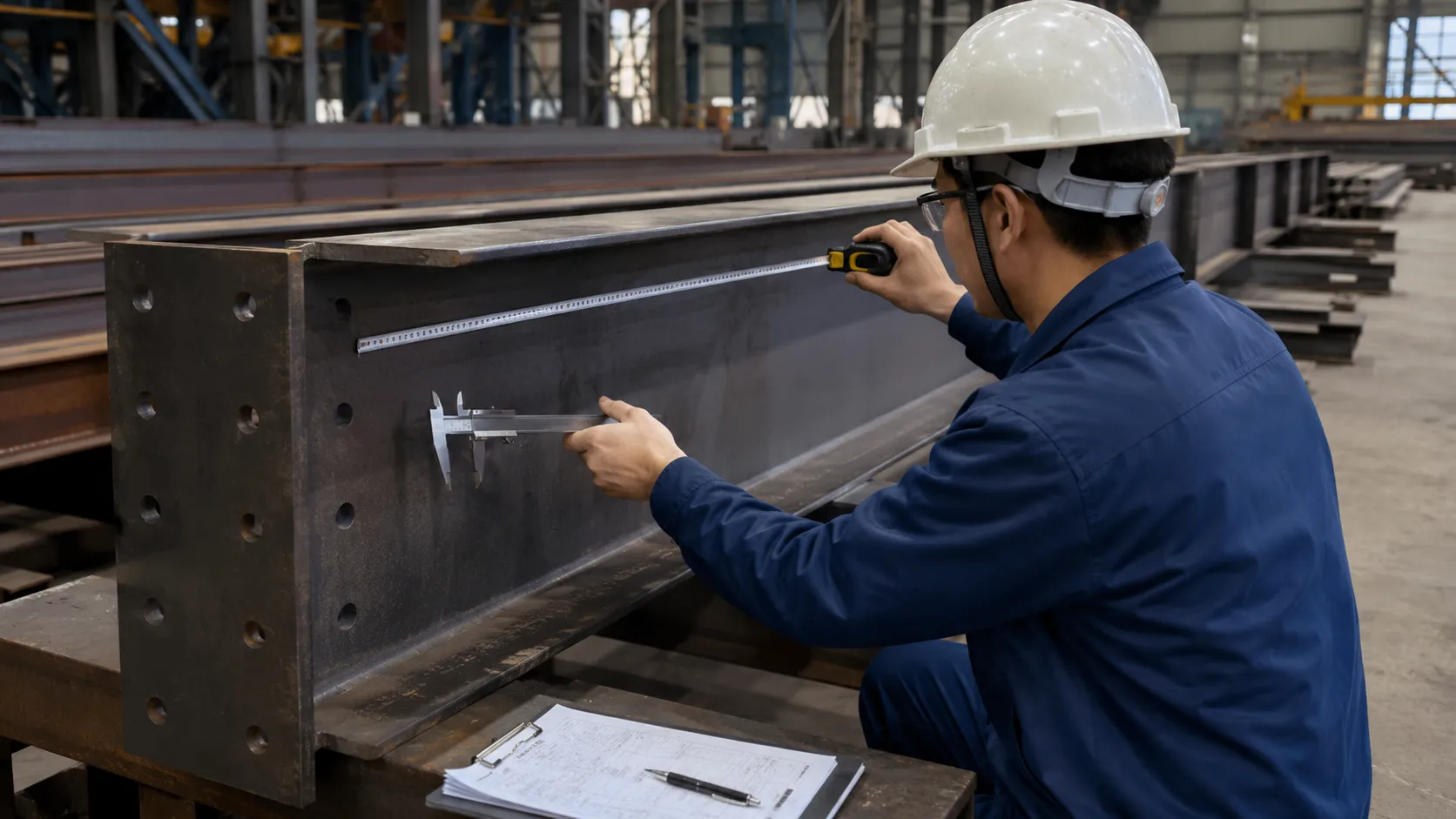
Bingfa manufactures steel warehouse components in a factory environment.
The fabrication workflow may include:
- Cutting
- Drilling
- Assembly
- Welding
- Dimensional inspection
- Hole-position inspection
- Weld inspection
- Component identification
- Surface-treatment inspection according to project scope
- Packing preparation
Quality checks may include component dimensions, hole positions, weld condition, surface preparation and identification.
For projects requiring specific documentation, required inspection records and material documentation should be confirmed before order.
Component Marking, Packing and Export
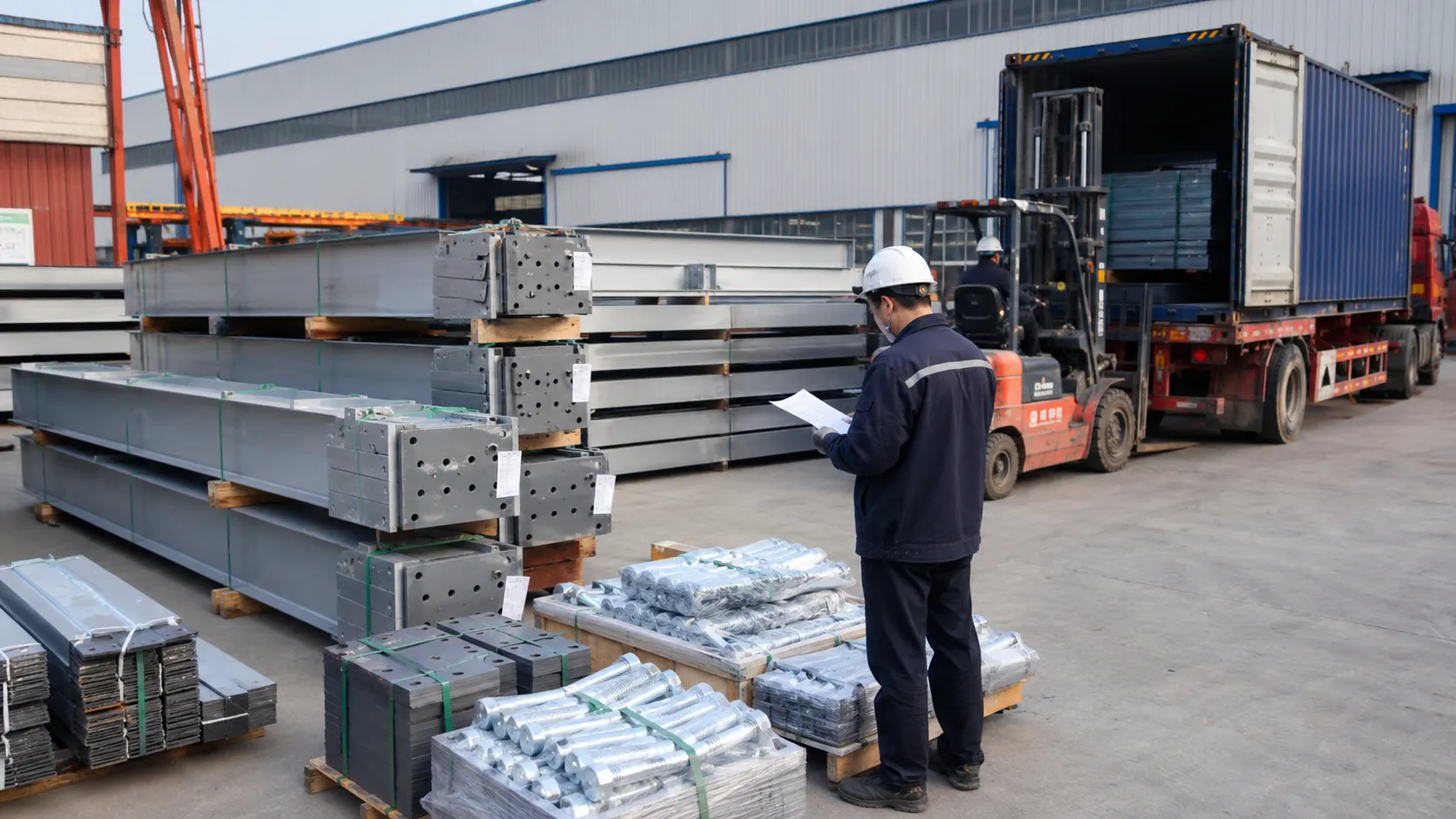
Clear span steel warehouse components can be identified, packed and prepared for shipment according to the confirmed project scope.
Component marking: Identification supports unloading and site assembly in coordination with approved drawings and component lists.
Packing: Packing and protection arrangements should reflect component type and shipping requirements.
Container loading: Components can be arranged to use available container space efficiently while considering protection and transport stability.
Export documentation: Required packing and shipping documentation should be confirmed for the actual shipment.
Information Needed for a Clear Span Warehouse Quotation
| Information | What to Provide | Why It Matters |
|---|---|---|
| Project country / city | Exact location | Helps identify local climate conditions, applicable project requirements and shipping considerations |
| Building use | Storage, logistics, manufacturing or other use | Helps define operational and structural requirements |
| Length | Overall building length | Supports layout and quantity planning |
| Total width | Overall building width | Defines the required structural span |
| Eave height | Required eave height | Affects clearance and structural geometry |
| Required clear height | Clearance for racks, equipment or vehicles | Supports operational planning |
| Clear-span requirement | Required column-free width | Defines the primary configuration requirement |
| Internal-column acceptance | Whether internal columns are acceptable if required | Helps compare structural alternatives |
| Racking layout if available | Rack and aisle arrangement | Helps coordinate the warehouse layout |
| Equipment | Equipment type and location if known | Helps coordinate clear operating space |
| Forklift / vehicle circulation | Vehicle types and operating routes | Helps coordinate aisles and doors |
| Door sizes | Size, type and quantity | Affects openings and structural interfaces |
| Loading requirements | Loading operation and dock requirements if any | Helps coordinate access and layout |
| Crane if applicable | Capacity, span, hook height and duty requirements | Affects structural provisions |
| Roof system | Preferred roof system if known | Helps enclosure coordination |
| Wall system | Preferred wall system if known | Helps enclosure coordination |
| Ventilation concept | Natural, mechanical or hybrid if known | Helps coordinate openings and enclosure |
| Future expansion | Planned future extension if any | Helps establish the engineering basis |
| Local design information if available | Relevant project design inputs | Supports preliminary structural review |
| Destination port | Port of discharge | Supports shipping planning |
| Drawings if available | Preliminary layouts or project drawings | Enables clearer project review |
Providing more complete project information helps establish a clearer and more accurate quotation basis.
Need Help Reviewing Your Clear Span Requirements?
Share your project location, warehouse use, total width, clear-span requirement, racking or equipment layout and available drawings for an initial project review.
REVIEW YOUR CLEAR SPAN REQUIREMENTSFAQ
What is a clear span steel warehouse building?
A clear span steel warehouse building is a project-specific warehouse configuration designed without interior columns across the required clear width where feasible. It provides unobstructed floor space for storage, equipment and circulation. Feasibility depends on building width, project loads, use, structural system and engineering requirements.
Does a clear span warehouse have interior columns?
By definition, a clear span warehouse is planned without interior columns across the required clear width. Whether that arrangement is feasible for a specific project depends on building width, loads, use and structural design.
How is a clear span warehouse different from a multi-bay warehouse?
A clear span warehouse uses primary frames spanning the required width without internal columns. A multi-bay warehouse divides the total width with interior columns. The appropriate choice depends on operational requirements, building width, project loads and structural design rather than one layout being universally better.
Can racking and forklifts be planned around a clear span layout?
A clear span layout can provide greater flexibility for racking and forklift circulation because internal columns do not interrupt the required floor area. The actual rack layout, aisle widths and vehicle routes should still be coordinated with the project operation.
Can a clear span warehouse include an overhead crane?
An overhead crane may be incorporated where required, subject to the crane parameters and structural design. Crane capacity, span, hook height and duty requirements should be confirmed before engineering so the required structural provisions can be reviewed.
What information is needed for a clear span warehouse quotation?
Useful information includes project location, building use, dimensions, clear-span requirement, internal-column acceptance, racking or equipment layout, doors, loading requirements, crane requirements where applicable, enclosure, ventilation, future expansion and available drawings. Providing more complete project information helps establish a clearer and more accurate quotation basis.
Planning a Clear Span Steel Warehouse?
Submit your building dimensions, project location, storage layout, door requirements, roof and wall system and available drawings so the quotation basis can be reviewed. You can also use the contact page for general communication.
SUBMIT YOUR WAREHOUSE PROJECT