
STEEL FACTORY CRANE PLANNING GUIDE
How Do You Calculate Eave Height for a Steel Factory with Overhead Cranes?
Plan eave height around actual crane data, required hook height, roof and frame allowance, and project-specific requirements. This guide helps buyers prepare the factory, crane and building information needed before steel building engineering review.
Introduction
Eave height is one of the first dimensions buyers ask about when planning a steel factory or workshop with an overhead crane. It affects crane operation, building cost, roof design, and future flexibility. However, eave height cannot be selected from a simple rule or copied from another project. The required height depends on the crane system, the hook height needed for the lifting operation, the roof and frame design, and the applicable project requirements. Early planning is useful, but final eave height must be confirmed through project-specific engineering and crane supplier data.
What Eave Height Means
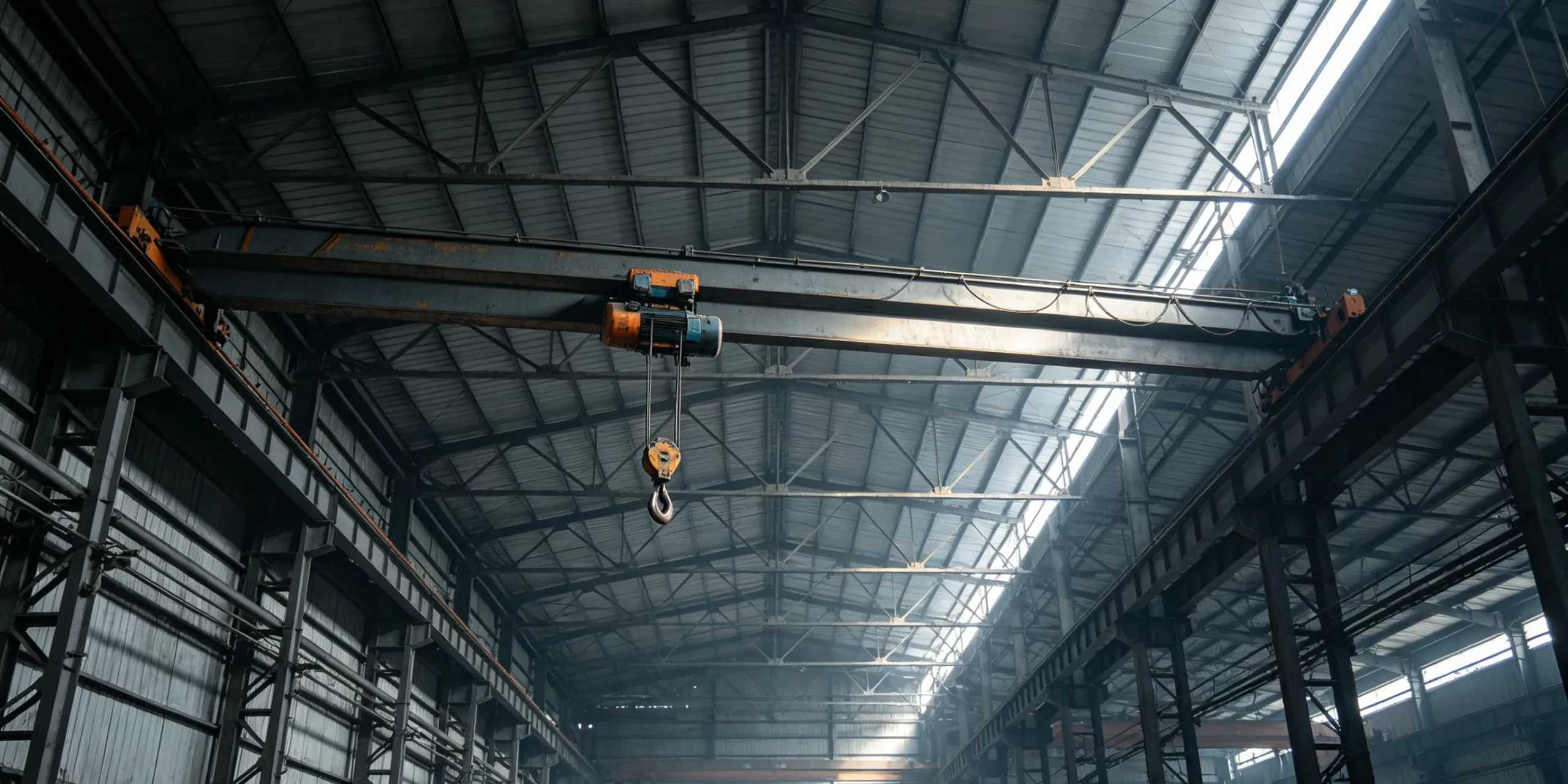
Eave height is the vertical distance from the finished floor level to the point where the roof meets the wall. In a factory with an overhead crane, the eave height is not the same as the hook height. The hook height is the maximum height the crane hook can reach. The crane rail height is the elevation where the crane runway beams are installed. The roof structure sits above the crane system, and the frame depth affects how much space is available.
The relationship between these elements is sequential. The hook must lift loads to a certain height. The crane bridge, trolley and hoist occupy space above the hook. The rail and runway beams support the crane. The roof and frame must clear the crane system. If any of these elements is underestimated, the building may not function as intended.
Key Information Needed Before Calculation
Before any preliminary height planning, the following information should be confirmed:
- Factory use and production process
- Crane capacity and type, such as single girder or double girder
- Required hook height
- Crane supplier drawings or preliminary crane data
- Building span and bay layout
- Roof structure type and frame depth
- Equipment or production clearance requirements
- Door and opening heights
- Local design basis and applicable code requirements
- Wind, snow and seismic information where applicable
- Future equipment or crane upgrade allowance if required
Without this information, any height estimate remains preliminary.
Simplified Planning Logic
For early planning only, a simplified logic can be used:
Required hook height+crane system height+required top clearance+roof and frame allowance
Each part has a specific meaning. The required hook height is the maximum lifting height needed for the operation. The crane system height includes the bridge, trolley and hoist dimensions. The top clearance is the space needed above the crane for safe operation and maintenance. The roof and frame allowance accounts for the structural depth of the roof system.
This is not a universal formula. It does not replace crane supplier drawings or structural engineering. Final values must be confirmed using actual crane data, applicable code requirements and project-specific structural design.
Why Crane Supplier Data Matters
Crane dimensions vary significantly between manufacturers, lifting capacities, hoist types and trolley arrangements. A crane from one supplier may have different physical dimensions from another crane with the same lifting capacity. The required hook height, rail elevation and top clearance can also differ.
Buyers should request the following from the crane supplier:
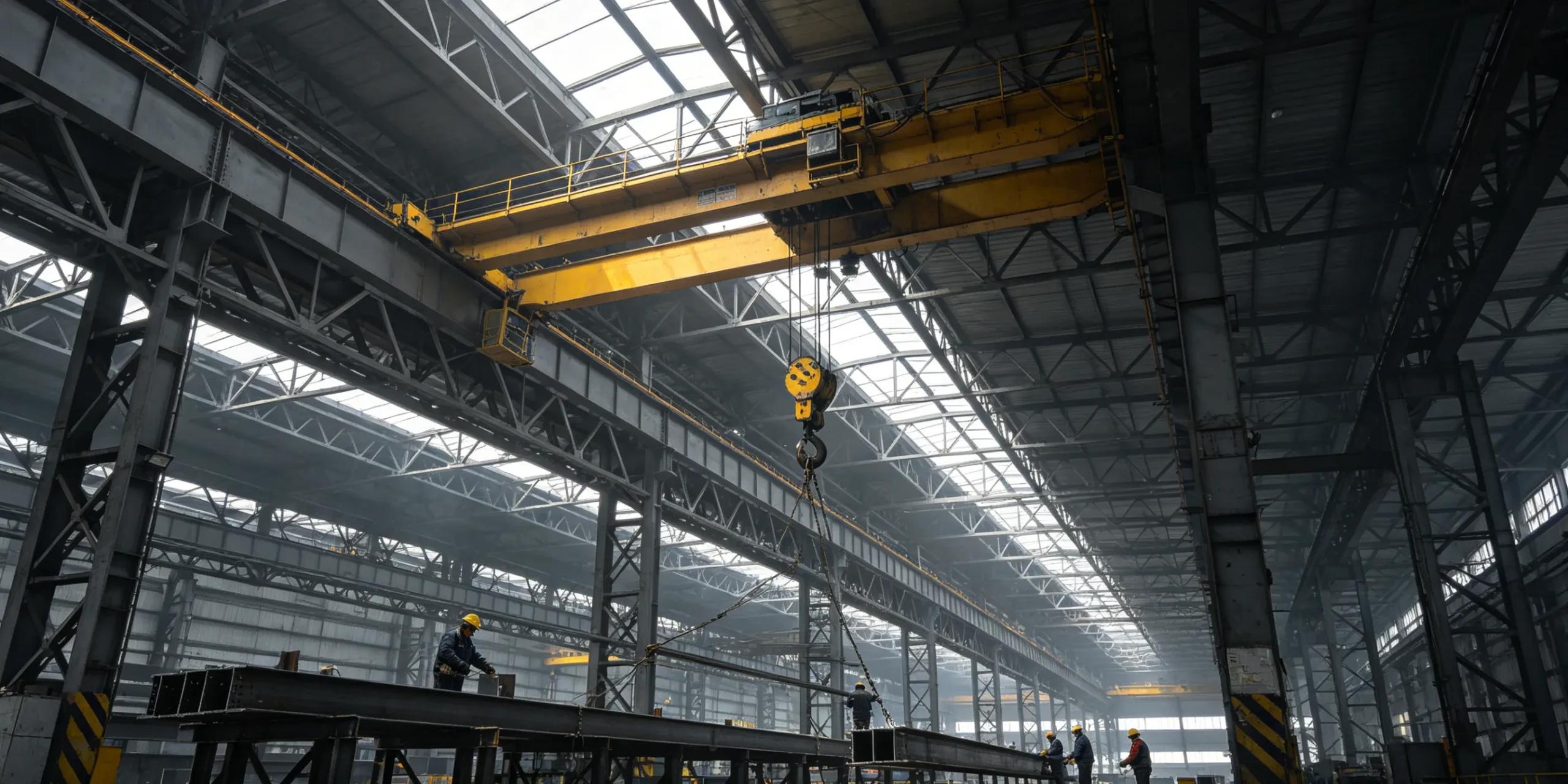
These documents allow the steel building designer to coordinate the frame, crane runway beams, columns and foundations correctly. Without them, the eave height and structural design remain assumptions.
How Steel Building Design Affects Eave Height
Several steel building design factors affect the final eave height:
- Building span
- Column spacing
- Roof slope
- Frame depth
- Bracing arrangement
- Crane beam arrangement
- Roof and wall system
- Door and opening locations
A larger span or deeper frame may require a taller eave to achieve the same hook height. The roof slope and drainage design also affect the roof structure depth. Bracing and crane beams may occupy space that must be accounted for. Openings for doors and equipment may influence the wall height and frame layout.
Because these factors interact, eave height cannot be finalised until the structural system is coordinated with the crane data.
Common Mistakes to Avoid
Common mistakes in eave height planning include:
Choosing eave height before crane data is confirmed
Ignoring the depth of the roof structure and frame
Using another factory’s height as a rule for a different project
Not allowing enough clearance for equipment or production operations
Forgetting local load and code requirements
Assuming future crane upgrades will fit the same building without review
Each of these can lead to rework, additional cost, or a building that does not meet operational needs.
How Bingfa Can Support the Review
Bingfa can review available project information and coordinate the steel building supply scope based on confirmed project data. This includes reviewing building dimensions, crane information, roof and wall requirements, and applicable design basis.
Final crane design is normally confirmed by the crane supplier. Bingfa can coordinate the steel building structure around confirmed crane data and the agreed steel-building supply scope.
Information to Send for a Quote
To support an initial review, please provide:
- Project location
- Factory use
- Building length, width and target height
- Crane capacity and quantity
- Required hook height
- Crane supplier drawings if available
- Equipment layout
- Door and opening requirements
- Roof and wall system requirements
- Applicable design basis and local requirements
- Wind, snow and seismic information where applicable
- Delivery destination
Complete crane drawings are helpful, but early project information can still be reviewed first.
Send the available factory layout, crane information, required hook height and project location so Bingfa can review the steel-building supply requirements.
Frequently Asked Questions
Can I use a fixed eave height for a 5-ton overhead crane?
No. A 5-ton crane does not automatically define the eave height. The required height depends on hook height, crane system dimensions, roof and frame allowance, and project-specific requirements. Each project must be reviewed with actual crane data.
What is the difference between hook height and eave height?
Hook height is the maximum height the crane hook can reach. Eave height is the height of the building at the point where the roof meets the wall. The eave height normally needs to allow more space than the hook height because the crane bridge, hoist, rail system and roof structure also require vertical clearance.
Do I need crane supplier drawings before steel building design?
They are strongly recommended before final design. Early review can start with preliminary crane information, but final coordination requires confirmed crane data, including dimensions, hook height and rail details.
Can the steel building be designed for future crane upgrades?
It may be considered if future requirements are communicated early. However, this affects the structure, crane beams, columns, foundations and cost. Future upgrades should be reviewed with the project engineer before any allowance is included.
What information should I send to Bingfa for review?
Send the project location, factory use, building dimensions, crane capacity and quantity, required hook height, crane supplier drawings if available, equipment layout, door and opening requirements, roof and wall requirements, applicable design basis, wind, snow and seismic information where applicable, and delivery destination. Early information is enough to start the review.
Send the available factory layout, crane information, required hook height and project location so Bingfa can review the steel-building supply requirements.