

Shop Painting vs Site Painting for Steel Structures: Which Is Better for Overseas Projects?
Compare where coating work is performed, what may be completed before shipment, and how touch-up, inspection and responsibility interfaces should be confirmed.
There is no universal winner.
Shop painting may provide better-controlled fabrication-stage conditions and easier access for inspection before shipment. Site painting or touch-up may still be required for field connections, erection-related work, handling damage, exposed interfaces or the final finish.
The correct split depends on the confirmed coating specification, supply scope, transport plan and site responsibilities.
What Shop Painting Can Cover
Shop painting means that specified coating work is performed on fabricated steel members before shipment. Columns, beams, braces and connection components can be prepared, coated and inspected at the fabrication stage according to the confirmed coating specification and product documentation.
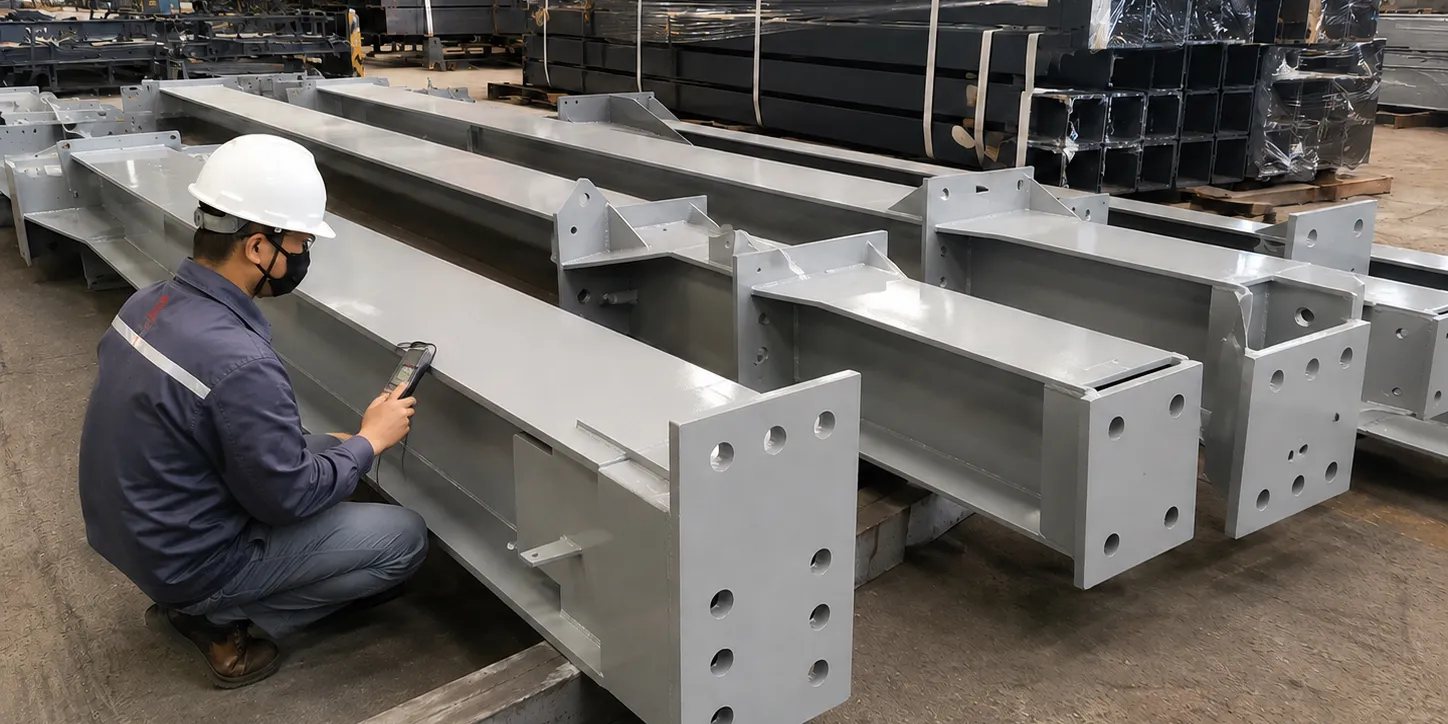
Common shop-stage work may include surface preparation, primer application, additional coats where specified, visual checks, specified DFT verification, defect repair, marking and packing coordination.
Shop-applied coating still depends on the selected products, preparation standard, application conditions, recoat and curing requirements, handling after curing, packing method and project inspection scope. It should not be treated as one universal system for every project.
What May Remain for Site Painting or Touch-Up
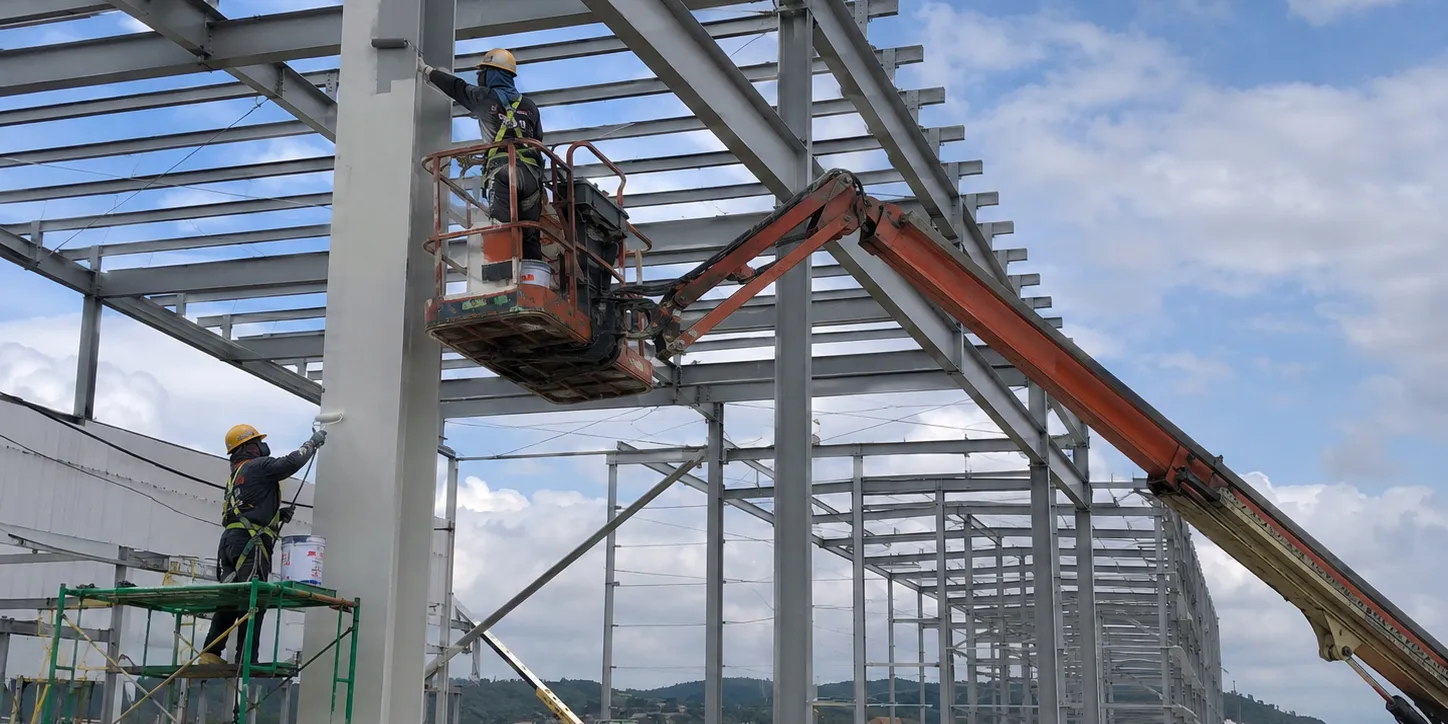
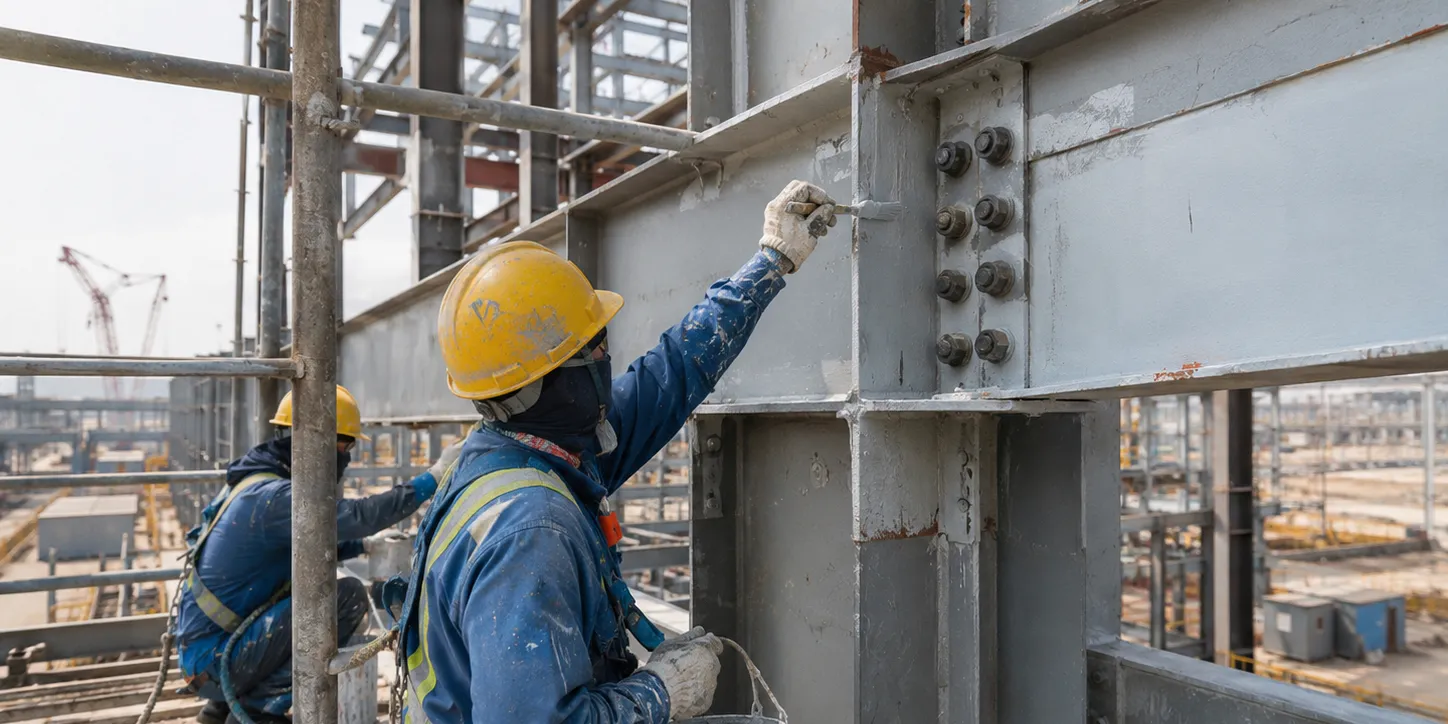
Field work may include connection areas, erection-related damage, transport scratches, approved field modifications, exposed interfaces or a final finish required after erection. It does not mean that every structure needs a complete site repaint.
In some projects, the main steel receives the specified shop coating and only damaged or unfinished areas are repaired on site. In others, a later coat is intentionally reserved for the site. The arrangement should be stated in the coating specification and supply or erection scope.
Touch-up and field coating should follow the agreed coating specification and compatible repair procedure. Locally available paint should not be substituted without checking product compatibility and approval requirements.
Shop Painting and Site Work Side by Side
The practical difference is not simply quality versus cost. Each method changes access, inspection timing, transport exposure and responsibility coordination.
The final arrangement may combine shop coating with site touch-up. It should be confirmed from project requirements rather than treated as a universal recommendation.
Who Confirms Each Coating Interface?
The following roles are typical planning references, not universal legal assignments. Responsibility depends on the agreed project and contract scope.
Typical: Fabricator or coating applicator within the agreed supply scope.
Confirm: coating system, application stage, inspection, curing and handling, and required documentation.
Typical: Supplier and logistics parties within their contract scope.
Confirm: handling protection, packing, loading and how coating damage is reported.
Typical: The party defined in the project or erection scope.
Confirm: damage locations, compatible repair system, inspection responsibility and approved field work.
Typical: A qualified erection contractor where separately contracted.
Confirm: erection scope, coating-repair interface and responsibility for field connections.
Handling, Packing and Coating Damage
Painted members can be marked, bundled, lifted, loaded and transported before erection. Edges, corners, lifting points, contact areas, connection plates and base plates may require particular attention because contact or movement can damage a coating.
Packing can reduce exposure to avoidable damage, but the coating condition must still be checked after handling and delivery. The project plan should define how damage is identified, recorded and repaired with a compatible system.
For a more detailed review of coating appearance, specified DFT, damage and records before loading, use the pre-shipment coating inspection guide.
Record the Agreed Checks at the Right Stage
Page-level planning can include visual inspection, coating records, specified DFT verification and a damage check before shipment. These checks document the agreed scope; they do not establish the performance of an unspecified coating system.
Surface preparation and product compatibility remain separate technical inputs. Review the surface-preparation guide and the structural-steel paint system guide where those decisions are still open.
If the project uses separate primer, intermediate and topcoat stages, confirm their roles through the coating-layer guide and the relevant product documentation.
What Buyers Should Confirm Before Quotation
A useful quotation should state the painting boundary clearly enough for the buyer, supplier, logistics team and site contractor to understand what is included.
Project Environment
Location, exposure, operating conditions and any project-specific coating requirements.
Shop Scope
Surface preparation, products, application stages, inspection records and packing interfaces included before shipment.
Site Scope
Field connections, repairs, final finish, approved modifications and the party responsible for the work.
Product Requirements
Confirmed coating specification, compatible repair procedure, recoat and curing requirements from product documentation.
Inspection Boundary
What is checked in the shop, at loading, after delivery and after field repair.
Erection Interface
Access, handling, field welding or cutting, touch-up responsibility and local contractor coordination.
Discuss Your Structural Steel Coating Requirements
Send your project location, coating specification and available steel-structure drawings so Bingfa can review the shop-coating, packing and site-touch-up interfaces within the proposed supply scope.
Execution and Responsibility Questions
Is shop painting always better than site painting?
No. Shop painting may provide better-controlled fabrication-stage conditions and easier pre-shipment access, while site painting may be appropriate for specified final work, field connections or repairs. The correct split depends on the confirmed coating specification, supply scope, transport plan and site responsibilities.
Why might site touch-up be required after factory painting?
Handling, loading, transport, unloading and erection can affect edges, corners, lifting points, bundled contact areas or connection zones. Approved field modifications and unfinished interfaces may also need coating work. Touch-up should follow the agreed specification and a compatible repair procedure.
Who is responsible for coating repairs after delivery or erection?
The responsible party should be defined in the project, supply and erection scope. It may be the supplier, logistics party, local erection contractor or another approved applicator depending on where the damage occurred and what the contract assigns. The repair method and inspection responsibility should also be confirmed.
Can the same coating product be used for shop painting and site touch-up?
Only when the confirmed coating system and product documentation support that use. Compatibility, surface preparation, application conditions and recoat requirements should be checked before field repair. A locally available product should not be substituted without the required review or approval.
Request a Steel Structure Coating Review
Share the available specification, drawings, project location and proposed shop and site responsibilities for a scope review.