
STRUCTURAL STEEL COATING GUIDE
Primer vs Intermediate Coat vs Topcoat for Structural Steel
Compare the role of primer, intermediate coat and topcoat, and learn how coating compatibility, exposure conditions and project specifications affect the final system.
Quick Answer
Primer, intermediate coat and topcoat perform different roles in a structural steel coating system.
Primer is applied to the prepared steel substrate and provides adhesion plus the first protective layer according to the selected coating system. An intermediate coat is used where the specified system requires additional film build, barrier performance or other system-level protection. The topcoat is the exposed finishing layer and may provide colour, weather resistance, UV resistance, chemical resistance or other surface properties depending on the coating product and specification.
Not every project automatically needs all three layers. Primer, intermediate coat and topcoat should be selected as one compatible system according to the exposure environment, coating manufacturer’s technical data, project specification and required protective performance.
Why the Layer Roles Matter in a Structural Steel Paint System
Protective performance does not depend simply on the number of coats.
Each layer has a role within the specified structural steel paint system, and the products must work together as a compatible combination. A system with more layers is not automatically better than a simpler system, and a two-coat system is not automatically less suitable than a three-coat system.
The correct layer arrangement depends on the coating chemistry, exposure environment, surface preparation, required film build, application conditions and project specification.
Understanding the difference between primer, intermediate coat and topcoat therefore helps buyers compare quotations and confirm exactly what coating scope is being supplied.
Primer vs Intermediate Coat vs Topcoat: What Is the Difference?
The three coating layers differ mainly in their position and function within the specified protective system.
Primer is applied directly to the prepared steel substrate. Its role commonly includes adhesion to the steel and the first protective function of the coating system.
Intermediate coat is positioned between the primer and finishing coat where the system requires it. It may add film build, barrier properties or other protective performance depending on its chemistry and specification.
Topcoat is the final exposed layer. Depending on the selected product, it may provide colour, appearance, weather resistance, UV resistance, chemical resistance or other required surface properties.
These layers should not be selected independently. Their compatibility and combined performance are more important than layer count alone.
What Is Primer for Structural Steel?
Primer is the first coating applied to the properly prepared structural steel substrate.
The role of a structural steel primer may include:
- Adhesion to the prepared steel surface
- Providing the first protective layer
- Supporting corrosion protection as part of the complete system
- Providing a compatible base for subsequent coats
- Meeting project-specific coating requirements
Different primer chemistries are available for structural steel. Examples may include zinc-rich, epoxy, alkyd and other primer types, depending on the specified coating system.
There is no single primer for structural steel that is suitable for every project.
The primer coating for steel should be selected according to the exposure environment, project specification, required performance and compatibility with any intermediate coat or topcoat that will be applied later.
What Is an Intermediate Coat?
The intermediate coat is applied between the primer and topcoat where the specified protective system requires it.
This is one of the most important differences in a multi-layer coating system: an intermediate coat is not automatically another primer.
Its possible roles may include:
- Adding protective film build
- Increasing barrier properties
- Supporting the overall coating-system performance
- Providing a compatible transition between primer and topcoat
- Meeting a project-specific multi-layer coating specification
High-build epoxies, micaceous iron oxide coatings and other products may be used as intermediate layers when they form part of a compatible specified coating system.
Some project documents or buyer searches use terms such as intermediate primers, but an intermediate coat should be identified by its actual role and product specification rather than assumed to be a second primer.
An intermediate coat paint product should also be compatible with both the underlying primer and the finishing coat.
An intermediate coat is not required for every project. Its use depends on the specified coating system, required film build, exposure conditions and protective-performance requirements.
What Is Topcoat for Structural Steel?
The topcoat is the final exposed layer of the coating system.
Its function depends on the product selected for the project. A topcoat may provide:
- The specified colour and appearance
- An exposed finished surface
- Weather resistance
- UV resistance
- Chemical resistance
- Abrasion resistance
- Other project-specific surface properties
Not every topcoat provides all of these properties.
For example, some products are selected primarily for exterior weatherability and colour retention, while others may be specified for particular industrial exposures.
The topcoat for structural steel must remain compatible with the underlying primer and intermediate coat where one is used.
Primer vs Intermediate Coat vs Topcoat Comparison
The main differences can be summarised by each layer’s position and role within the system.
| Paint Layer | Position | Main Function | Suitable Use / Role |
|---|---|---|---|
| Primer | Directly on prepared steel | Adhesion to substrate and first protective function | First layer of the specified coating system and compatible base for later coats |
| Intermediate Coat | Between primer and topcoat | Additional film build, barrier properties or other system performance | Used where the specified coating system requires an additional intermediate layer |
| Topcoat | Final exposed layer | Finishing and exposed-surface performance | Provides the specified finish and environmental properties according to the selected product |
The table explains layer function rather than prescribing one universal coating system.
The actual products, layer count and application requirements should follow the compatible coating system and project specification.
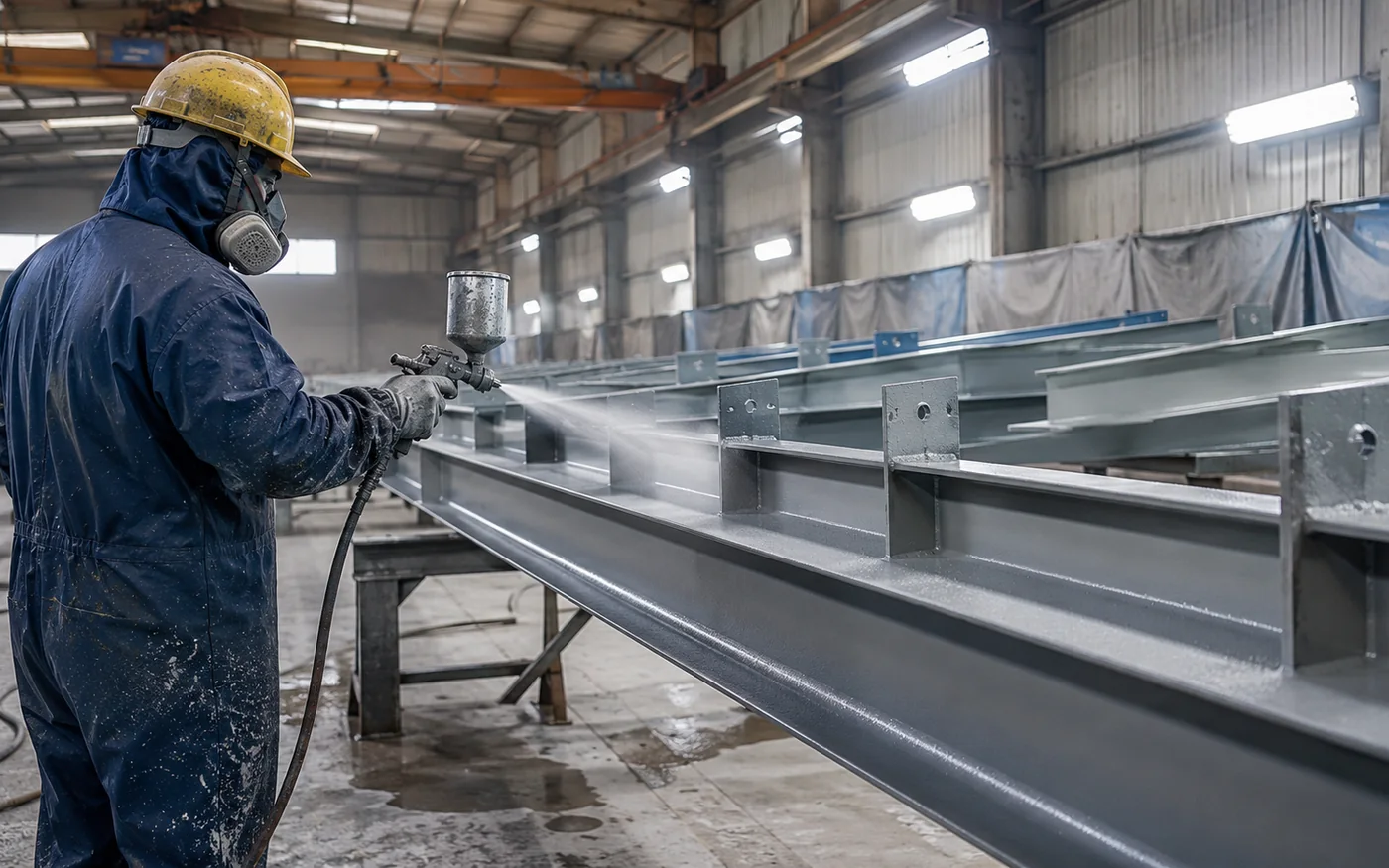
Does Structural Steel Always Need All Three Layers?
No.
A primer + intermediate coat + topcoat system is not automatically required for every structural steel project.
Coating systems vary according to factors such as:
- Exposure environment
- Required protective performance
- Coating chemistry
- Product compatibility
- Project specification
- Owner or consultant requirements where applicable
- Surface preparation
- Application conditions
- Future maintenance strategy
Some projects may use a primer and topcoat without a separate intermediate coat. Other specified systems may use a single-product coating approach or additional layers.
Layer count alone does not determine coating quality or steel structure paint service life.
The complete specified system and its application conditions are more important than simply comparing the number of coats.
When Primer and Topcoat May Be Enough
Some coating systems are specifically designed to achieve the required project performance using a primer followed by a finish or topcoat without a separate intermediate coat.
This may be appropriate when:
- The selected product system is designed for that layer arrangement
- The required total film build can be achieved within the specified system
- Primer and topcoat are confirmed as compatible
- The required protective performance can be achieved
- The project specification permits the system
The decision should not be based only on whether the environment appears mild or severe.
A two-coat system is not universally suitable, but neither should an intermediate coat be added automatically when the specified coating system does not require one.
When a Three-Coat System May Be Specified
A primer + intermediate coat + topcoat system may be specified when the coating design requires an additional intermediate layer.
Project reasons may include:
- Additional protective film build
- Additional barrier performance
- A multi-layer coating specification
- Particular environmental exposure
- Project-specific durability requirements
- Owner or consultant coating requirements
- Compatibility with a specified coating system
Three-coat systems may appear in industrial facilities, infrastructure projects, coastal projects and other demanding applications, but the application type alone does not determine the correct system.
For buyers comparing a three-coat paint system for steel, the important question is not simply whether three layers are present. The important questions are what each layer does, whether the products are compatible, and whether the complete system matches the project specification.
Common Primer / Intermediate / Topcoat System Configurations
Structural steel coating systems can be arranged in several ways depending on the selected products and specification.
Possible configurations may include:
Single-product or specialised coating system
A specified product may provide the required performance without separate primer, intermediate and topcoat products.
Primer + topcoat
A compatible two-layer arrangement may be used where the specified system is designed to meet the required performance without a separate intermediate coat.
Primer + intermediate coat + topcoat
A three-layer system may be used where an additional intermediate layer is part of the required protective design.
Other multi-layer systems
Some project specifications may require additional coats or specialised layers.
These are system configurations, not universal templates. The actual coating arrangement should follow the confirmed project requirements and product technical data.
How to Select the Intermediate Coat in a Three-Layer System
The intermediate coat should not be selected independently from the rest of the system.
Important checks include:
- Primer compatibility
- Topcoat compatibility
- Coating manufacturer’s approved or recommended system
- Condition of the underlying primer
- Required total film build
- Exposure environment
- Recoating interval
- Project specification
- Application conditions
- Application method
- Shop and site painting sequence where relevant
The role of the intermediate coat should also be clear.
For one system it may primarily provide additional film build. For another system it may contribute specific barrier characteristics or other required protective properties.
The correct product should therefore be selected as part of the complete coating system rather than as a stand-alone layer.
Where the project divides coating work between fabrication and the construction site, the shop painting vs site painting sequence should also be coordinated with the coating specification.
COATING SYSTEM REVIEW
Compare the Coating Layers Before Ordering
Share the project environment, coating specification and required layer arrangement so the supplied steel coating scope can be reviewed clearly.
Discuss Your Structural Steel Coating RequirementsCoating Compatibility Matters
Primer, intermediate coat and topcoat should function as one compatible coating system.
Mixing incompatible products or applying one layer outside the conditions required by the system may contribute to problems such as:
- Poor intercoat adhesion
- Softening
- Wrinkling
- Lifting
- Incomplete curing
- Intercoat defects
Compatibility should be checked against the relevant product technical data and coating-system requirements.
For broader coating-system selection beyond the individual layer functions discussed here, buyers can review the structural steel paint system guide.
Surface Preparation Is Still Critical
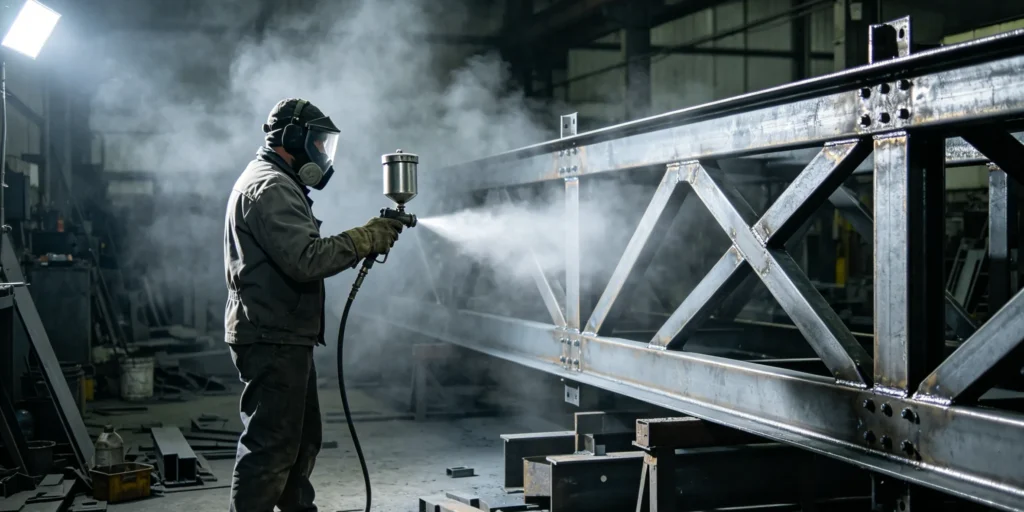
Correct layer selection cannot compensate for unsuitable substrate preparation.
Before primer application, the steel surface should be prepared according to the coating system and project specification.
Surface conditions that may interfere with coating performance include:
- Oil or grease
- Loose rust or scale
- Welding residues
- Dust
- Moisture
- Other contaminants
The required preparation method and acceptance condition depend on the selected coating system and project specification.
This section only addresses surface preparation as an input to primer/intermediate/topcoat performance. More detailed preparation guidance is covered separately in the surface preparation for structural steel guide.
Dry Film Thickness Is a Project-Specific Requirement
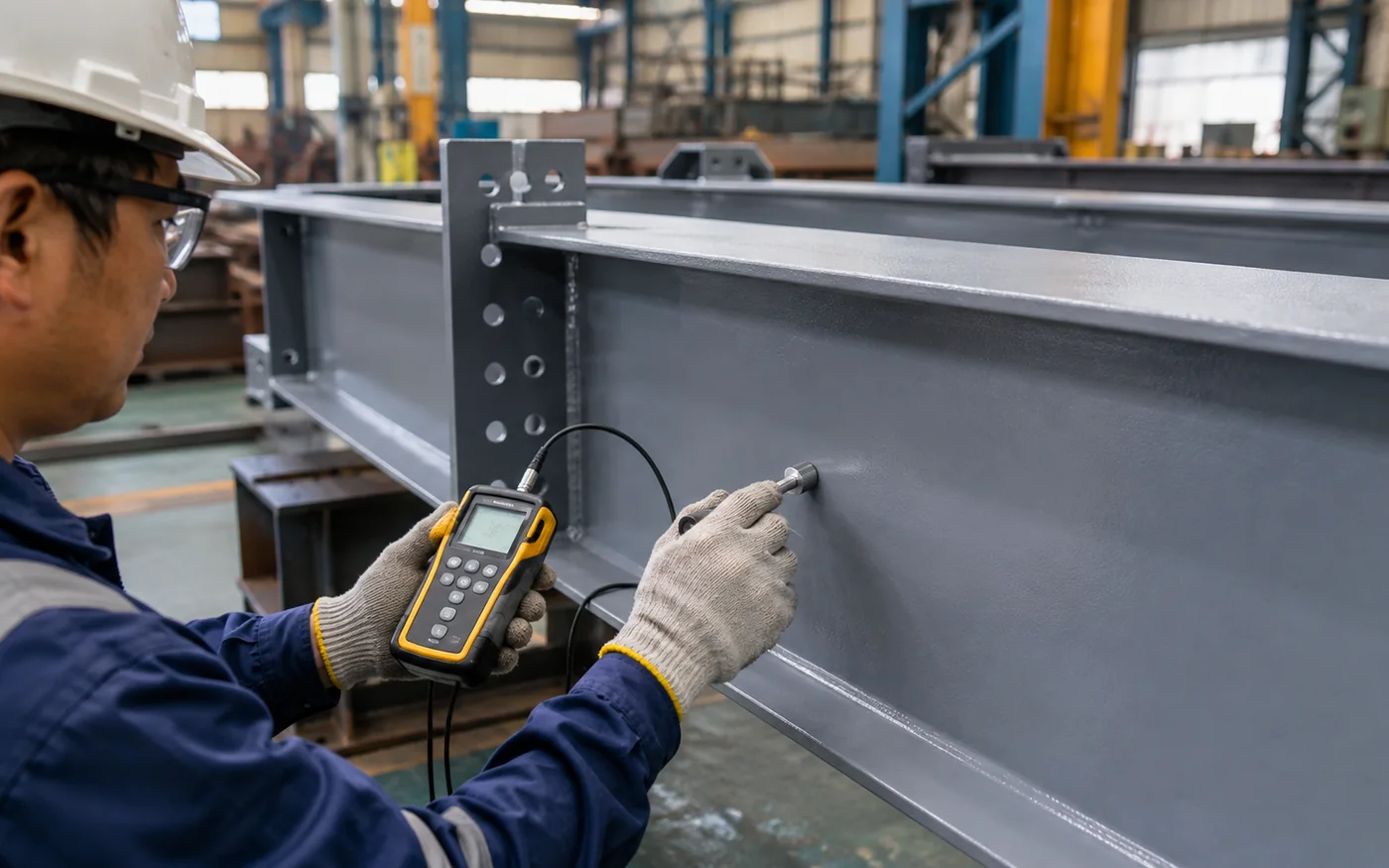
Dry film thickness, or DFT, is the thickness of the coating after curing.
Each coat may have a specified target or acceptable range according to the selected product, complete coating system and project specification.
DFT matters because film build is one of the factors that can influence coating-system performance. However, there is no universal DFT that applies to every primer, intermediate coat or topcoat.
Depending on the product and system:
- Insufficient film build may reduce the intended protective performance
- Excessive film build may contribute to application or coating defects
- Each coat may have its own specified requirements
- Total system thickness may also be specified
Product technical data and the project coating specification should govern the required values.
Where coating inspection forms part of the supply scope, DFT can be checked according to the confirmed inspection requirements. More detailed inspection considerations are covered in the steel structure paint quality inspection guide.
Exposure Environment Changes the Required Coating System
The exposure environment is an important input in coating-system selection, but it does not automatically determine one fixed primer/intermediate/topcoat combination.
Projects may involve conditions such as:
- Indoor dry exposure
- Outdoor weather exposure
- Humid industrial environments
- Coastal or salt-laden environments
- Chemical exposure where applicable
- Infrastructure or heavy industrial conditions
Each of these conditions may create different coating requirements depending on the location, steel use, owner specification and selected coating products.
For projects exposed to marine or salt-laden conditions, the coastal steel structure paint guide provides more focused environmental context.
This page does not assign one universal coating system to a particular environment.
GCC, UAE and Other Demanding Project Environments
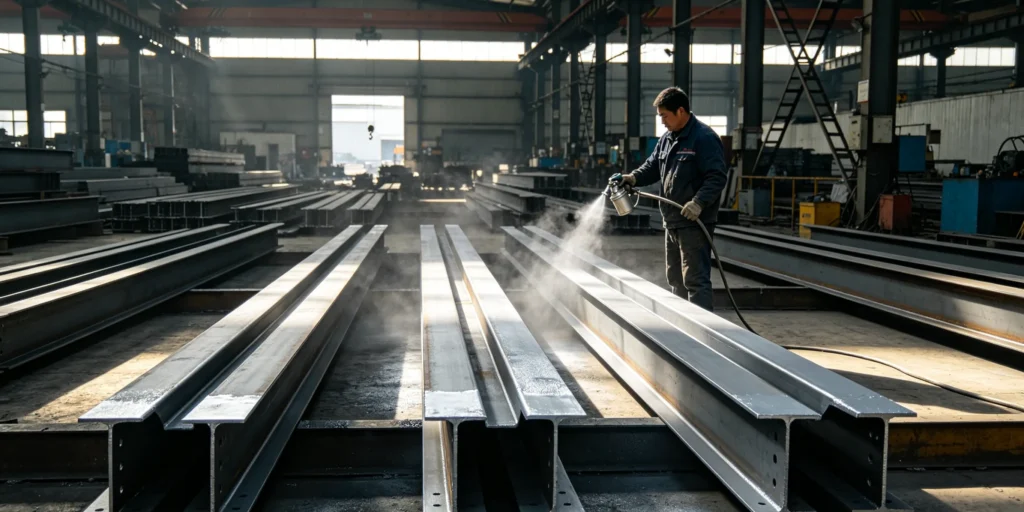
Some search and procurement enquiries relate specifically to GCC, UAE, Qatar and similar project locations.
Projects in these regions may involve combinations of:
- High temperatures
- Strong solar and UV exposure
- Coastal salt exposure in some locations
- Industrial exposure
- Project-owner specifications
- Consultant-defined coating requirements
However, geographic location alone does not determine the coating system.
A steel bridge, industrial building, warehouse or LNG-related project within the same region may have very different coating specifications.
A primer/intermediate/topcoat system for one infrastructure project should therefore not be copied automatically to another project.
The relevant project specification, product technical data and project specialists should govern the coating selection.
This guide does not provide local regulatory or engineering approval advice.
Common Steel Structure Paint System Mistakes
Common procurement and coordination mistakes include:
- Treating primer as the complete protective coating system
- Assuming an intermediate coat is always required
- Assuming three coats are automatically better than two
- Mixing products without confirming compatibility
- Ignoring substrate preparation
- Ignoring specified recoating intervals
- Selecting coating only by colour
- Copying another project’s coating system
- Comparing systems only by number of coats
- Ignoring project-specific DFT requirements
- Assuming all coastal projects use the same coating system
A coating specification should describe a compatible protective system rather than only a list of colours or coat quantities.
Common Paint Problems and What They May Indicate
Coating problems can have more than one cause.
Examples may include:
- Peeling or loss of adhesion
- Blistering
- Wrinkling
- Cracking
- Early corrosion
- Uneven surface appearance
Depending on the situation, possible contributing factors may include:
- Surface preparation
- Coating compatibility
- Application conditions
- Curing conditions
- Film thickness
- Environmental exposure
- Handling damage
These symptoms should not be diagnosed from appearance alone without reviewing the coating system and application records.
For adhesion-loss cases, the separate guide on paint peeling on steel structures provides more focused troubleshooting context.
Where the buyer needs to verify coating work before shipment, refer to the steel structure paint quality inspection guide.
How to Choose the Right Primer / Intermediate / Topcoat System
A practical project-selection sequence is:
- Confirm the exposure environment
- Review the project or owner coating specification
- Confirm the required substrate preparation
- Identify a compatible coating system supported by the relevant product technical data
- Confirm whether the specified system requires an intermediate coat
- Confirm application conditions and recoating requirements
- Confirm project-specific DFT requirements
- Confirm colour, finish and exposed-surface requirements
- Coordinate shop and site coating sequence where relevant
- Confirm inspection and touch-up requirements
The objective is to select one compatible system that meets the confirmed project requirements, not to maximise the number of coating layers.
What Should Buyers Confirm Before Ordering?
Useful coating information for a structural steel quotation includes:
- Project location
- Intended steel-structure use
- Exposure environment
- Indoor or outdoor condition
- Coastal exposure if applicable
- Project coating specification
- Primer type if already specified
- Intermediate-coat requirement if specified
- Topcoat requirement if specified
- Colour and finish
- Surface-preparation requirement if known
- DFT requirements if available
- Shop painting or site painting requirements
- Areas excluded from painting where relevant
- Fireproofing interfaces where applicable
- Touch-up requirements
- Inspection requirements
- Delivery destination
If the full coating specification is not yet available, an initial project review can begin with the information currently available.
The final coating scope should be confirmed before fabrication and coating work proceed.
Frequently Asked Questions
1. What is the difference between primer, intermediate coat and topcoat?
Primer is applied to the prepared steel substrate and provides adhesion plus the first protective function of the specified system. An intermediate coat is used where the system requires additional film build, barrier properties or other protective performance. The topcoat is the final exposed layer and may provide colour, weather resistance, UV resistance, chemical resistance or other surface properties depending on the product.
2. What is the purpose of an intermediate coat on structural steel?
An intermediate coat is used between the primer and topcoat where the specified system requires it. It may add film build, barrier properties or other system performance and should remain compatible with both the primer and topcoat. It is not automatically required for every structural steel project.
3. Does every steel structure need primer, intermediate coat and topcoat?
No. Layer count depends on the selected coating system, exposure environment, compatibility, protective-performance requirement and project specification. Some projects may use primer and topcoat without a separate intermediate coat, while other systems may use different layer arrangements.
4. Can structural steel use only primer and topcoat?
Yes, where the specified coating system is designed to achieve the required project performance using that layer arrangement. Primer and topcoat must be compatible, and the system must satisfy the required film build, exposure and project specification. It should not be assumed suitable for every project.
5. How do I select an intermediate coat for a three-coat steel protection system?
Select the intermediate coat as part of the complete coating system. Check primer and topcoat compatibility, manufacturer technical data, required film build, exposure conditions, recoating requirements, application conditions and the project specification. Do not select the intermediate coat independently from the other layers.
6. What coating information should I provide before ordering structural steel?
Provide the project location, exposure environment, coating specification if available, required primer/intermediate/topcoat arrangement, colour and finish, surface-preparation requirements, DFT requirements if available, shop or site painting requirements, inspection requirements and delivery destination. An initial review can begin with the information currently available.
PROJECT QUOTATION INPUTS
Confirm the Primer, Intermediate Coat and Topcoat Scope
Send the coating specification, exposure environment, DFT requirements if available, colour, inspection needs and delivery destination for review.
Request a Steel Structure Paint System Review