
STRUCTURAL STEEL MATERIAL GUIDE
Q235B vs Q355B Steel: Which Grade Is Suitable for Your Steel Building?
Compare Q235B and Q355B steel grades by strength class, thickness-dependent properties, fabrication, material equivalence and project-specific structural requirements.
Quick Answer
Q235B and Q355B are different structural steel grades used in steel buildings. Q355B generally represents a higher nominal strength class than Q235B under the applicable Chinese material standards. However, higher strength does not automatically mean better—material properties depend on the applicable standard, product thickness and the actual product specification.
The final grade should follow the structural design and project requirements. Buyers should not substitute ASTM or EN grades by name alone without engineering review and project approval.
What Is Q235B Steel?
Q235B is a structural steel grade commonly used in steel construction. The grade designation should be interpreted according to the applicable Chinese material standard.
Under that standard, Q235B is typically considered a general-purpose structural steel grade suitable for many applications where the design requirements do not call for a higher-strength material. The actual mechanical properties and chemical composition must be checked against the applicable material standard and the product certificate.
Q235B is commonly encountered in structural steel supply, although actual availability depends on product form, thickness, supplier and project location.
The material properties of q235b steel depend on the specific product form, thickness and the applicable standard. Buyers should not rely on a single value from an unverified source. The required properties should be confirmed from the actual material certificate and product specification.
What Is Q355B Steel?
Q355B is a structural steel grade that represents a higher nominal strength class than Q235B under the applicable Chinese material standard.
It is used where the structural design benefits from or requires a higher-strength grade. The actual mechanical-property requirements depend on the material standard and the product thickness.
The q355b yield strength and other mechanical properties are specified in the applicable material standard, but the values can vary with product thickness and product form.
Buyers should confirm the required properties from the actual material certificate and the project specification.
The higher nominal strength class of q355b steel can allow different section selection in structural design. This does not mean smaller or lighter sections will result in every design, because stability, deflection, connection and other design criteria may govern.
The final grade should be confirmed based on the structural design and project requirements.
Q235B vs Q355B: Key Differences
The main difference between Q235B and Q355B lies in their strength class under the applicable Chinese material standard.
Q355B generally represents a higher nominal strength class than Q235B. This difference can affect structural design, member selection and the overall building configuration.
Key comparison points:
- Strength class — Q355B generally represents a higher nominal strength class than Q235B under the applicable material standard
- Structural design role — Higher-strength grades may allow different member selection depending on the structural design
- Potential section selection — Q355B may allow different section selection in some applications where strength is an important design criterion
- Fabrication requirements — Fabrication and welding requirements can differ depending on the grade, thickness and joint design
- Procurement and availability — Availability can vary by grade, thickness and product form
- Material certification — Both grades should be supplied with appropriate material documentation according to the project requirements
- Project specification — The grade should be selected based on the project specification and structural design
Neither grade is universally better than the other. The appropriate grade depends on the specific project requirements, structural design and applicable standards.
Mechanical Properties Depend on Thickness and Standard
The mechanical properties of structural steel grades are not single fixed numbers that apply to all product forms and thicknesses.
The specified minimum mechanical properties can vary with:
- Product thickness
- Product form
- Applicable material standard
- Product specification
The material standard defines the required properties, while the mill or material certificate records the relevant results for the supplied product.
Buyers should not rely on a single mechanical-property value copied from an unverified source.
The actual mechanical properties for the specific product and thickness should be confirmed from the applicable material standard and product documentation.
The structural designer should use the required values for the actual material, product form and applicable standard.
Why Higher Strength Does Not Automatically Mean a Better Building
A higher-strength steel grade may influence member selection, but overall building design also depends on several other factors.
These may include:
- Stability — Members must resist buckling under compression and bending
- Slenderness — Long or slender members may be controlled by stability rather than material strength alone
- Deflection — Serviceability requirements may control member selection
- Connection design — Connections must be designed for the actual forces and member configuration
- Fatigue where relevant — Fatigue requirements may affect some projects
- Local buckling — Plate geometry and member configuration can affect structural behaviour
- Fabrication — Fabrication requirements may affect the practical material choice
- Project loads — The magnitude and combination of project loads affect structural demand
- Building geometry — Span, height and layout influence member forces and structural behaviour
The structural designer should select the appropriate grade based on the complete structural analysis and project requirements.
Higher-strength steel is not always necessary and does not automatically result in a better steel building.
When Q235B May Be Suitable
Q235B may be considered for structural applications where the design requirements and project specification permit its use.
Possible situations may include:
- Members where the required structural performance can be achieved with Q235B
- Structural components where the approved design specifies Q235B
- Projects where the applicable material specification calls for Q235B
- Applications where Q235B satisfies the structural and project requirements
The final material selection should be confirmed through structural design.
There are no universal member assignments that require Q235B for a particular type of beam, column, purlin or other structural component.
When Q355B May Be Suitable
Q355B may be considered where the structural design benefits from or requires a higher nominal strength class.
Possible situations may include:
- Members where higher nominal strength is useful or required by design
- Highly loaded members where the structural analysis indicates a higher-strength grade is appropriate
- Projects where section optimisation is evaluated by the engineer
- Situations where the project specification requires Q355B
The final grade selection should be based on structural analysis and project requirements.
The use of Q355B should not be assumed to be automatically necessary or beneficial for every project.
Can Q235B and Q355B Be Used in the Same Steel Building?
Yes. A project may use different steel grades for different members if the approved structural design and project specification allow it.
Different structural members, plates and connection components may use different grades where the approved structural design and project specification require it.
When more than one steel grade is used, material identification becomes especially important.
Fabrication drawings, material lists and production records should clearly distinguish the required grades so that materials are not mixed during procurement and fabrication.
Buyers should confirm the grade requirements before material procurement begins.
Q235B vs Q355B in Steel Warehouse Projects
In warehouse projects, steel-grade selection may be influenced by:
- Warehouse span
- Building height
- Project loads
- Frame configuration
- Member forces
- Structural system
The structural engineer should select the appropriate grade based on the specific warehouse design and project requirements.
For broader commercial building options, buyers can also review steel warehouse buildings.
The steel grade should still follow the approved structural design and project specification rather than a generic warehouse rule.

Q235B vs Q355B in Steel Workshop and Factory Projects
In workshop and factory projects, the steel-grade requirement may be influenced by:
- Machinery
- Cranes where applicable
- Production loads
- Frame geometry
- Large openings
- Equipment layout
- Structural demand in different areas of the building
These factors may influence member forces and structural design.
For broader project context, buyers can review steel workshop buildings and the industrial steel factory building page.
The final material grade should remain project-specific.
Welding and Fabrication Considerations
Changing the steel grade can influence fabrication planning.
Welding requirements depend on factors such as:
- Material specification
- Material thickness
- Joint design
- Welding process
- Welding consumables
- Heat input
- Preheat requirements where applicable
- Project welding requirements
There is no universal rule that Q235B is always easy to weld or that Q355B is always difficult to weld.
The welding procedure and related fabrication requirements should follow the approved project welding requirements for the actual material, thickness and joint configuration.
Where Q235B and Q355B are both used in one project, material traceability and fabrication drawings should clearly distinguish the grades.
Material Certificates and Grade Verification
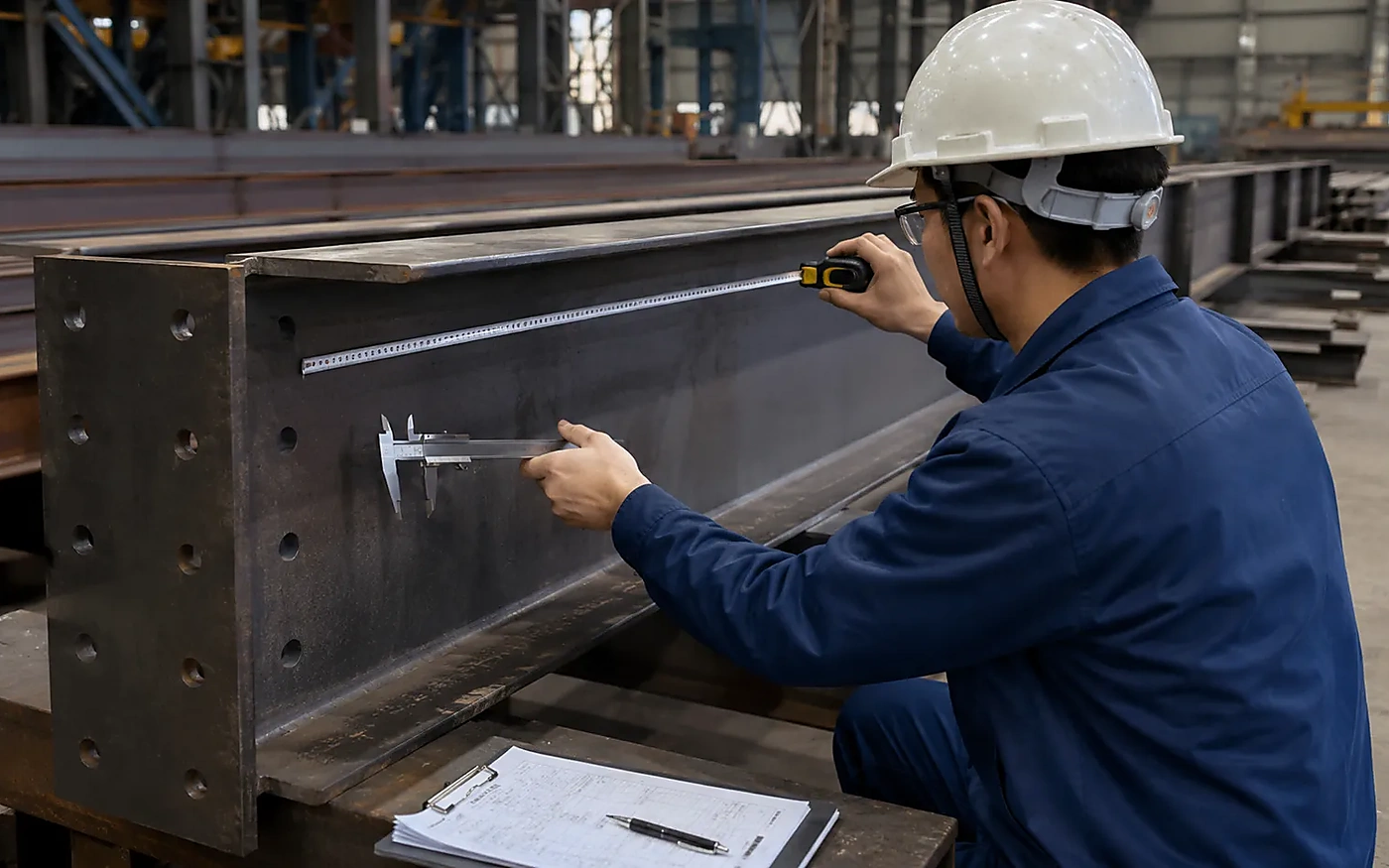
Buyers should verify steel grade and material documentation before fabrication.
Relevant verification items may include:
- Steel grade
- Applicable material standard
- Heat or batch traceability where required
- Mechanical-property results
- Chemical composition where required by the project specification
- Material or mill certificate
- Plate and section identification
- Project-specific documentation requirements
The supplied material documentation should demonstrate that the steel corresponds to the specified grade and applicable material requirements.
For broader documentation and inspection context, buyers can review certificates and quality documents.
Bingfa can coordinate material identification and documentation according to the confirmed project scope, but material acceptance requirements should follow the applicable project specification.
Q235B ASTM Equivalent: Is There a Direct Match?
Buyers often search for a Q235B steel equivalent in ASTM or EN material systems, but there is no universal one-to-one substitute.
Q235B is sometimes discussed alongside ASTM A36 or EN S235 grades because certain strength characteristics may appear broadly similar in some comparisons.
However, these grades are not automatically equivalent or interchangeable.
Different standards can define different requirements for:
- Chemical composition
- Mechanical properties
- Thickness-dependent requirements
- Testing
- Product dimensions
- Tolerances
- Impact requirements where applicable
- Certification
- Material identification
A substitution should not be made simply because two grades have similar nominal strength values.
The project specification and engineering approval should govern any proposed material substitution.
Is Q355B Equivalent to S355 or ASTM A572 Grade 50?
Q355B is also sometimes compared with EN S355 or ASTM A572 Grade 50 in early material discussions.
These comparisons may help buyers understand broad strength-class relationships, but Q355B is not automatically interchangeable with S355 or ASTM A572 Grade 50.
Each material belongs to a different standard system with its own requirements.
Differences may exist in:
- Mechanical-property requirements
- Chemical composition
- Thickness ranges
- Testing
- Toughness requirements
- Product tolerances
- Certification
- Project acceptance criteria
Any substitution should therefore be reviewed against the actual project specification and approved by the appropriate project engineer or responsible design party.
Price, Steel Weight and Total Project Cost
Material unit price may differ between Q235B and Q355B depending on market conditions, product form, thickness and supplier.
Higher nominal strength can sometimes influence structural section selection.
However, this does not mean that Q355B will always reduce steel weight or total structural cost.
Project economics may depend on:
- Material unit price
- Section selection
- Total steel weight
- Fabrication complexity
- Welding requirements
- Connection design
- Material availability
- Procurement schedule
- Project-specific structural requirements
The total project cost should be evaluated using the complete structural design rather than material price or nominal strength alone.
There are no fixed savings or universal cost advantages for either grade.
Availability and Procurement
Material availability can vary depending on:
- Regional supply
- Available plate or section sizes
- Thickness range
- Certification requirements
- Product form
- Supplier inventory
- Delivery schedule
A grade that is readily available for one plate thickness or section size may not be equally available for another.
Buyers should confirm the availability of the specified grade and product form before finalising procurement and fabrication schedules.
There is no universal rule that Q235B or Q355B is always more available globally.
Common Q235B vs Q355B Selection Mistakes
Common mistakes include:
- Choosing a steel grade only from nominal yield strength
- Assuming Q355B is always better than Q235B
- Assuming Q235B is always cheaper
- Assuming Q355B always reduces steel weight
- Copying another project’s material selection
- Treating ASTM A36 or EN S235 as automatically interchangeable with Q235B
- Treating S355 or ASTM A572 Grade 50 as automatically interchangeable with Q355B
- Ignoring thickness-dependent mechanical properties
- Failing to distinguish different steel grades in drawings and material lists
- Ignoring material certificates and grade verification
- Changing steel grade without engineering review or project approval
The steel grade should be part of the structural design and project specification rather than a purchasing decision based only on material strength or price.
What Should Buyers Confirm Before Quotation?
Useful information for an initial steel-building quotation includes:
- Project location
- Building use
- Structural drawings if available
- Required material standard
- Specified steel grade if already defined
- Member and plate thickness information if available
- Project loads if available
- Crane information if applicable
- Corrosion and coating requirements
- Material certificate requirements
- Inspection requirements
- Requested supply scope
- Delivery destination
Complete structural drawings are not mandatory for an initial project discussion.
If the material grade has not yet been finalised, buyers should provide the available project information so that the structural and quotation requirements can be reviewed.
The final grade should be confirmed before material procurement and fabrication.
From Material Confirmation to Fabrication
A typical project workflow may include:
- Confirm project requirements and available structural design information
- Confirm the specified material grade and applicable material standard
- Confirm material documentation and certification requirements
- Prepare the required drawings and material lists
- Procure the specified steel material
- Verify material identification and traceability
- Begin fabrication according to the approved production information
- Inspect fabricated components according to the confirmed inspection scope
- Identify components for site assembly
- Pack components for shipment
The exact sequence depends on the project scope, design responsibilities, procurement requirements and confirmation process.
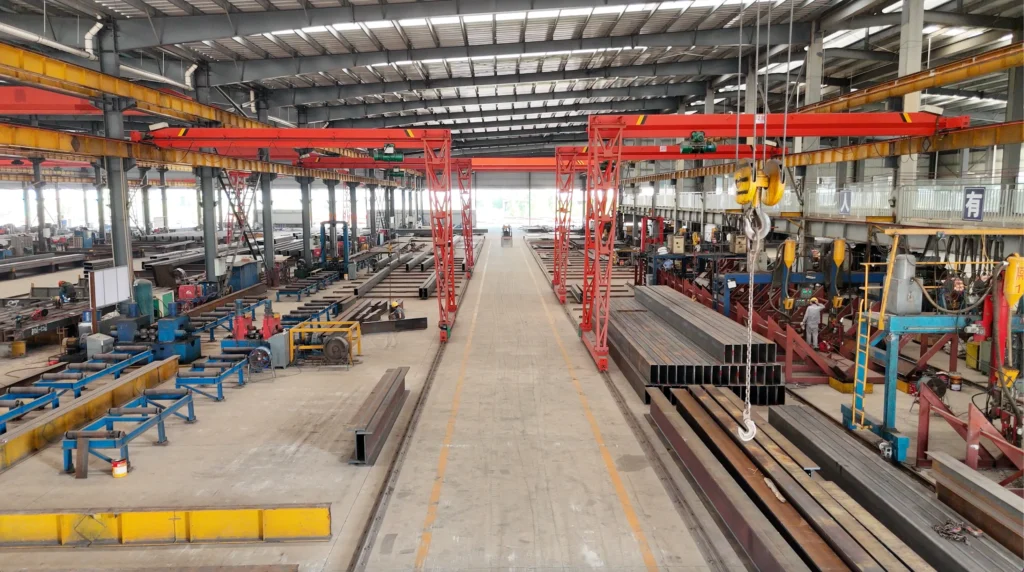
Bingfa can support material coordination, steel fabrication, material identification, quality inspection, packing and export preparation according to the confirmed project scope.
Frequently Asked Questions
What is the main difference between Q235B and Q355B steel?
Q355B generally represents a higher nominal strength class than Q235B under the applicable Chinese material standard. However, the actual mechanical-property requirements depend on the material standard, product form and thickness. The appropriate grade should follow the structural design and project specification.
2. Is Q355B always better than Q235B?
No. Higher nominal strength does not automatically mean a better steel building. Grade selection depends on structural analysis, member forces, stability, deflection, connections, fabrication, availability and project requirements.
3. Can Q235B and Q355B be used in the same steel building?
Yes, where the approved structural design and project specification require different grades for different structural components. Drawings, material lists and fabrication records should clearly identify the required grade for each component.
4. Is Q235B equivalent to ASTM A36?
No automatic equivalence should be assumed. Q235B and ASTM A36 belong to different material standards with different requirements. Broad strength comparisons may be useful for early discussion, but substitution requires review against the project specification and engineering approval.
5. Is Q355B equivalent to S355 or ASTM A572 Grade 50?
Q355B, S355 and ASTM A572 Grade 50 belong to different standard systems. They may be discussed as broadly similar strength classes in some contexts, but they are not automatically interchangeable. Any substitution should follow the project specification and engineering approval.
6. What steel grade information should I provide before quotation?
Provide the project location, intended building use, structural drawings if available, applicable material standard, specified steel grade if known, thickness information if available, project loads, crane information where relevant, material-certificate requirements, inspection requirements and requested supply scope. An initial review can begin with the information currently available.