
Wind and Snow Load Inputs for Steel Building Design
Learn which project inputs affect wind and snow load design for steel buildings, including location, code, exposure, openings, roof geometry, snow drift and local engineering review.
Wind and snow load design for a steel building depends on project-specific inputs that must be confirmed before structural calculations begin. Basic wind speed and ground snow load are starting inputs, not final design values. The applicable code and edition, building risk category, terrain and exposure, topography, building height, enclosure classification, openings, roof geometry, snow drift, unbalanced snow and rain-on-snow may all affect how wind and snow actions are reviewed. These inputs can influence frames, bracing, purlins, cladding, connections, anchors and foundations. Final design values and member requirements require engineering review and local confirmation.
Why Location Alone Is Not Enough
Knowing the project city is not enough to determine final wind and snow design values. Two buildings in the same region may require different review because of terrain, exposure, topography, building height, roof geometry, openings, enclosure classification and building use. The adopted code and edition, along with the applicable risk or importance category, also affect the design basis.
Project location helps identify hazard data and local requirements, but it should not be treated as a substitute for confirmed design inputs. Buyers should provide the available project and site information so the engineering team can review the specific conditions.
Applicable Code, Edition and Building Risk Category
Wind and snow design begins with the adopted code or design basis for the project location. Different countries and jurisdictions may use different standards, editions, hazard maps and local amendments. Building use may also affect the risk or importance category and related design requirements.
ASCE 7, NBCC and Eurocode are examples of design bases that may be adopted by a project or jurisdiction. The applicable standard, edition and local requirements should be confirmed for the specific project. Final confirmation of code adoption and local approval rests with the relevant engineers and authorities.
Basic Wind Speed vs Design Wind Pressure
Basic wind speed is an input that represents wind hazard for a location under the adopted design basis. Design wind pressure is a project-specific result used in structural review after the applicable code methodology and relevant building conditions are considered.
A location-based starting input under the adopted design basis.
A project-specific result after the applicable method and building conditions are considered.
Depending on the design basis, those conditions may include exposure or terrain, topography, building height, geometry, enclosure classification, internal pressure and external pressure effects. Basic wind speed is therefore not the same as final design wind pressure, and one wind-speed value should not be treated as the final pressure for every surface or component.
Exposure, Terrain, Topography and Building Height
Wind action may change with surrounding terrain, exposure conditions and site topography. Open terrain, suburban or urban surroundings, and sites influenced by hills, ridges or escarpments may require different treatment under the adopted design basis. Building height also affects how wind action is evaluated across the structure.
Exposure
Review the surroundings and the adopted design basis rather than relying on the city name.
Terrain
Open, suburban or urban conditions may require different treatment.
Topography
Hills, ridges or escarpments may require project-specific review.
Building Height
Height affects how wind action is evaluated across the structure.
Exposure or terrain classification should be confirmed for the actual site rather than assumed from the city name alone. Topographic effects should also be reviewed where the adopted code requires them.
Enclosure, Openings and Internal Pressure
Buildings may be classified differently according to their walls, openings and enclosure condition. Depending on the adopted design basis, categories can include enclosed, partially enclosed, partially open or open buildings.
Enclosed
Review the actual wall and opening configuration under the adopted design basis.
Partially Enclosed
Identify large doors, permanent openings and expected opening conditions.
Partially Open or Open
Confirm open wall areas and other permanent opening conditions.
Large doors, permanent openings, open wall areas, louvres and other openings may affect internal-pressure review. Projects with large or frequently open doors should identify the expected opening conditions. The final enclosure classification should follow the adopted design basis and the actual building configuration rather than a generic building type.
Ground Snow Load vs Roof Snow Load
Ground snow load is an input representing snow hazard at the project location. Roof snow load is determined from that input together with project-specific and code-defined factors.
A starting input representing snow hazard at the project location.
A project-specific result based on the adopted design basis and applicable roof and building conditions.
Depending on the adopted design basis, roof exposure, thermal condition, roof slope, geometry, building importance, drift, sliding and other factors may need to be considered. Ground snow load is therefore not automatically the same as roof snow load. Snow depth should also not be used as a direct substitute for a structural snow-load value unless the adopted design method specifically provides for it.
Snow Drift, Unbalanced Snow and Rain-on-Snow
Roof snow may not be distributed uniformly. Snow drift can develop near parapets, roof steps, adjacent higher roof areas, valleys, obstructions and rooftop equipment. Certain roof geometries may also require unbalanced snow review.
Snow Drift
Parapets, roof steps, higher roof areas, valleys, obstructions and rooftop equipment can create local conditions.
Unbalanced Snow
Certain roof geometries may require review beyond a simple balanced snow condition.
Rain-on-Snow
Separate review may be required where it is included by the adopted design basis and applicable project conditions.
These checks can create local load cases that differ from a simple balanced snow condition. A roof slope should not be assumed to eliminate drift, unbalanced snow or other project-specific snow effects.
Building Geometry and Roof Conditions
Building length, width, height, roof type, roof slope, roof steps, parapets, valleys, overhangs, canopies and attached structures may influence wind and snow review. Openings, large doors and partially open wall conditions also affect the wind-design input set.
- Building length, width and height
- Roof type and roof slope
- Roof steps and adjacent higher areas
- Parapets, valleys and overhangs
- Canopies and attached structures
- Large doors and other openings
- Open or partially open walls
- Available drawings and revisions
The structural review should use the actual building geometry. Buyers should provide available drawings and identify features that may change how wind or snow actions are distributed.
How Wind and Snow Inputs Affect the Building System
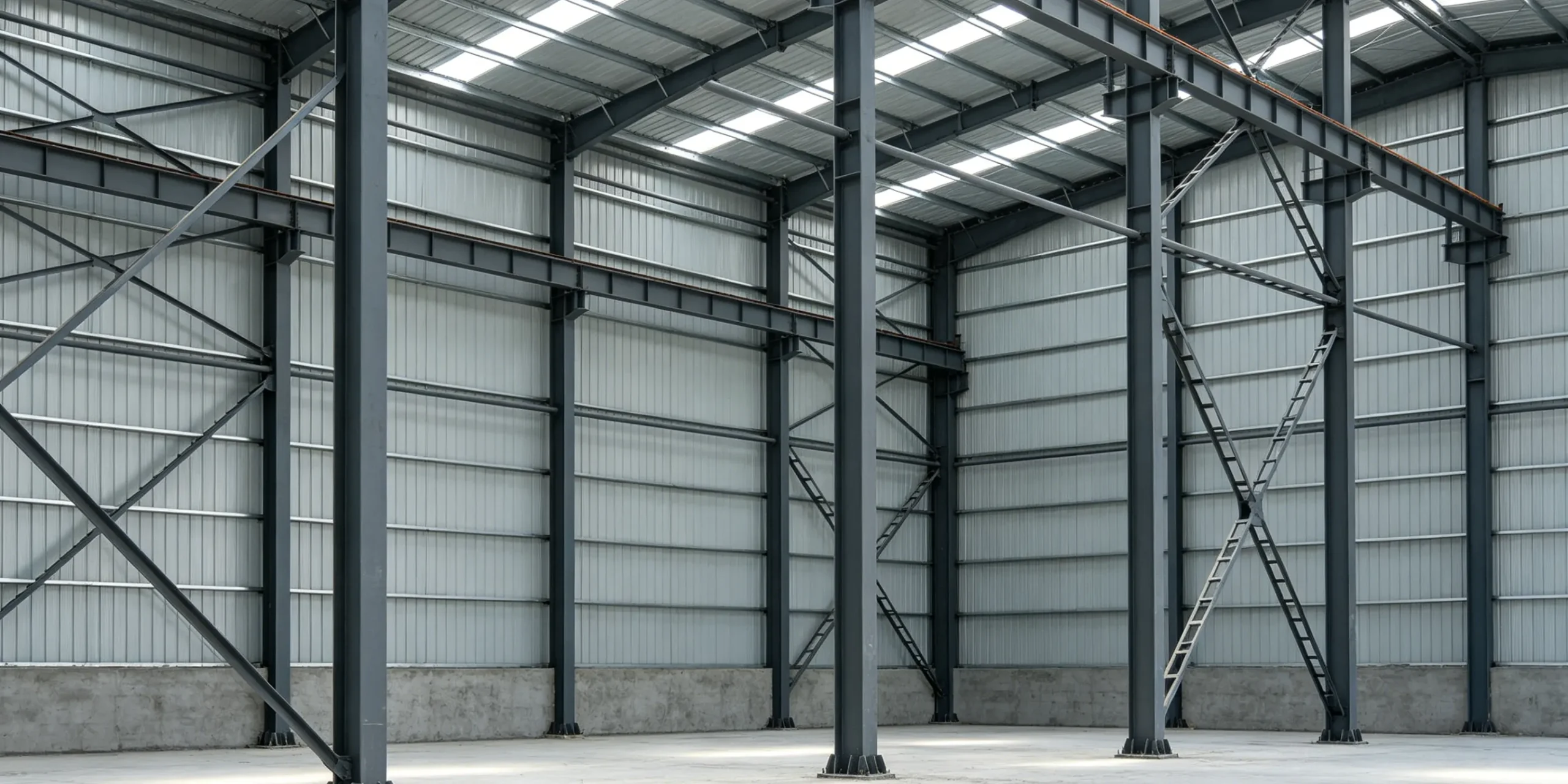
Confirmed wind and snow inputs may influence engineering review of multiple parts of the steel building system, including:
The effect on each component depends on the complete structural solution, governing load combinations and confirmed project conditions. Higher wind or snow inputs do not automatically mean that every member must become larger or that every spacing must become smaller. Final member and connection requirements come from engineering review.
Other Loads That Must Be Coordinated Separately
Wind and snow are important design inputs, but they are not the only actions that may affect a steel building. Depending on the project, separate coordination may be required for:
- Seismic actions
- Dead loads
- Live loads
- Crane loads
- Mezzanine loads
- Equipment loads
- Suspended services
- Rain loads where applicable
- Construction or maintenance loads
The governing combinations depend on the adopted design basis and project conditions. Detailed warehouse-specific coordination of wind, snow, seismic, crane and equipment loads belongs to the dedicated Steel Warehouse Design Loads guide.
Local Engineering and Approval Boundary
Engineering Review
Final structural design, load calculations, member sizing and connection design should be confirmed by qualified engineers using the adopted design basis for the project.
Local Approval
Local approval, permits, foundation requirements and authority acceptance should be confirmed by the relevant local engineers, contractors and authorities unless those responsibilities are explicitly included in an agreed scope. A factory drawing, preliminary design or quotation does not automatically satisfy local approval requirements.
Information Buyers Should Prepare
To support wind and snow input review, buyers should prepare:
- Project country, city and site location
- Building use
- Approximate length, width and height
- Eave and ridge height
- Roof type and slope
- Clear-span or column layout
- Door and opening sizes
- Open or partially open walls
- Applicable code or design basis if known
- Basic wind speed or official wind data if provided
- Terrain or exposure information if specified
- Ground snow load or official snow data if provided
- Risk or importance category if known
- Crane, mezzanine or equipment loads if any
- Drawings if available
- Foundation or anchor information if included
- Delivery destination
- Required calculations, drawings or documents if specified
- Required supply scope
Early project information can be reviewed first, but final design inputs must be confirmed before structural calculations and fabrication.
How Bingfa Can Support Wind and Snow Input Coordination
Depending on the confirmed scope, Bingfa can review available project location, building use, dimensions, openings, wind and snow information and drawings to coordinate steel-building design inputs with the proposed supply scope.
This review can help identify whether key project information is still missing before structural coordination continues. Final design values, member sizing and local approval depend on confirmed project requirements and the relevant engineering and authority responsibilities.
Review Your Wind and Snow Design Inputs
Send your project location, building use, dimensions, openings, available wind and snow information, and drawings so Bingfa can review the steel building design-input and supply-scope requirements.
Frequently Asked Questions
What wind information is needed for a steel building?
Useful wind information may include the project location, applicable code or design basis if known, basic wind speed or official wind data, terrain or exposure conditions, building height and geometry, enclosure classification, opening information and risk or importance category where applicable. Final design wind pressure is confirmed through engineering review using the adopted design basis and project-specific inputs.
Is basic wind speed the same as design wind pressure?
No. Basic wind speed is an input representing wind hazard for a location under the adopted design basis. Design wind pressure is a project-specific result determined after the applicable code methodology and relevant conditions such as exposure, topography, building height, geometry, enclosure and internal or external pressure effects are considered.
Is ground snow load the same as roof snow load?
No. Ground snow load is a starting input for snow design. Roof snow load is determined using the adopted design basis together with project-specific factors such as roof geometry, slope, exposure, thermal condition, building importance, drift, sliding and other applicable conditions.
Can wind and snow design values be determined from project location alone?
No. Location helps identify hazard data and local requirements, but final values also depend on the applicable code or design basis, building use, risk category, site conditions, geometry, openings, enclosure and other project inputs. Final design values require engineering review.
What information should I send for a wind and snow load review?
Send the project location, building use, approximate dimensions, eave and ridge height, roof type and slope, door and opening sizes, open or partially open wall conditions, applicable code if known, available wind and snow data, terrain or exposure information if specified, special loads such as cranes or mezzanines, drawings if available, required documents and the requested supply scope. Early information is enough to begin the review, but final design inputs must be confirmed before structural calculations and fabrication.
Discuss Your Steel Building Design Inputs
Send your project location, building use, dimensions, openings, available wind and snow information, and drawings so Bingfa can review the steel building design-input and supply-scope requirements.