
EPS vs PU vs Rock Wool Sandwich Panels: Which Is Best for a Steel Warehouse?
Quick Answer: Which Sandwich Panel Fits a Steel Warehouse?
Compare EPS sandwich panel, rock wool sandwich panel and PU sandwich panel options for steel warehouse buildings to choose the right balance of insulation, fire resistance and budget. Panel selection affects insulation performance, fire-related requirements, installation planning and long-term operating costs. Buyers should compare EPS, PU and rock wool panels under the same building use, roof or wall application, project environment, budget and documentation requirements.
For projects using sandwich panels on the roof, review the sandwich roof panel installation guide for joint, fixing, flashing and drainage coordination.
Quick answer: EPS sandwich panels are commonly compared for cost-focused general building enclosure, PU sandwich panels for stronger thermal-insulation requirements, and rock wool sandwich panels where fire-related and sound-control considerations are more important. The final choice should be based on building use, panel thickness, joint system, project climate, applicable local requirements and quotation scope.
If you are comparing EPS, rock wool and PU sandwich panels for a warehouse project, send your building use, project country and insulation requirements to request a panel quotation.
What Are EPS, PU and Rock Wool Sandwich Panels?
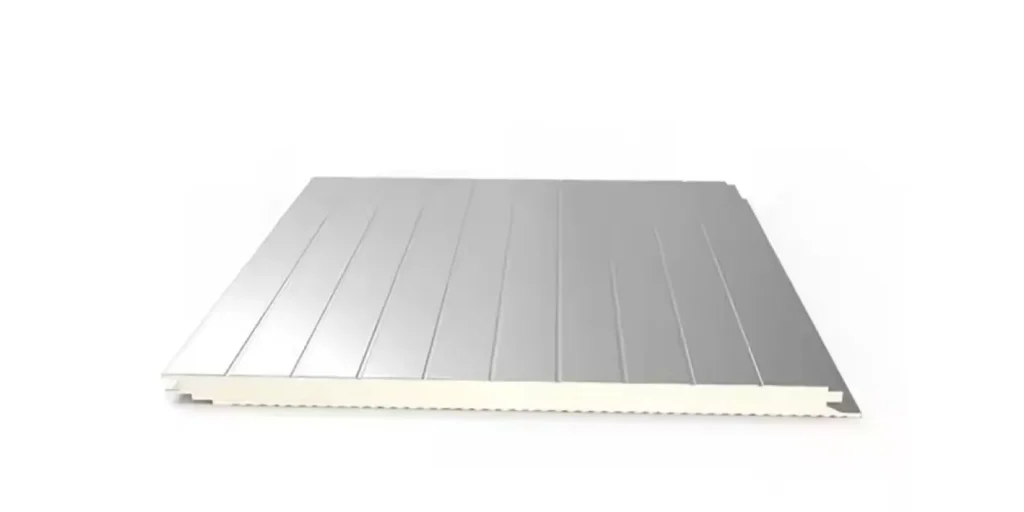
EPS, PU and rock wool sandwich panels are metal-faced building panels with an insulation core between two steel sheets. They are commonly used for steel warehouse roof and wall systems when buyers need faster enclosure installation and a cleaner insulated finish than basic single-layer cladding.
The three panel types differ mainly in insulation priorities, fire-related considerations, sound-control needs, weight and quotation scope. Final suitability depends on panel thickness, joint details, roof or wall application, climate and project requirements.
How EPS, PU and Rock Wool Sandwich Panels Differ
EPS Sandwich Panels: A Cost-Focused Option
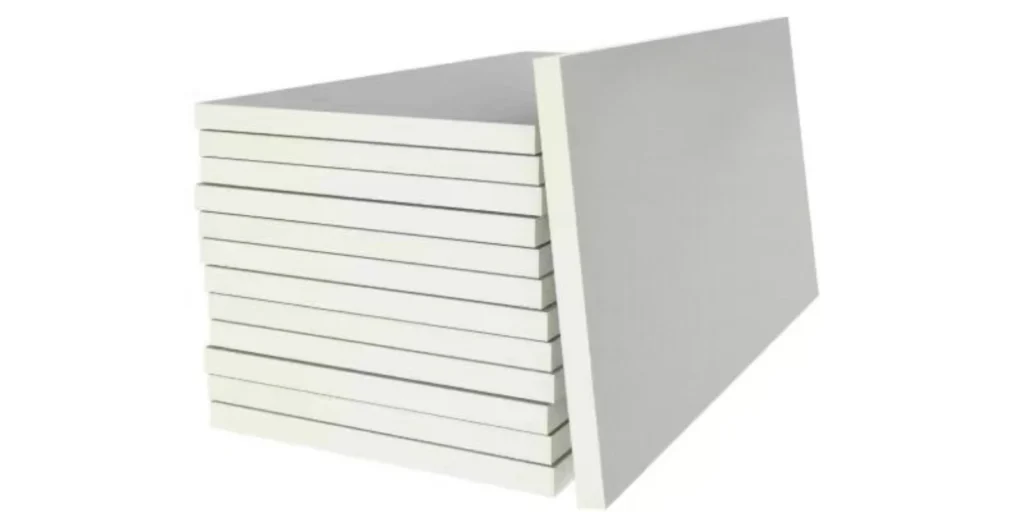
Core Material: Expanded polystyrene foam (a lightweight, rigid plastic foam)
EPS panels are commonly compared for general warehouse roof and wall enclosure where buyers need insulated panels while keeping the project budget under control.
Key Advantages:
- Cost-focused option for general warehouse enclosure
- Insulation level depends on the selected thickness and project use
- Relatively lightweight panel units for coordinated installation
- Used for roof and wall systems in many general storage projects
- Accessories and steel-sheet specification should be compared with the quotation
Limitations:
- Fire-related requirements should be confirmed according to local standards
- Not every project needing stronger insulation will use EPS panels
- Panel joints, lengths and accessory scope should be checked before ordering
Common application direction:
- General storage warehouses
- Distribution and logistics buildings
- Budget-focused insulated roof and wall systems
- Projects comparing insulated panels with basic cladding
Rock Wool Sandwich Panels: Fire-Related and Acoustic Considerations
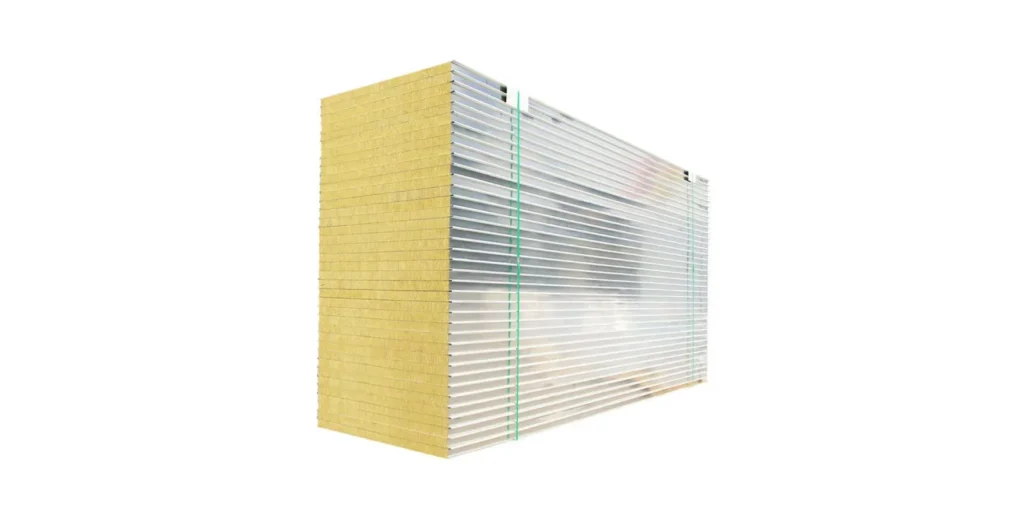
Core Material: Mineral wool (made from molten basalt rock and slag)
Rock wool panels are often reviewed where buyers need to confirm fire-related enclosure requirements or sound-control considerations. The final selection should still be based on local standards, panel density, thickness, joint system and the complete project scope.
Key Advantages:
- Often reviewed for fire-related project requirements
- May support sound-control needs in some industrial buildings
- Can be used for roof, wall or partition systems when specified
- Density, thickness and joint details should be confirmed
- Weight and supporting structure should be checked with the quotation
Limitations:
- Usually costs more than EPS in many projects
- Panel weight may affect the supporting steel frame
- Moisture protection and installation details should be confirmed
- Final suitability depends on building use and local requirements
Common application direction:
- Warehouses with specific fire-related requirements
- Industrial buildings where sound control is considered
- Selected wall, roof or partition systems
- Projects that need density and accessory scope confirmed
PU Sandwich Panels: Stronger Thermal-Insulation Requirements
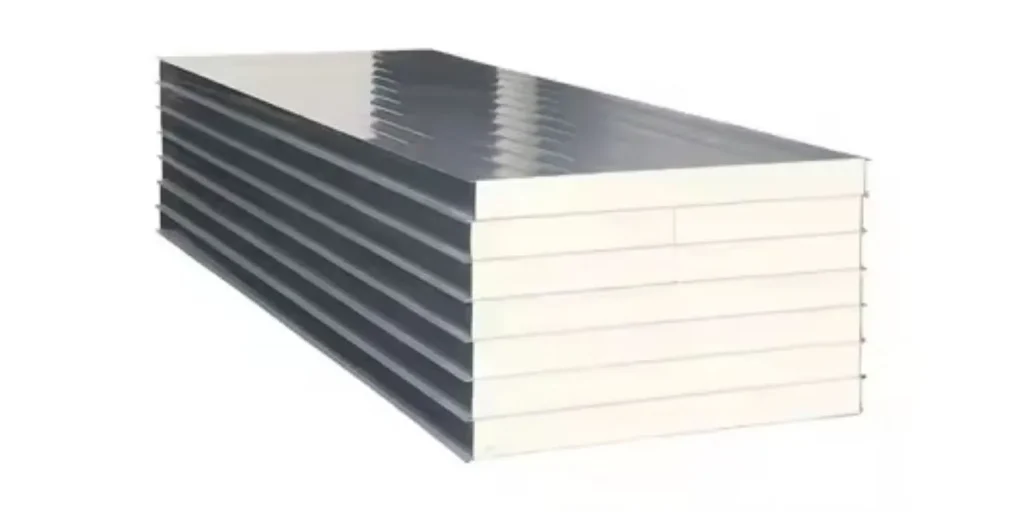
Core Material: Polyurethane foam (a closed-cell rigid foam)
PU sandwich panels are commonly compared where buyers need stronger thermal insulation for warehouse roof or wall systems. They may also be reviewed for temperature-sensitive uses, but panel thickness, joint details and operating conditions should be confirmed before selection.
Key Advantages:
- Commonly compared where stronger thermal insulation is required
- Closed-cell core may support moisture-resistant enclosure performance
- Used for selected roof and wall systems with confirmed details
- Thickness and joint system should be matched to the project
- Buyers should compare accessories and quotation scope carefully
Limitations:
- Usually higher cost than EPS in many projects
- Fire-related requirements should be confirmed according to local standards
- Roof or wall detailing may require closer coordination
- Final performance depends on the complete enclosure system
Common application direction:
- Higher-insulation warehouse roof and wall systems
- Selected temperature-sensitive projects
- Projects comparing long-term insulation needs and budget
- Buildings where joint details and thickness are critical
Color Steel Sheets vs Insulated Sandwich Panels
A color steel sheet provides basic metal cladding without an insulated core, while EPS, PU and rock wool panels combine metal facings with insulation. Buyers should compare cladding and insulated sandwich panel materials according to building use, climate, insulation needs and quotation scope.
- Choose color steel sheets for basic roof or wall cladding without an insulated core.
- Choose EPS panels when budget and general insulated enclosure are the main priorities.
- Choose rock wool panels when fire-related or sound-control requirements need review.
- Choose PU panels when stronger thermal insulation requirements must be confirmed.
Quick Comparison Table
body.page-id-3507 .wp-elements-246e761d31e07e23a49ec314eb6756a3{max-width:100%;overflow-x:auto;-webkit-overflow-scrolling:touch;box-sizing:border-box;}| Feature | Color Steel | EPS | Rock Wool | PU |
|---|---|---|---|---|
| Fire Rating | None | B2 | A1 | B1 |
| Thermal Conductivity | >0.1 W/m·K | 0.032-0.038 W/m·K | 0.038-0.042 W/m·K | 0.022-0.026 W/m·K |
| Sound Insulation | Up to 20 dB | Up to 30 dB | Up to 45 dB | Up to 35 dB |
| Weight | Lightest | Very light | Heavy | Medium |
| Cost | Lowest | Low | Medium | Highest |
| Waterproofing | Good | Good | Moderate | Excellent |
| Service Life | 15-20 years | 20-25 years | 25+ years | 25+ years |
How to Choose the Right Sandwich Panel for a Steel Warehouse
There is no single sandwich panel material that is best for every steel warehouse. Buyers should compare the following points before selecting a material:
Building use and insulation requirements
- General storage and budget-focused enclosure: EPS may be considered
- Fire-related or sound-control requirements: rock wool may be reviewed
- Stronger thermal insulation or temperature-sensitive use: PU may be compared
Panel thickness, joint system and roof or wall application
- Compare the same panel thickness when reviewing quotations
- Confirm whether the panel is for roof, wall or partition use
- Check fasteners, flashings and accessory scope with the panel quotation
Climate, drainage and local requirements
- Climate and operating conditions affect insulation needs
- Fire-related requirements should follow local standards and project design
- Roof slope, drainage and weather sealing should be reviewed with the full system
Common Mistakes When Comparing Sandwich Panels
Comparing only unit price without matching panel thickness and steel-sheet specification
Ignoring fire-related requirements, building use or local project conditions
Assuming one panel material is suitable for every warehouse application
Requesting quotations without confirming accessories, panel lengths and destination port
Bingfa Steel Sandwich Panel Support
Bingfa Steel supplies EPS, PU and rock wool sandwich panel options for steel building projects. Buyers can send building use, roof or wall application, required thickness and project location for project-based quotation review.
- Project-based thickness and panel length coordination
- Roof and wall application matching
- Accessory, packing-list and quotation-scope confirmation
- Support based on confirmed project requirements
Which Sandwich Panel Is Best for Your Warehouse?
No single sandwich panel is best for every steel warehouse. EPS may be considered where budget and general enclosure are the main concerns, PU where stronger thermal insulation is required, and rock wool where fire-related or sound-control requirements are more important.
- Consider EPS when cost-focused general enclosure is the main priority and project requirements allow
- Review rock wool when fire-related or sound-control needs must be documented
- Compare PU when stronger thermal-insulation requirements are confirmed
If you are still comparing materials, send your warehouse use, panel application, required thickness, project country and destination port to request a quotation.
Sandwich Panel Comparison FAQ
Common questions when comparing EPS, PU and rock wool sandwich panels for steel warehouse projects.
Is PU sandwich panel better than EPS?
PU is commonly compared where stronger thermal insulation is required, while EPS may be considered for more cost-focused general enclosure. The suitable option depends on building use, thickness, climate and quotation scope.
Is rock wool better than EPS for steel buildings?
Rock wool may be reviewed where fire-related or sound-control considerations are important. EPS may be considered for general enclosure and budget-focused projects. Applicable local requirements should be confirmed before selection.
Which sandwich panel is suitable for a steel warehouse?
The choice depends on warehouse use, insulation requirements, fire-related requirements, climate, panel thickness, joint system and budget. No single material is suitable for every project.
Can the same sandwich panel be used for roofs and walls?
Some panel systems are designed for specific roof or wall applications. Buyers should confirm the panel profile, joint system, drainage, fastening and structural support before quotation.
What information is needed for a sandwich panel quotation?
Buyers should provide the project location, building use, roof or wall application, required panel thickness, panel length and quantity, steel-sheet requirements, surface color and destination port.
Contact Us
Let’s stay in touch
Our team will be happy to respond to you in less than 24 hours.
PROJECT INQUIRY
Tell Us About Your Project
Share your project location, building requirements and contact details. Our team will review your information and get back to you as soon as possible.
Contact Us
Let’s stay in touch
Our team will be happy to respond to you in less than 24 hours.
PROJECT INQUIRY
Tell Us About Your Project
Share your project location, building requirements and contact details. Our team will review your information and get back to you as soon as possible.