
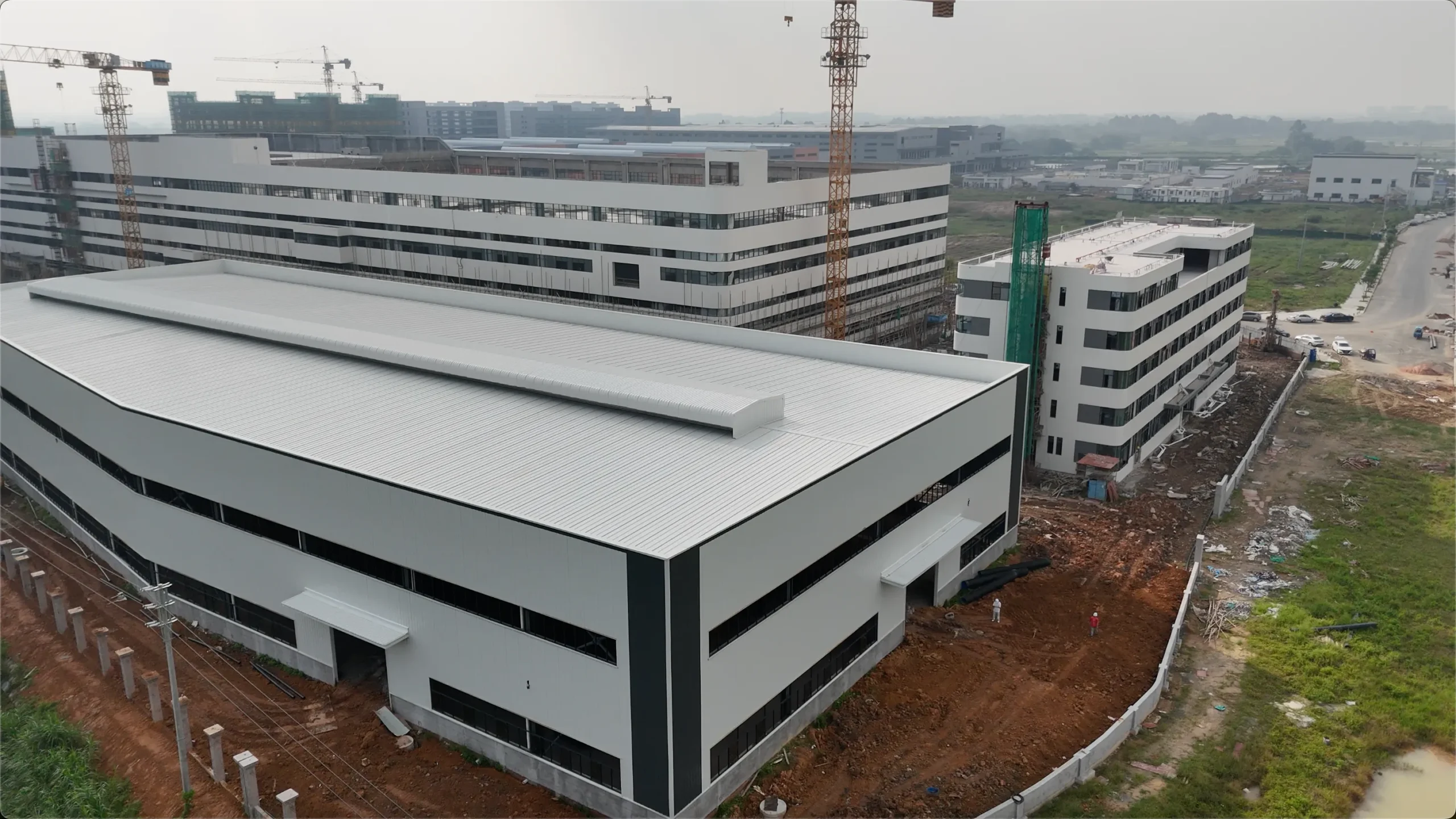
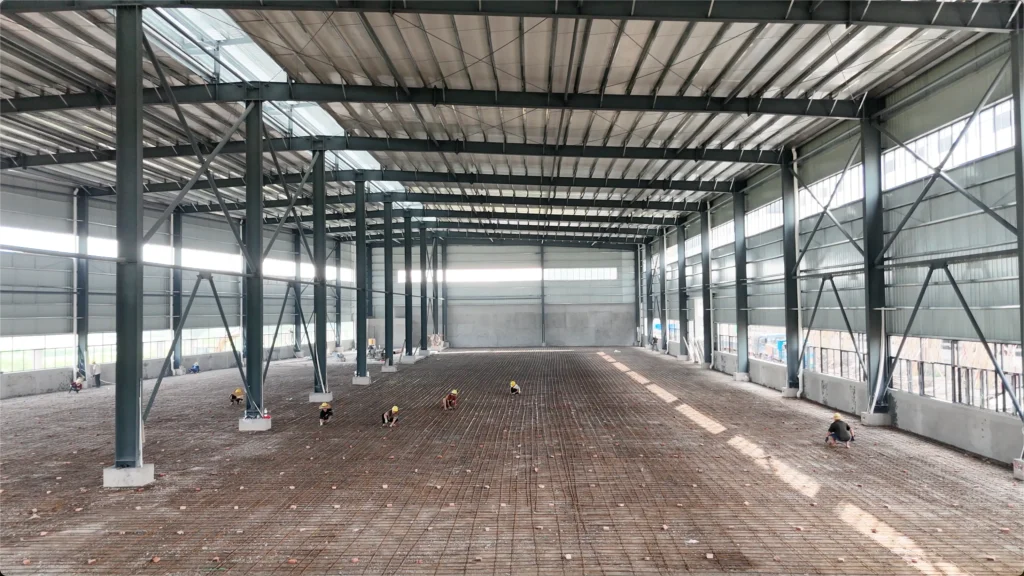
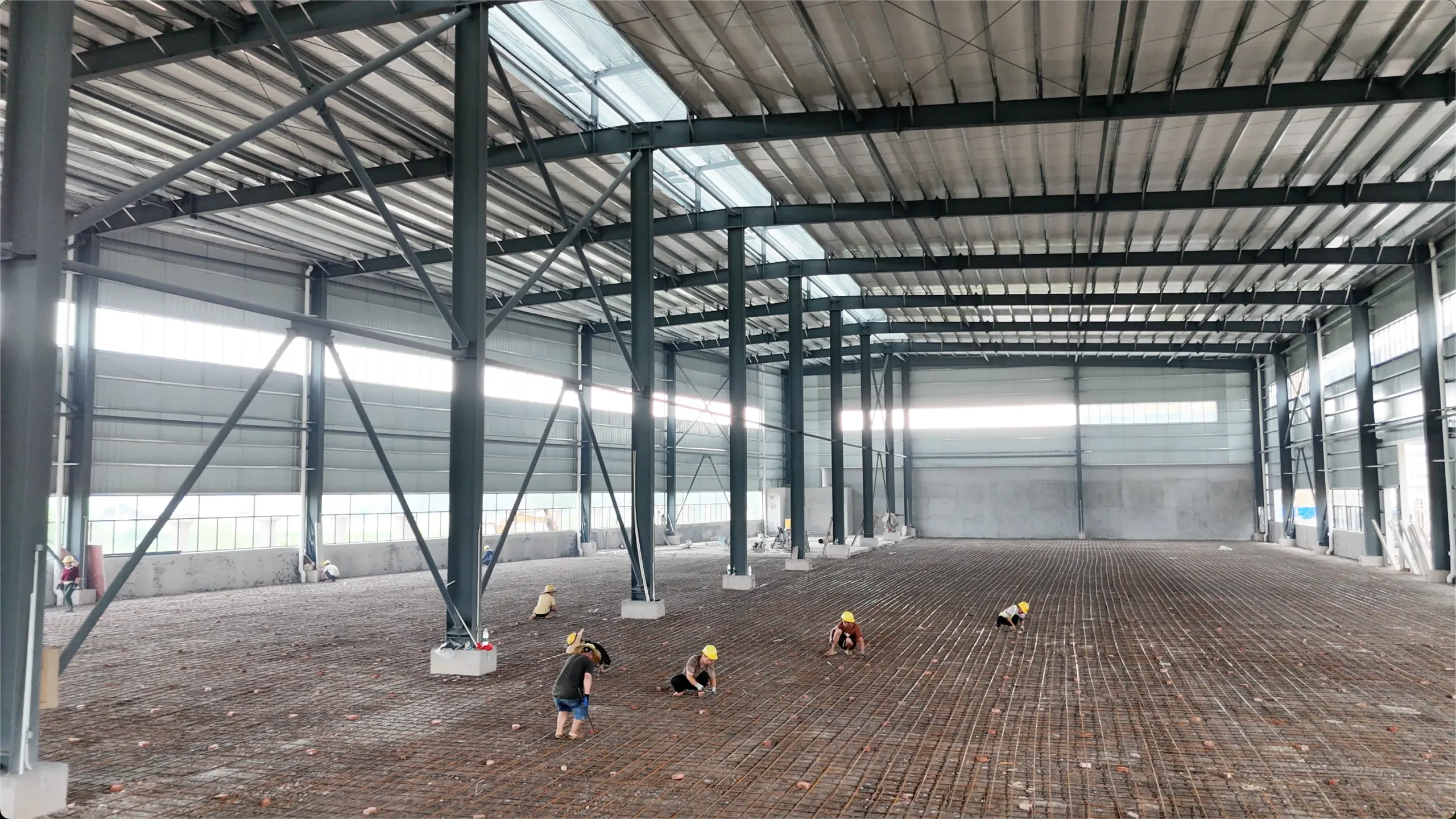
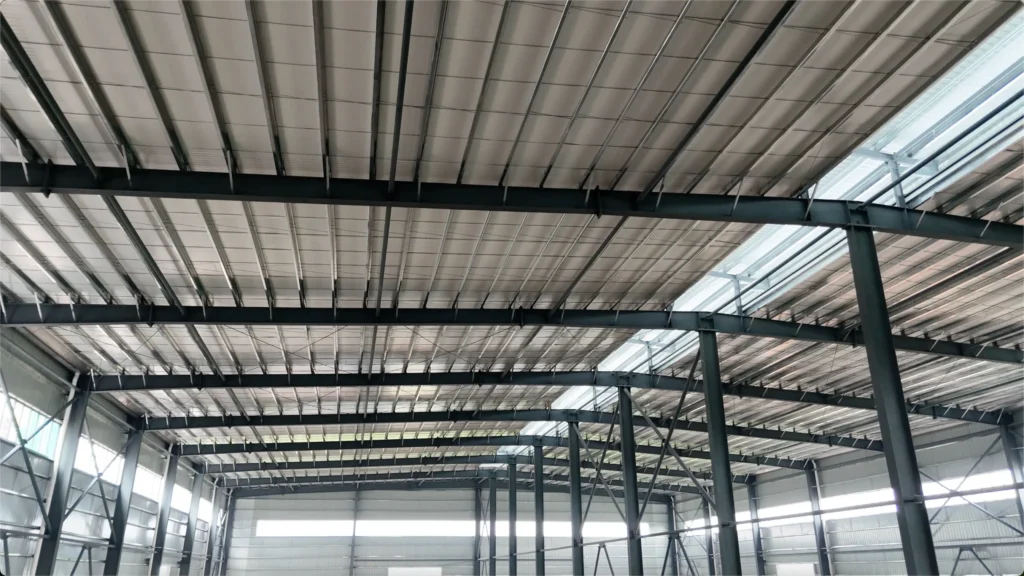
Representative factory-building visuals for planning discussion; they are not presented as a verified record of one specific project or location.
Planning Reference Overview
Planning boundary: Around 5000sqm is a scale reference, not a verified as-built area. Final dimensions, spans, heights, loads and supply scope must be confirmed from project drawings and local design conditions.
This page is a planning reference for buyers considering a steel factory building around 5000sqm. It shows how layout planning, access, enclosure selection and supply-scope coordination can affect a factory-building quotation without presenting one unverified project as a completed case study.
What Buyers Should Confirm for a Factory Building Around 5000sqm
Before design begins, buyers should confirm several important requirements:
- Allow enough space for production lines and equipment.
- Coordinate the internal layout with material movement and daily production flow.
- Base the structural arrangement on the confirmed use, loads and local design requirements.
- Match the roof and wall system to insulation, ventilation and enclosure needs.
- Coordinate door positions with raw-material entry and finished-product delivery.
- Define fabrication, transportation and site-assembly responsibilities in the supply scope.
- Balance the design basis, usability, budget and future expansion requirements.
A useful planning brief should focus on building use, working layout and long-term practicality rather than floor area alone. Quotations should be compared using the same design basis, enclosure scope and installation responsibilities.
Layout, Span and Clear-Height Planning
For a factory building around 5000sqm, the usable layout depends on more than total floor area. Production zones, equipment positions, storage, internal routes and loading areas all affect how the building length, width, span arrangement and clear height should be coordinated.
For a similar project, buyers should confirm the required clear working height, internal traffic routes, equipment layout, loading access and possible future expansion before finalizing the structural arrangement.
Planning Considerations for Similar Projects
For a factory of this scale, the steel-frame arrangement should be coordinated with internal workflow, usable space and material movement. For buyers comparing similar steel workshop buildings, the column layout, clear height, span arrangement and door positions should all be reviewed together rather than treated as separate decisions.
Planning should address:
- Production line arrangement
- Equipment operation areas
- Raw material storage
- Finished goods storage
- Forklift and vehicle movement
- Door and loading area coordination
- Internal traffic routes
- Future layout adjustment
This helps keep an approximately 5000sqm steel factory building practical for production use instead of functioning only as a large covered space.
Structural Span and Design Coordination
Buyers often want wide usable interior areas with fewer columns, but a larger clear span can change the steel quantity, member size and overall design basis. The suitable solution should be reviewed according to actual production use rather than preference alone.
A factory building around 5000sqm should not be planned only by total floor area. The usable layout depends on production flow, equipment position, clear height, structural span, forklift routes, loading access, roof and wall requirements and possible future expansion. Buyers should compare quotations using the same confirmed building scope and design basis.
Design Basis and Cost Comparison
For similar projects, span arrangement, interior clearance and member selection should be coordinated with the confirmed production layout and equipment needs. The aim is to balance usable space, structural efficiency and quotation scope.
The design basis should consider:
- Equipment placement
- Production workflow
- Required interior clearance
- Column layout impact
- Roof structure stability
- Steel frame weight
- Budget control
When quotations are compared, buyers should confirm whether the same design basis, span logic, member sizes, access requirements and enclosure scope are included. This helps avoid both under-design and unnecessary over-design.
Review Your Factory-Building Planning Inputs
Share the available dimensions, production use, equipment layout, site conditions and enclosure requirements for a scope review.
Roof and Wall System Options
A factory building roof and wall system affects working conditions, maintenance planning, condensation control and the overall enclosure scope. Similar projects should confirm whether the building needs basic metal cladding or an insulated system.
The suitable option depends on building use, local climate, insulation needs, fire-related requirements and budget rather than material price alone.
Material Selection Direction
For similar projects, roof and wall materials can be selected according to confirmed operating conditions, insulation requirements and maintenance expectations.
Buyers comparing sandwich panel materials should review the same application scope, panel type, joint system and project requirements before quotation. Common options include:
- Color Steel Sheet
Basic roof and wall cladding where an insulated core is not required. - EPS Sandwich Panel
Cost-focused insulated enclosure option for general applications. - PU Sandwich Panel
Often compared where stronger thermal insulation is required. - Rock Wool Sandwich Panel
Often reviewed for fire-related and sound-control requirements. - Rock Wool Sandwich Panel with PU Sealing Edge
May be reviewed where edge sealing and enclosure details need further coordination.
The final roof and wall system should be selected according to the confirmed working environment, enclosure scope and quotation basis.
Doors, Ventilation and Internal Logistics
Industrial buildings need ventilation and daylight planning that match the working process, roof and wall system and internal equipment layout. Similar projects should confirm whether natural ventilation, louvers, ridge vents, skylights or other openings are required.
Working conditions depend on the complete enclosure and access layout rather than one component alone.
Working-Condition Planning
For similar projects, ventilation and natural lighting should be coordinated together with roof and wall selection, opening locations and internal working areas.
Depending on project requirements, the building can include:
- Wall windows
- Louvers
- Ridge vents
- Roof skylight panels
- Large access doors
- Ventilation openings
- Customized lighting layout
These design options can help improve indoor air circulation, reduce dark working areas and support daily industrial production when they are matched to the confirmed project scope.
Door Positions and Material Flow
Door size and position affect raw-material entry, finished-goods movement, forklift circulation and loading efficiency. Buyers should confirm door locations together with the internal layout, not after the structural scheme is finalized.
If door locations do not match the working process, internal traffic can become inefficient even when the building area is sufficient.
Access Planning for Similar Projects
For a similar steel factory building, door arrangement should be reviewed together with production flow, equipment positions, forklift routes and loading requirements.
Common door options include:
- Roller shutter doors
- Sliding doors
- Access doors
- Large equipment doors
- Loading area doors
This page should not be treated as confirming one standard door layout for every factory of this scale. The suitable arrangement depends on the intended operation and site access conditions.
Fabrication, Packing and Installation Scope
A factory building around 5000sqm may include many fabricated steel components and accessory items. Similar projects should confirm how components are marked, packed and delivered because this affects installation efficiency and quotation scope.
Fabrication and Packing Coordination
For this type of project, component fabrication, numbering, packing and loading should be coordinated according to the installation sequence and destination requirements.
Depending on the agreed supply scope, a quotation may include:
- Factory fabrication of steel columns and beams
- Preparation of purlins, bracing, bolts, and connection parts
- Component marking before packing
- Export or site-ready packing
- Loading coordination
- Installation drawings and technical communication
Clear component, packing and documentation boundaries can make site assembly easier to coordinate.
Future Expansion and Long-Term Use
A factory building around 5000sqm may be planned for present production needs, but future changes can affect space use, access and structural planning. If expansion is ignored too early, later modifications can become more complicated and costly.
Expansion Planning Notes
For similar projects, the floor plan and structural arrangement can be reviewed for later additions when there is enough room on the site and when the future use is considered during planning.
Future planning may include:
- Extending the factory building length
- Adding storage areas
- Adding office or mezzanine areas
- Adding more doors
- Expanding production zones
- Adjusting internal layout
This can make a steel factory building more flexible for long-term operation when expansion requirements are confirmed early.
Steel Frame and Material System Notes
The steel frame in a similar factory building may include columns, beams, roof purlins, wall purlins, bracing, bolts and connection pieces. The final system should match the confirmed building use, structural arrangement and enclosure scope.
Common material systems for similar projects include:
- H-section steel columns and beams
- C/Z steel purlins
- Steel bracing system
- High-strength bolts
- Color steel sheet roof and wall cladding
- EPS, PU, or rock wool sandwich panels
- Doors, windows, louvers, and ventilation accessories
The final material system should be selected according to production use, local climate, insulation needs, fire-related requirements and project budget.
What Buyers Should Provide for a Similar Quotation
This planning reference shows how building use, layout and scope affect the final solution for a factory around 5000sqm. For a similar quotation, buyers should provide clear project information so the structural and enclosure scope can be compared correctly.
Please provide:
- Project country and city
- Required building length, width and height
- Intended factory use
- Production-line or equipment layout
- Required clear height
- Clear-span or multi-span preference
- Door and loading-bay requirements
- Roof and wall enclosure requirements
- Ventilation requirements
- Drawings if available
- Applicable project requirements
- Surface-treatment requirements
- Packing and installation scope
- Destination port
If dimensions are still being confirmed, the steel warehouse building size guide and prefabricated steel building cost guide can help align the quotation basis before supplier comparison.
Supply-Scope Boundaries for Similar Factory Building Requirements
A factory-building quotation should distinguish the structural frame, enclosure, accessories, documentation, packing and site responsibilities.
Depending on the supplier agreement, the reviewed scope may include:
- Steel structure design suggestions
- Factory layout coordination
- Steel frame fabrication
- Roof and wall material selection
- Sandwich panel supply
- Export packing and loading support
- Installation drawings
- Project quotation based on actual requirements
The suitable solution should still be confirmed according to building use, drawings, enclosure requirements, installation responsibilities and the final quotation scope.
Discuss a Factory Building Around 5000sqm
Send the available building size, project location, intended production use, equipment layout and drawings so the quotation basis can be reviewed.